Category Archives: 2025

Time to Fly

Beth is a meticulous planner. Some people might say that I am too — but perhaps by only one or two. We are vastly different in our approaches. My amazing wife keeps lists of lists, meticulously indexed.

While I was adding boxes of lithium batteries to the “packing table”—where every item bound for Ghana gets staged, evaluated, ranked, and either packed or left behind— I caught a glimpse of one of Beth’s lists. It was like peering into the gears of the Antikythera mechanism. I was simultaneously full of admiration and slightly dazed. I gripped the table to steady myself as I scanned the single page masterpiece.

The document wasn’t just a list; it was a roadmap for ordering equipment for the eight young men riding motorcycles between the remote communities of Northern Ghana and sharing the Gospel. Beth’s document featured no fewer than five links to additional reference documents and was divided into three precise sections.

The first section detailed what should be done two months prior to departure: whom to contact in Ghana to gather repair needs and to identify fixes I could handle in the field. The second laid out tasks for 4–6 weeks before departure, including instructions for notifying the finance team about equipment orders using specific forms. Finally, the third section explained the critical steps for the final week—including printing and affixing labels to equipment so we can track what breaks and when.

Some of Beth’s stickers used to track equipment brought to the field

Hmmm. My meticulous planning consists primarily of sticky notes, bits of graph paper with small sketches, and spreadsheets of all the technical bits I assemble. Most of my ToDo items include activities like:

  • Test fire stove
  • Flush and check water filter
  • Configure the new mobile phones
  • Rebuild all videos for higher resolution with ffmpeg
  • Activate Garmin InReach
  • Check first aid kit for Z-packs & Amoxycillin

Beth rolls her eyes when I declare that I’m the Side Kick, and she is the Superhero. However, what is certainly true, is that we are blessed to be a team.

What we do: BiblePlus

Before we get too far along in this year’s blog, it might be helpful to provide a super short recap about what we do there. Beth and I help support a team of Ghanaians doing ministry. Sometimes we are helping with water filters that can prevent disease. Sometimes we are playing games with children. Most of the time, when we are not bouncing across dusty red tracks to tiny villages in the north, we are recording audio and video. Why? Do we have a YouTube channel? Are we social media influencers? Can you follow us on TikTok? The answer to all three is no — although I’m sure my fashion and luxury travel tips would attract many Gen-Z followers.

Ghana, like many countries around the world, is home to dozens of distinct languages and cultures. The largest of those people groups have millions of speakers, and have both political and economic resources. However, many of the medium-sided people groups have only a couple hundred thousand speakers. Some of the smaller tribes have only 10 or 20 thousand speakers — or fewer. How can those groups, who are often primarily oral cultures, hear what Jesus taught about love, grace, forgiveness, and compassion?

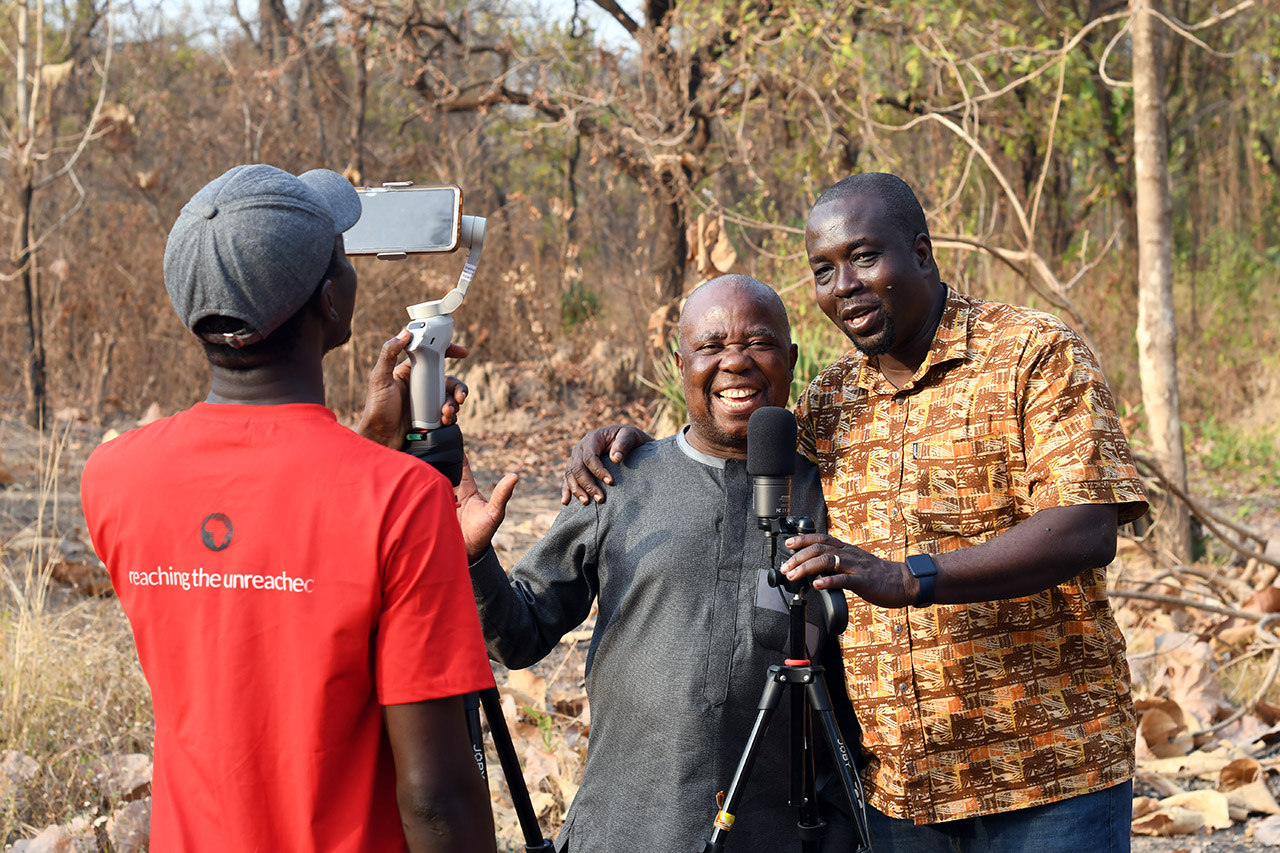
Beth and I record jubilant church choirs singing in their indigenous musical styles, nurses sharing community health information on topics such as malaria, diabetes, AIDS, and tuberculosis, Bible stories shared by men and women using the language and style of their unique culture, and prayers, testimonies, and teachings by local pastors. Recorded outside under mango trees, in traditional mud and thatch homes, or in small churches, their voices represent the hearts and authentic faith of people where they live, in the language they speak at home and on their farms. 

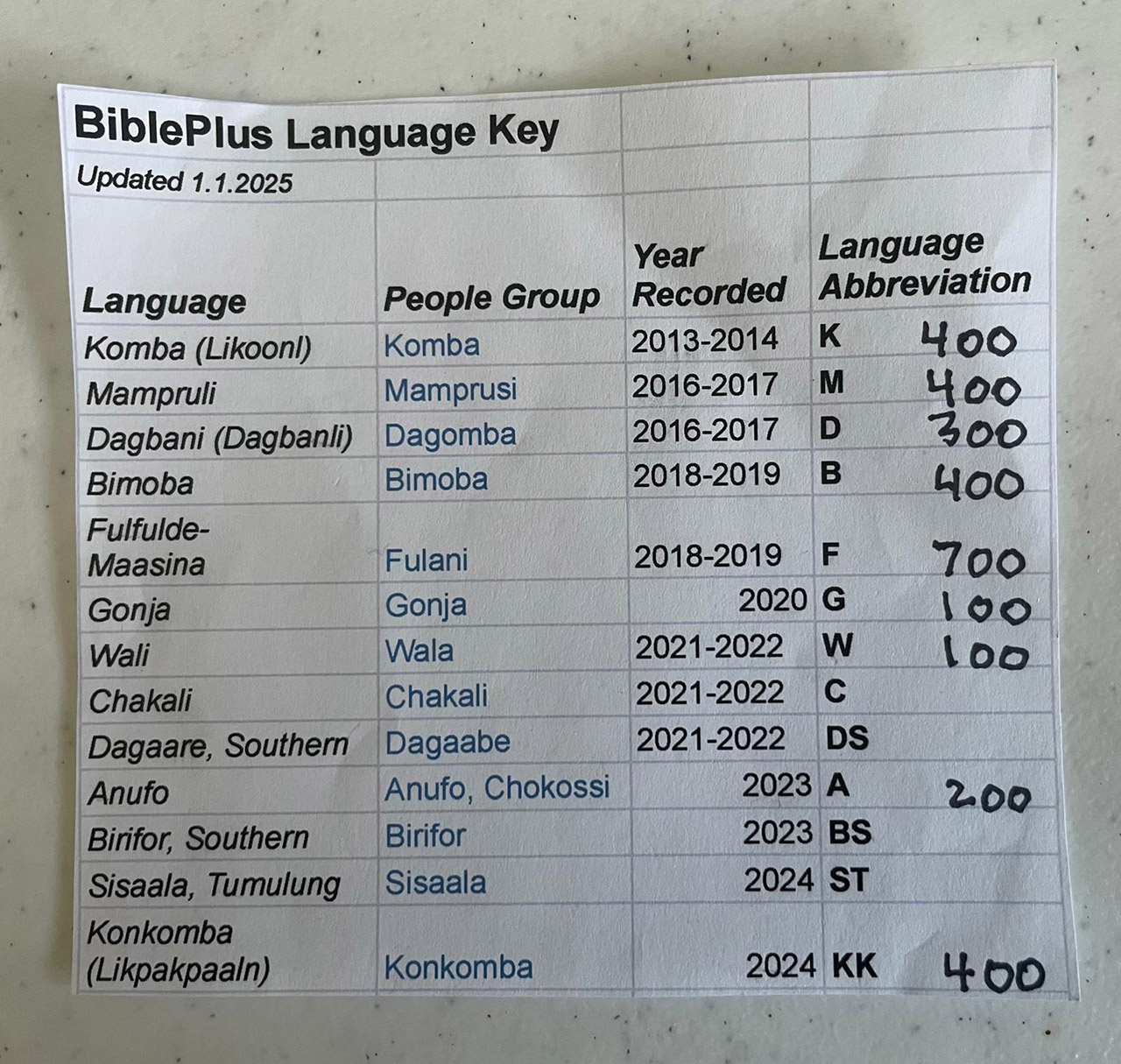
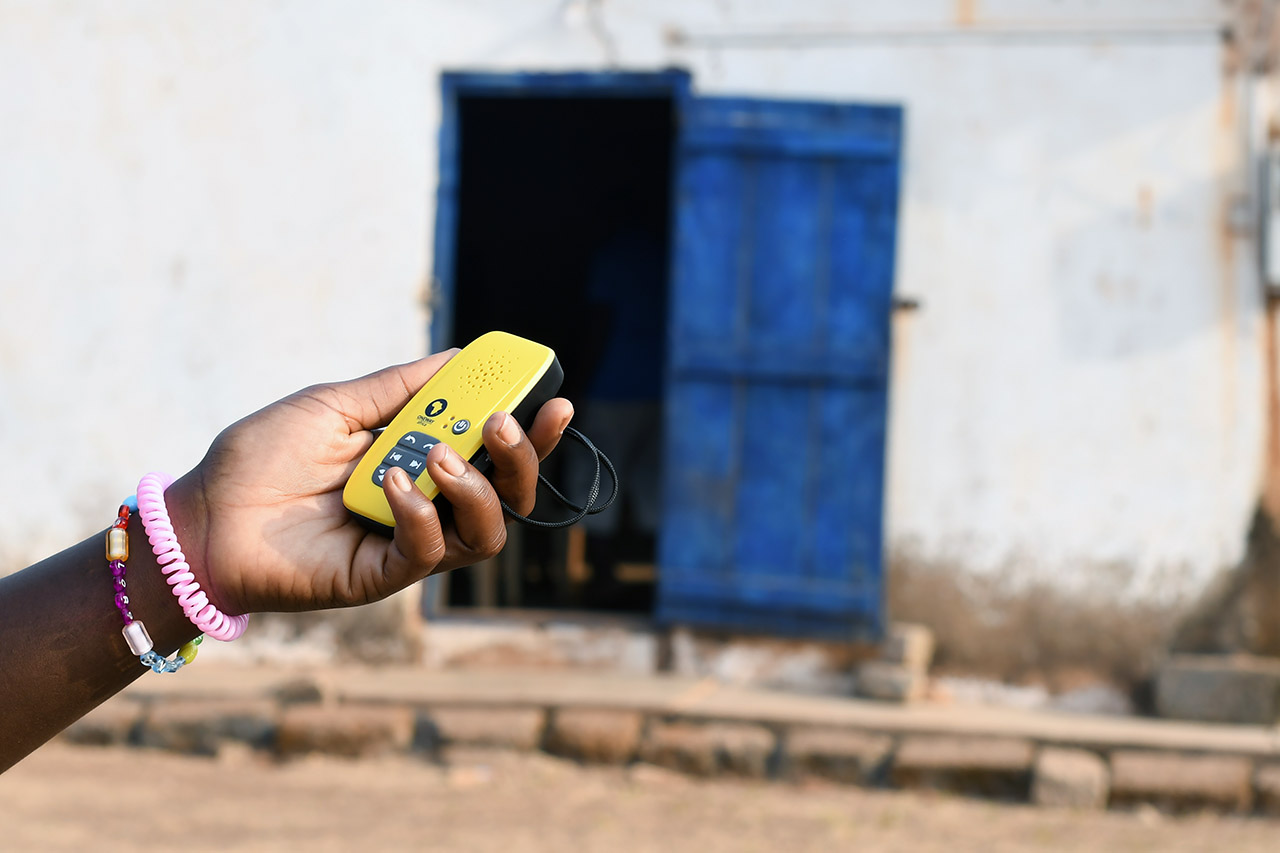
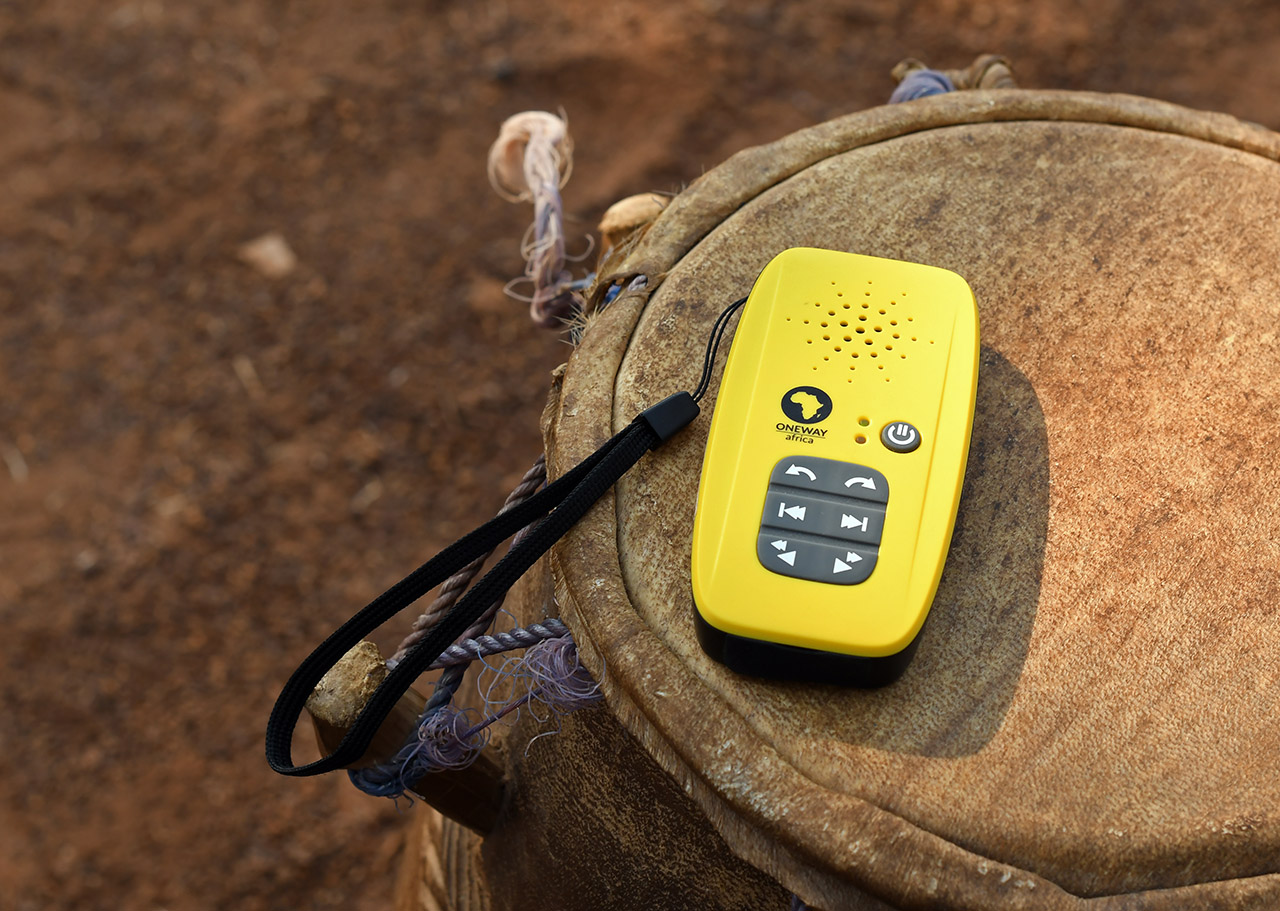
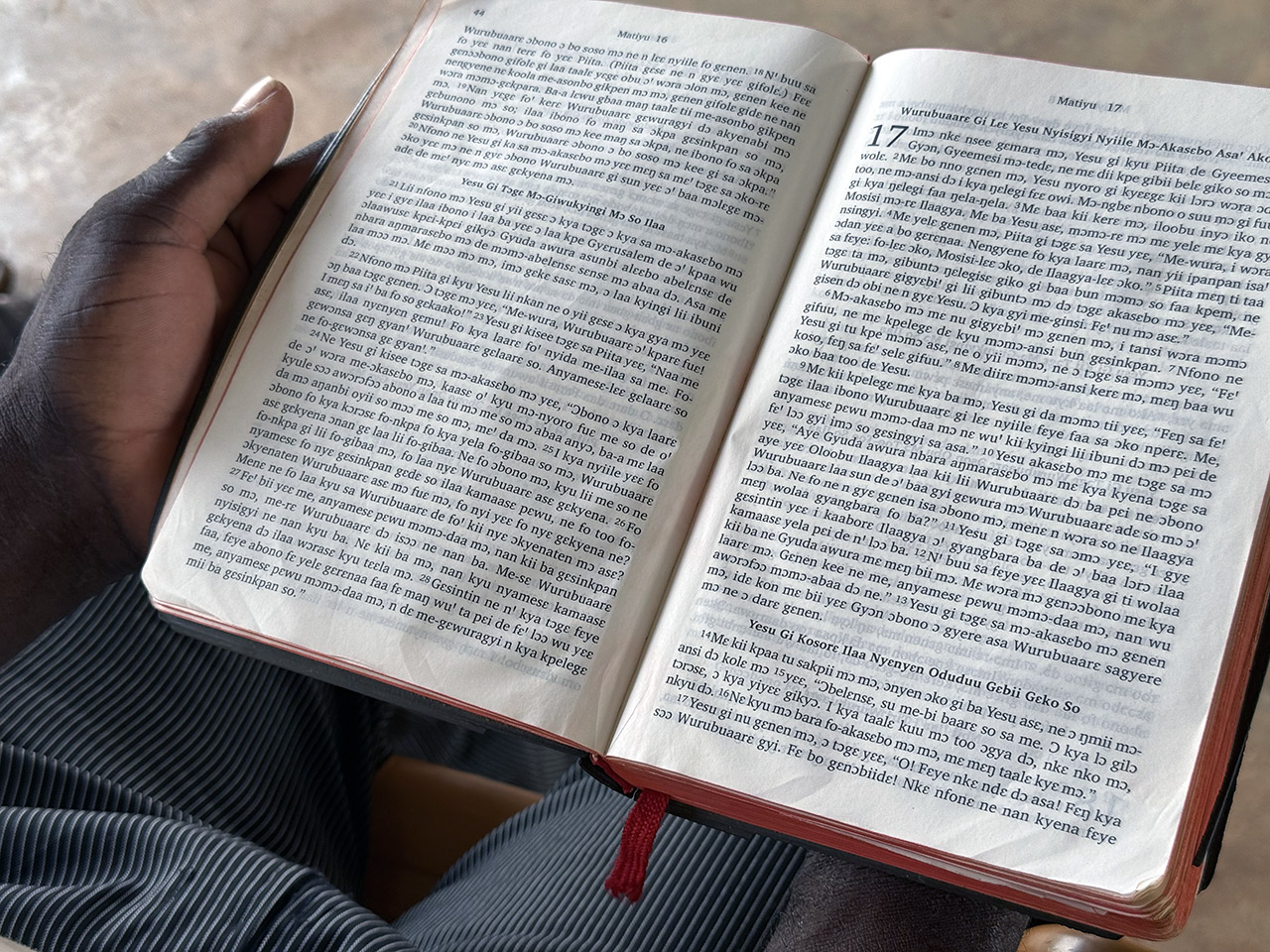
We then process and assemble the audio and video tracks. They are then combined with other digital resources from partners, such as an audio version of the New Testament and videos dubbed into the local language. The combined library of media resources can then be distributed on microSD cards for mobile phones or loaded onto solar-powered audio players.  To date, Beth and I have helped produce “BiblePlus” in thirteen different Ghanian languages.  We hope to add two more languages on this trip. 

The Next Leaders 
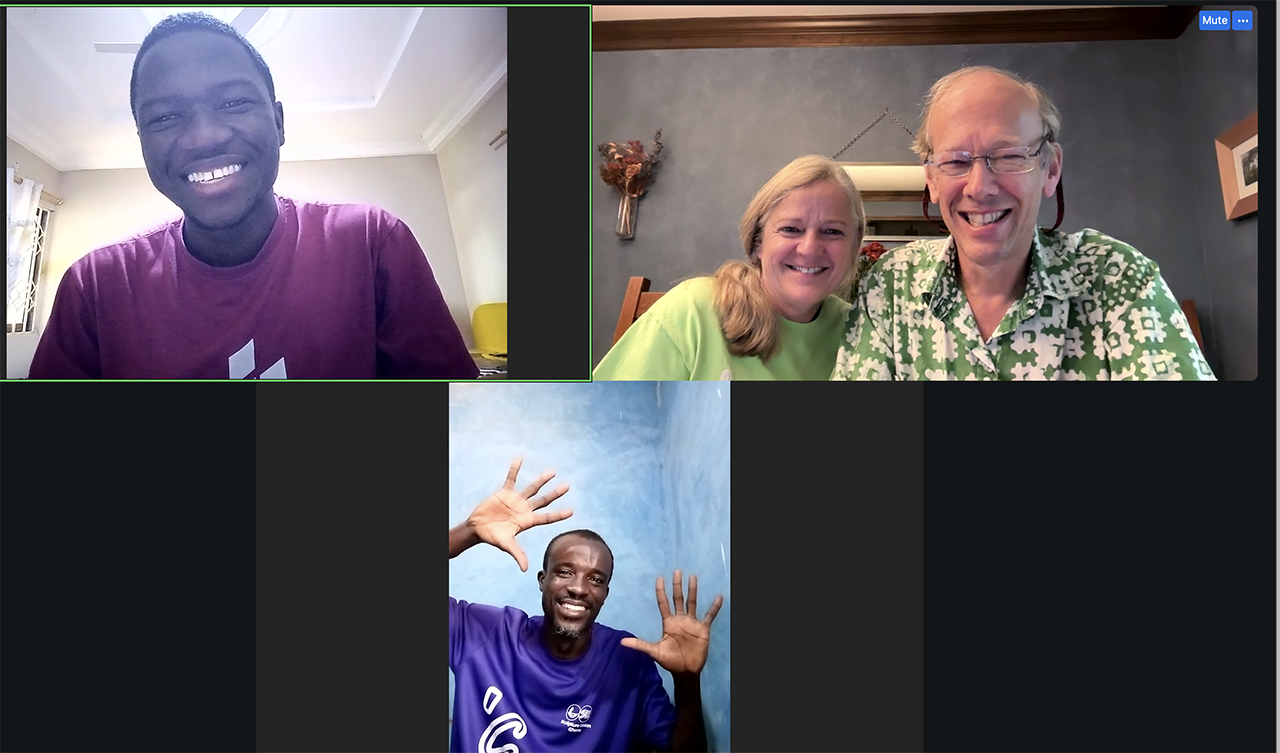
Cyrus (upper left) and Clement (lower middle) on a Zoom call with Beth and I, preparing for the trip.

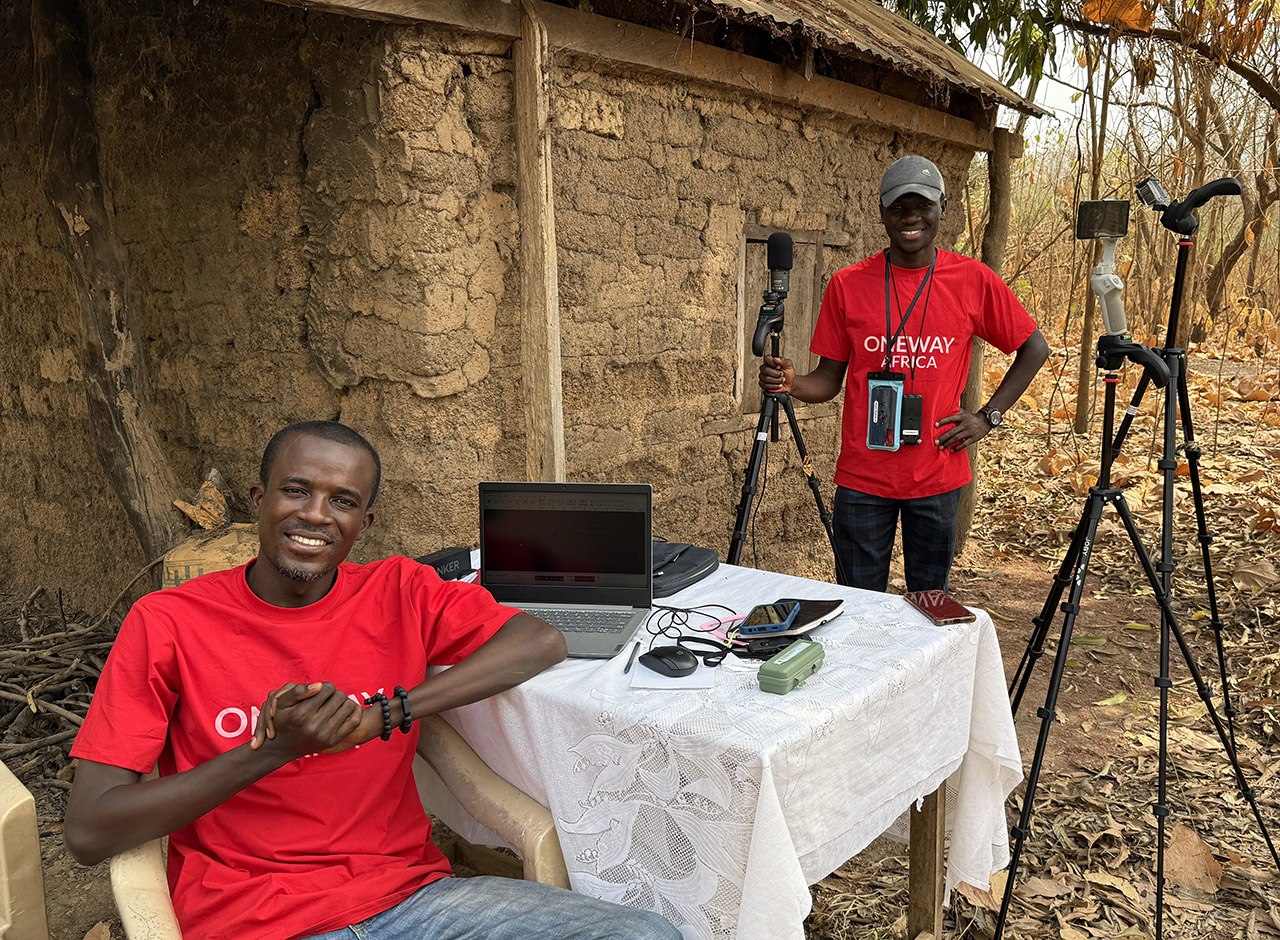
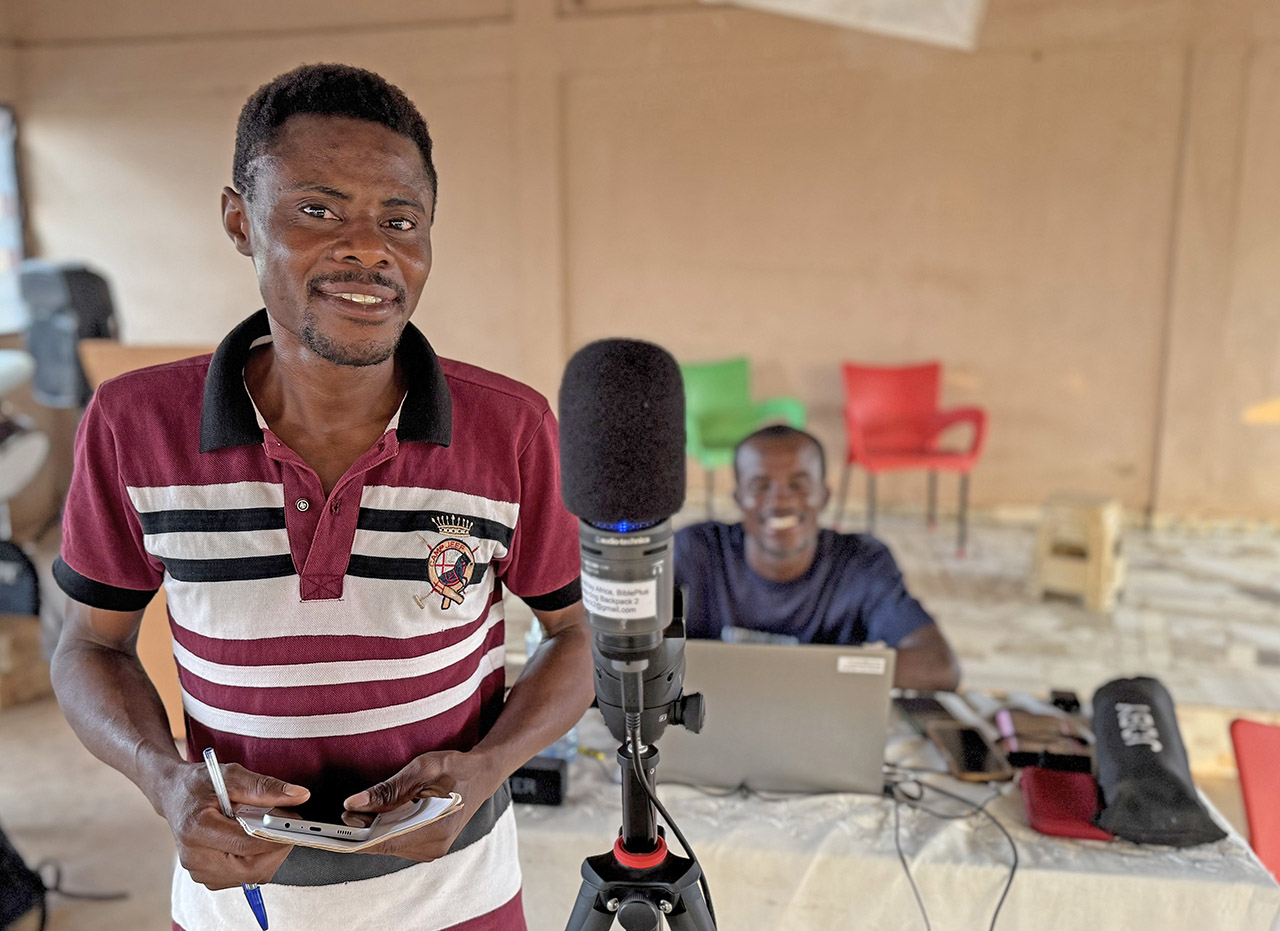
It has been almost 9 months since our last trip to Ghana. Cyrus and Clement (C&C) have been busy continuing the work in Northern Ghana, and we meet with them periodically over Zoom. We began training C&C two years ago. They each have a portable recording studio — a backpack with microphones, a mobile phone for recording video, and a laptop for editing. During our last trip, in April of 2024, we recorded the Sisaala and Konkomba languages.

On this trip, Marianne, a staff member from the OneWay offices in Aurora, will be joining us for part of the trip to Ghana. Together with Cyrus, Clement, and of course Ray, we will be working to record audio and video of the Akyode and Adele people in the Nkwanta district. There have been long-standing conflicts between their communities, and we are praying for reconciliation.
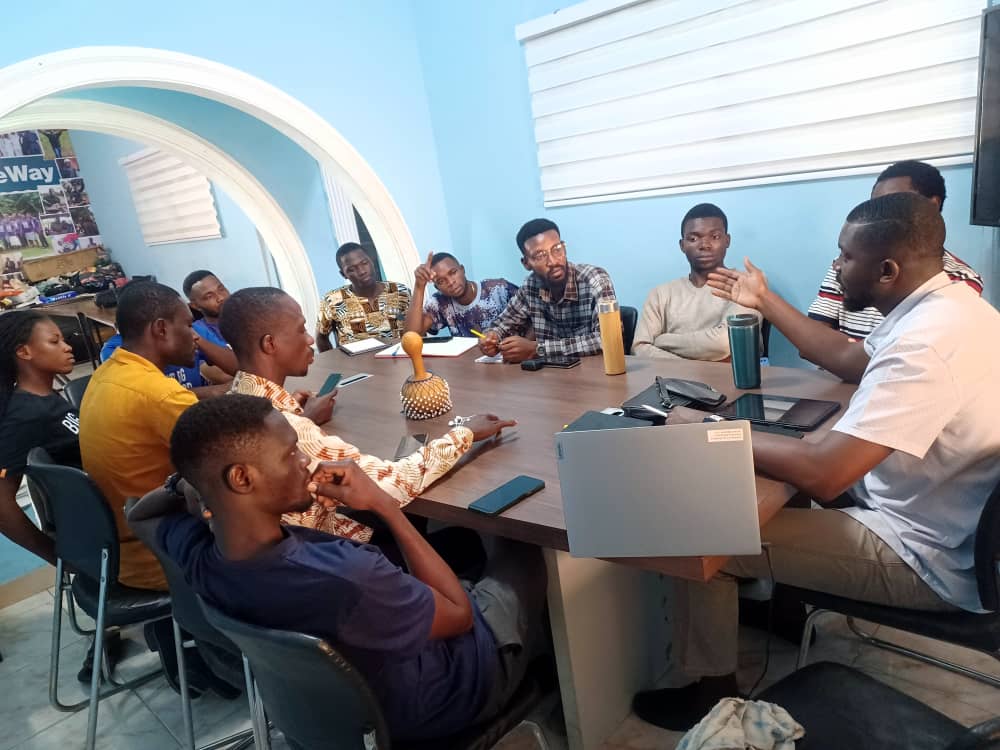
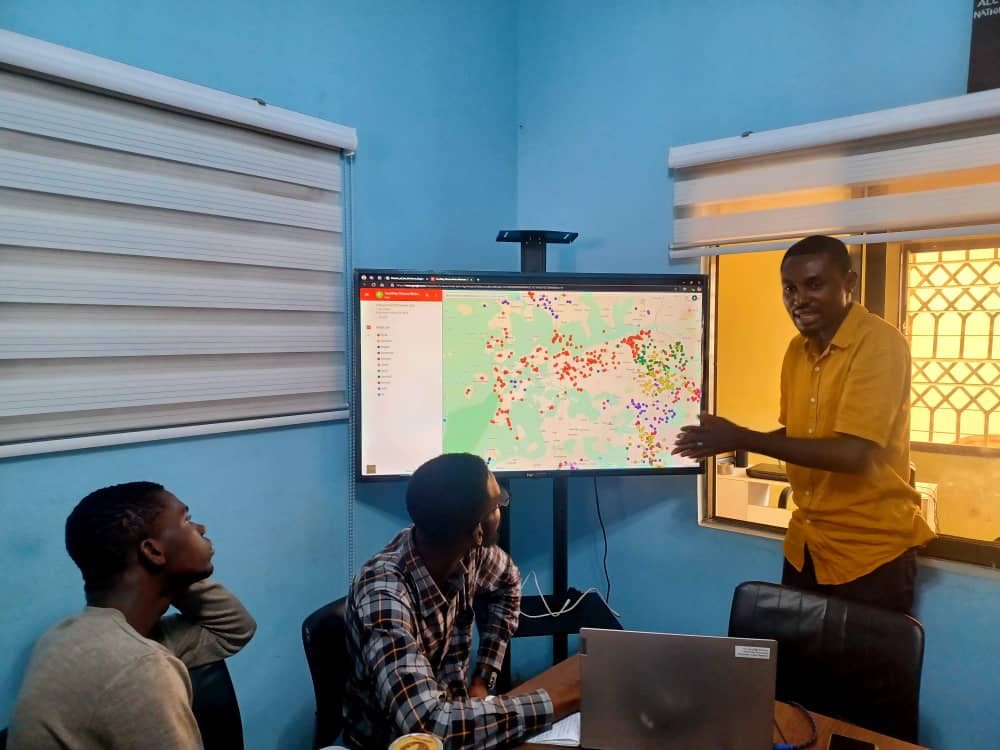
The team in Ghana, during their all-hands retreat, planning for the work in the North
Each dot on the map represents where the motorcycle missionaries have worked in the communities

Ghanaians are welcoming. And over the last 12 years working hand in hand with team members serving in the North, we have been promoted from strangely dressed Oburoni to “Auntie Beth” and “Uncle Pete”. Our blended family has enjoyed weddings, dance parties, and hard, exhausting work that often continues late into the night. It is a joy to return to broad smiles, open hearts, and dancing feet.

Field Supplies and Equipment

While our trips to Ghana are roughly two weeks long, Beth and I work on remote support and preparation year-round. We are the quartermasters. Every few years equipment in the field must be updated, and this year is one of those super cycles. Beth and I have been prepping new gear and updating the digital libraries of microSD cards, USB sticks, and mobile phones.

From small rural churches in Virginia and retired grandmas in Batavia to school kids collecting nickels and dimes, partners in the work have provided the resources to buy the equipment used each day in Ghana. In his letter to the church in Ephesus, the Apostle Paul describes those who “equip the saints for the work of ministry”. We are thankful for the broad and diverse team that makes it possible for everything from armored motorcycle jackets and helmets to water filters and microSD cards to equip the workers, “the saints”. Over the last 12 years, more than 31,000 solar or microSD versions of BiblePlus in 13 languages have been donated. Thank you!
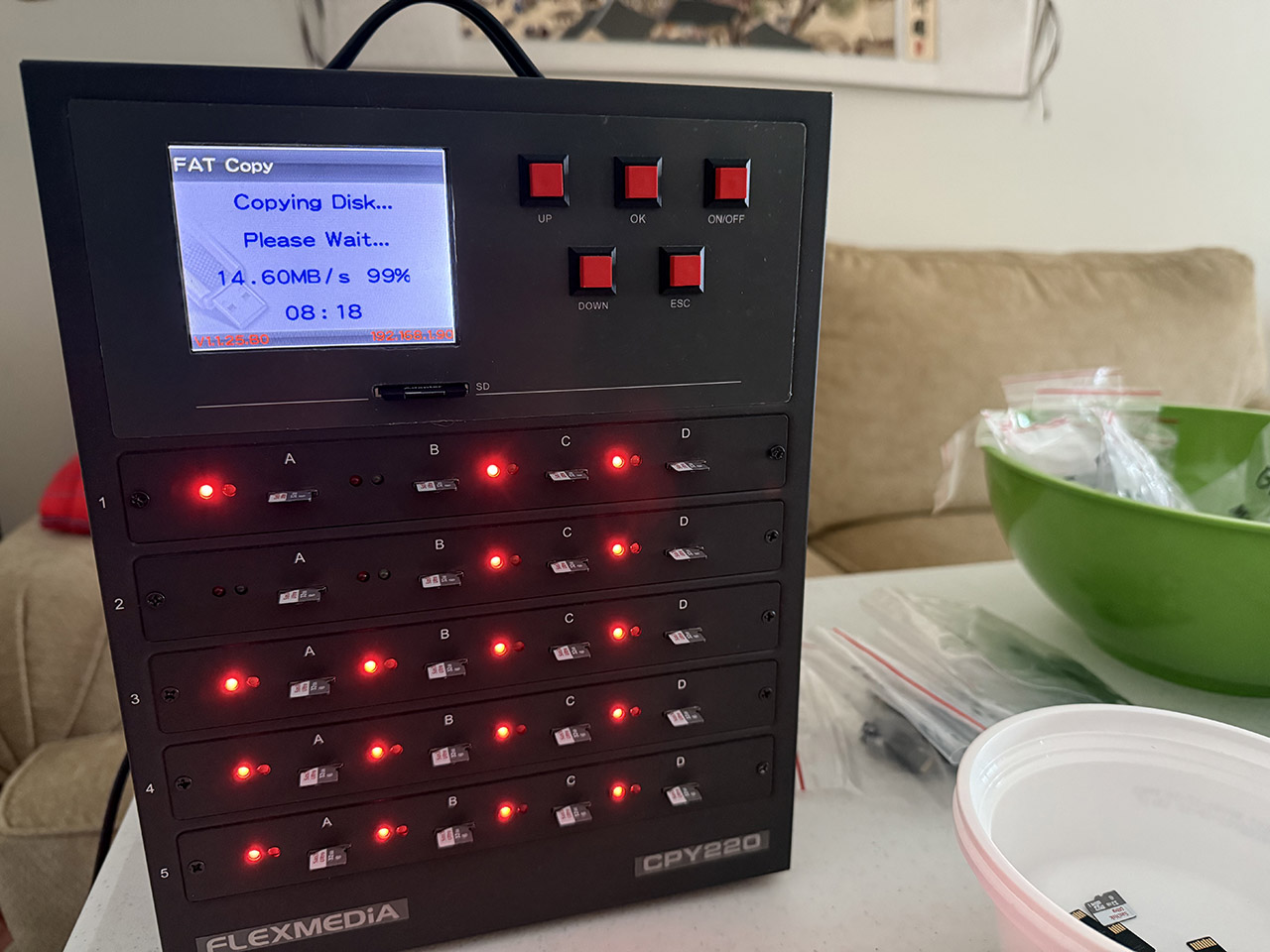
Beth duplicates microSD cards for cell phones.
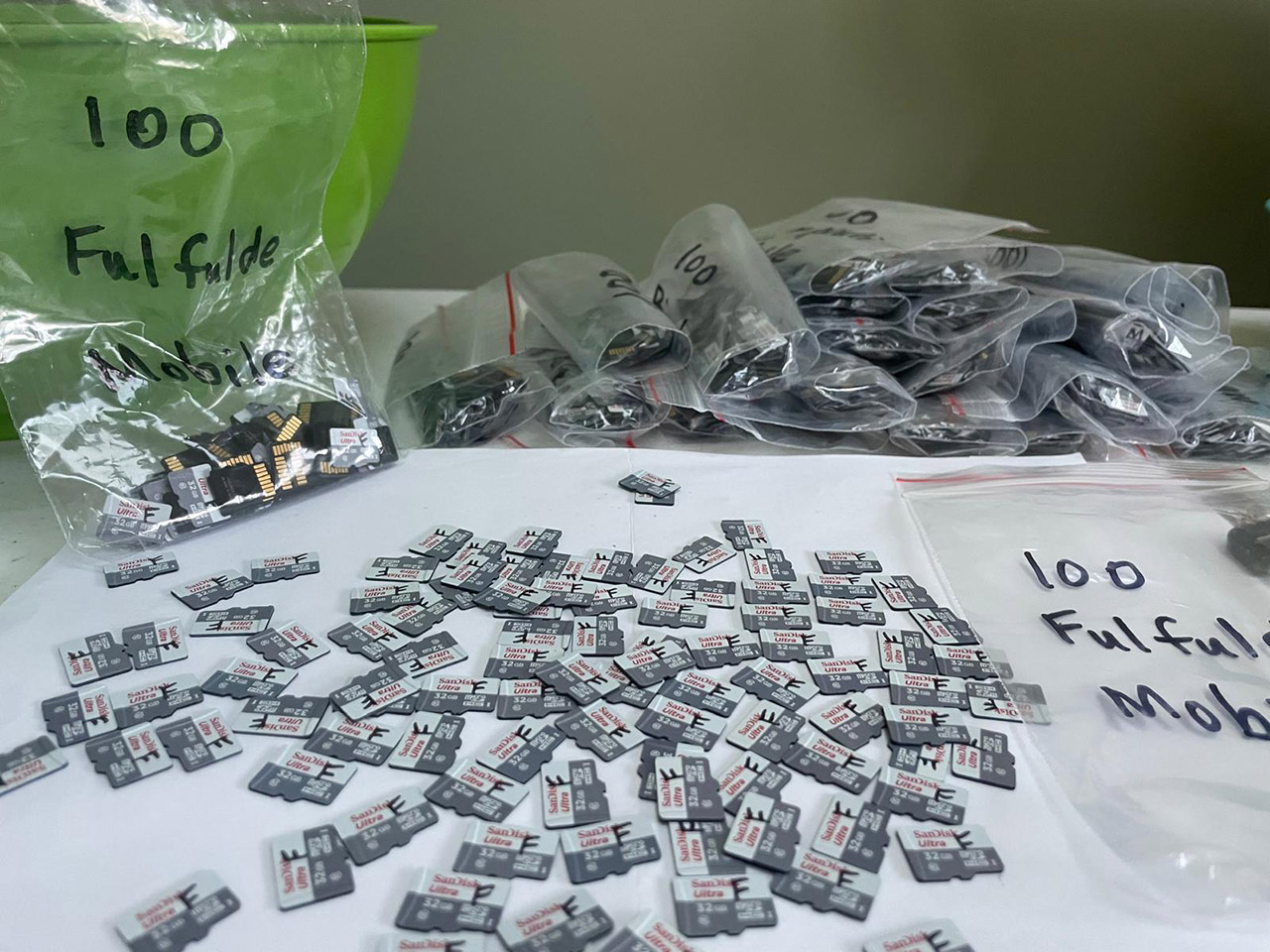
Beth carefully marks each microSD card, so it can be taken North, to the villages for distribution.
3000 BiblePlus cards across the 13 languages we have recorded so far.
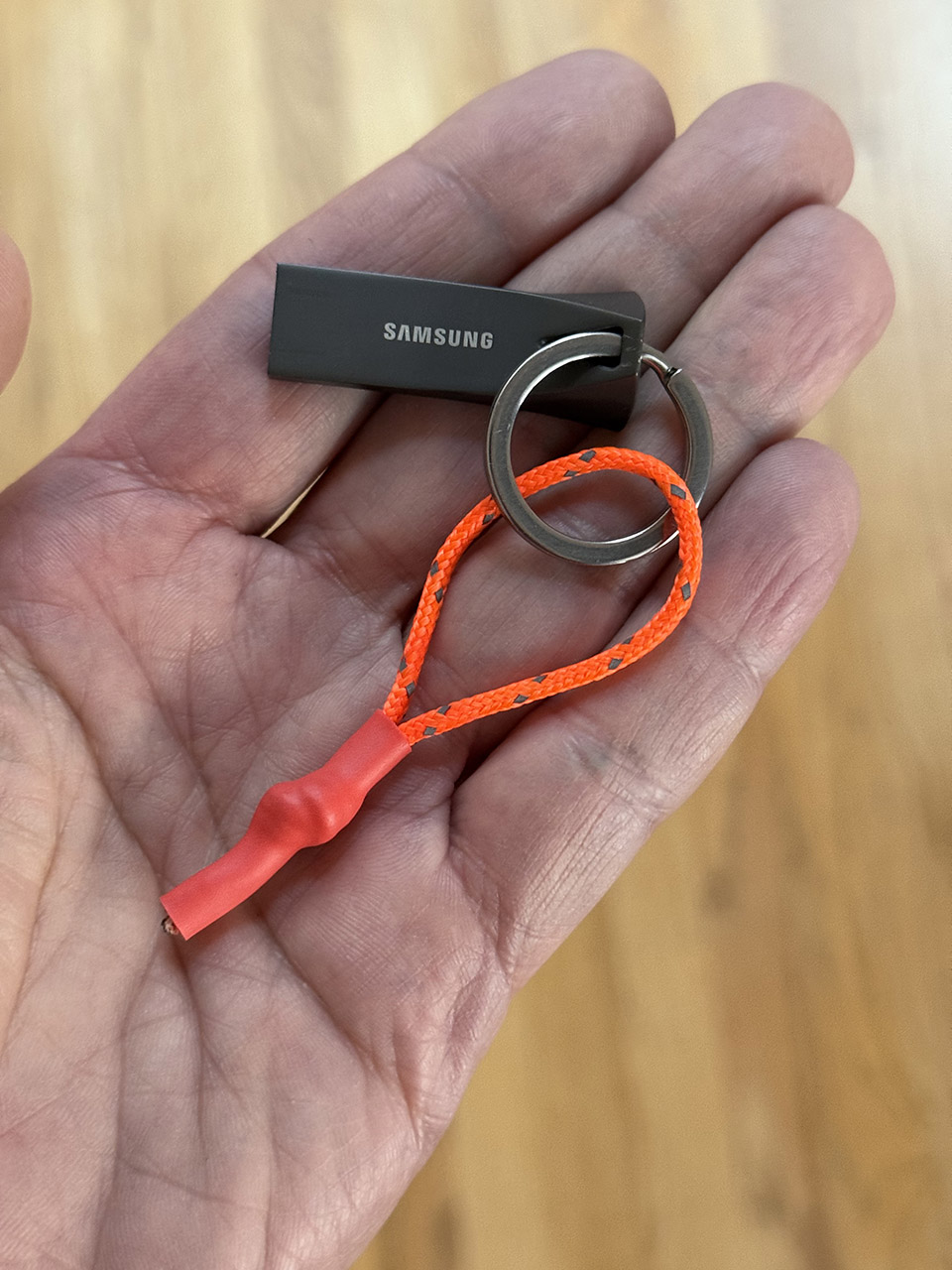
The new USB stick with all of the videos.
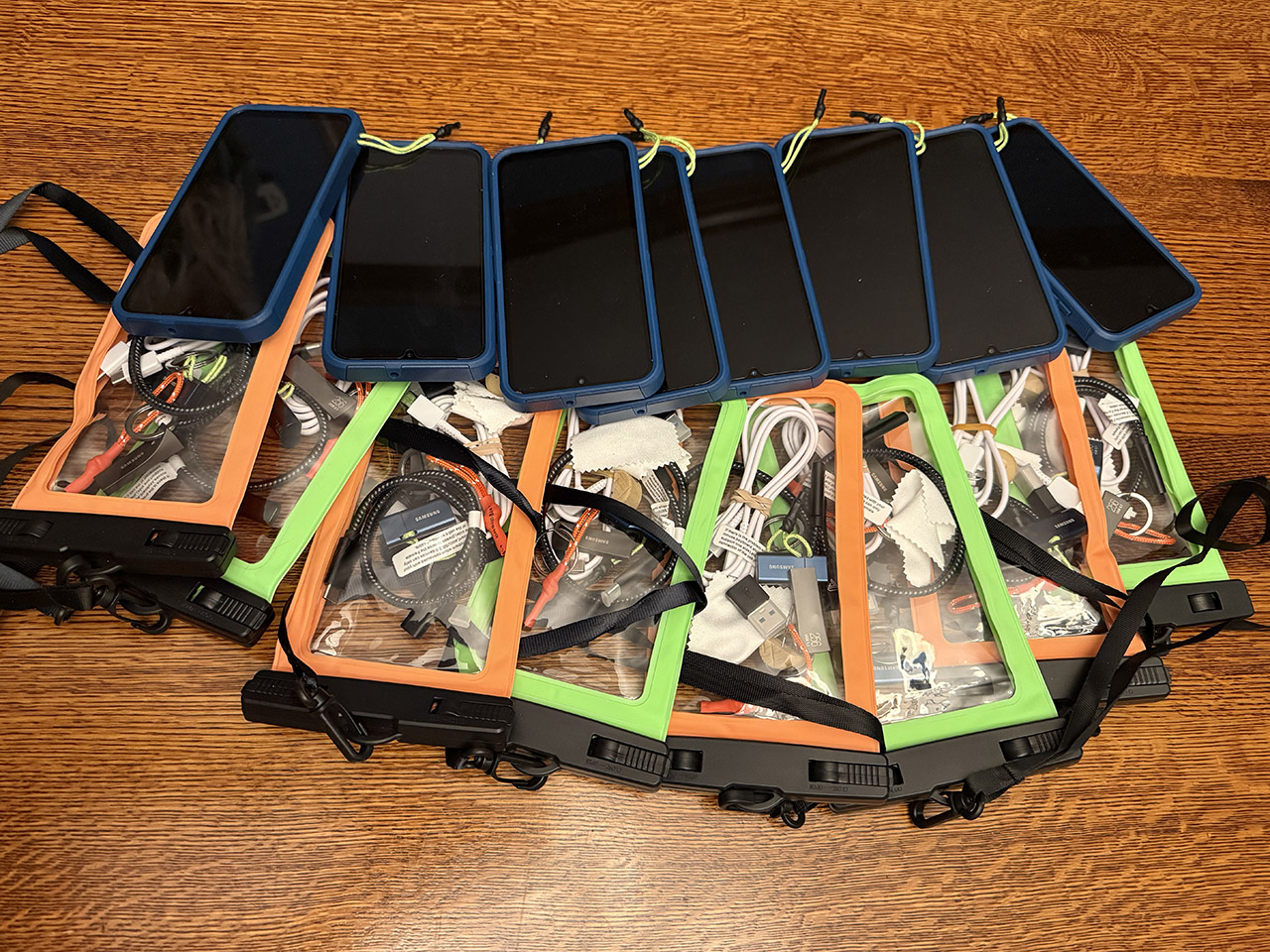
Eight new mobile phones, which are used to take photos, record GPS locations, and share BiblePlus files.
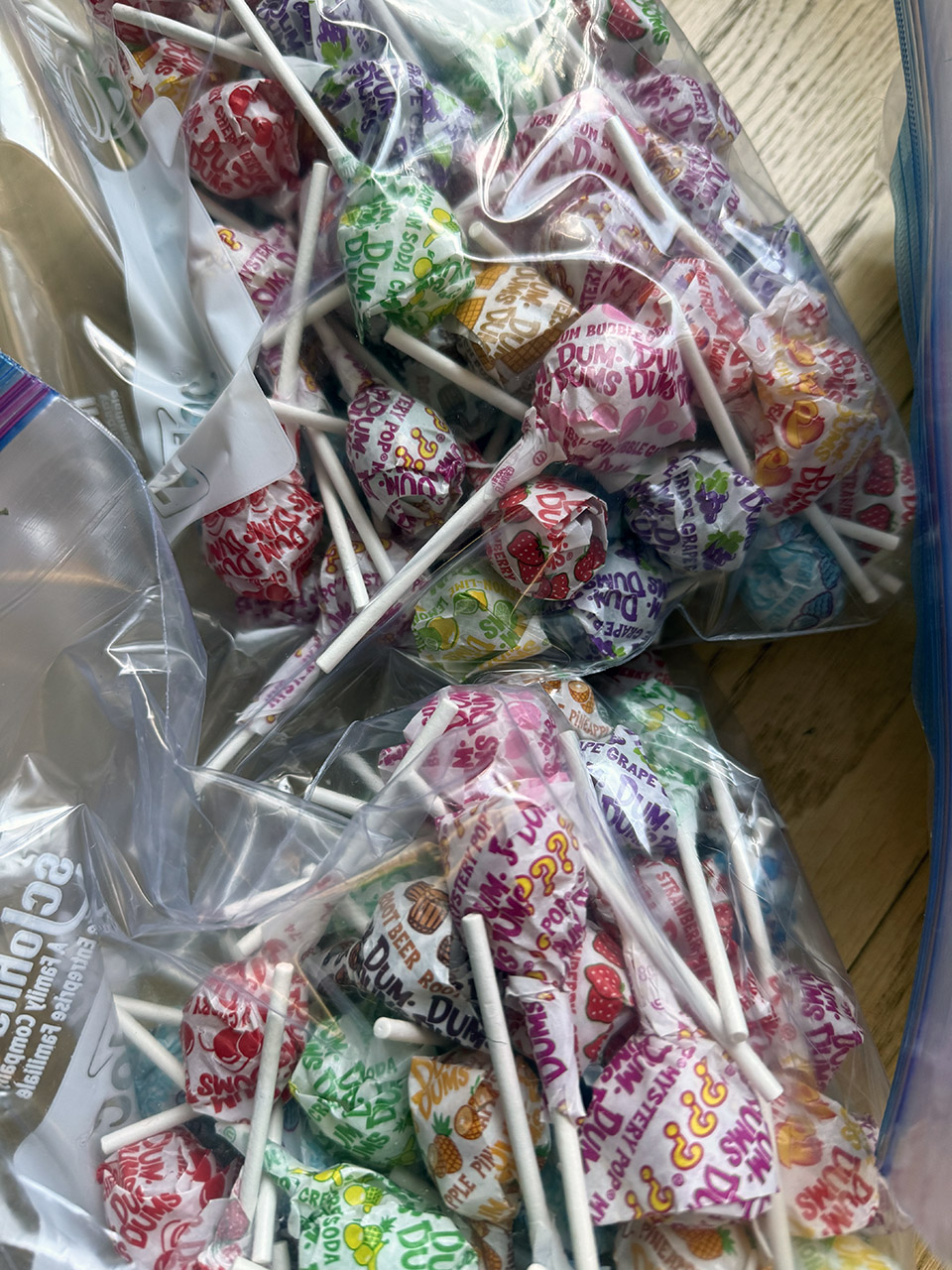
The absolutely essential dum-dums — always an instant success.
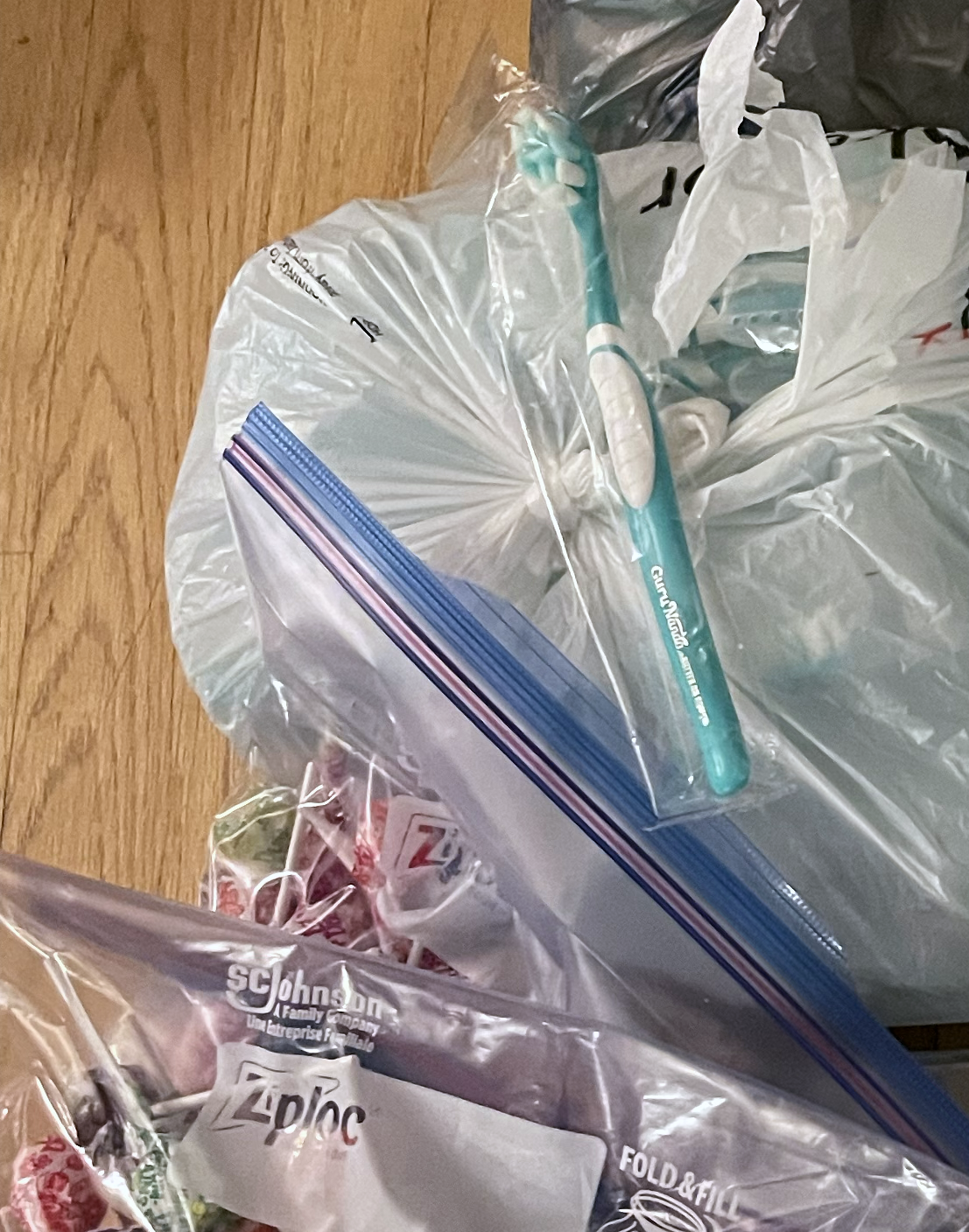
A load of dental supplies, donated by someone from our dentist’s office, will be provided to the medical outreach teams.

Other Preparation

The plans for this trip are still evolving. A few days ago Ray decided we would take two trucks up the eastern corridor toward Nkwanta. He will drive one, and I will drive the other. Ray will come back a few days early, with Marianne, and C&C will work with Beth and I to wrap up the work. But experienced readers will remember that plans are more like crayon doodles here in Ghana — situations change.

We are “planning” for a potential hike to a very remote community. We would follow a jungle path up a small mountain for three hours to a community without electricity. We don’t mind a little camping.
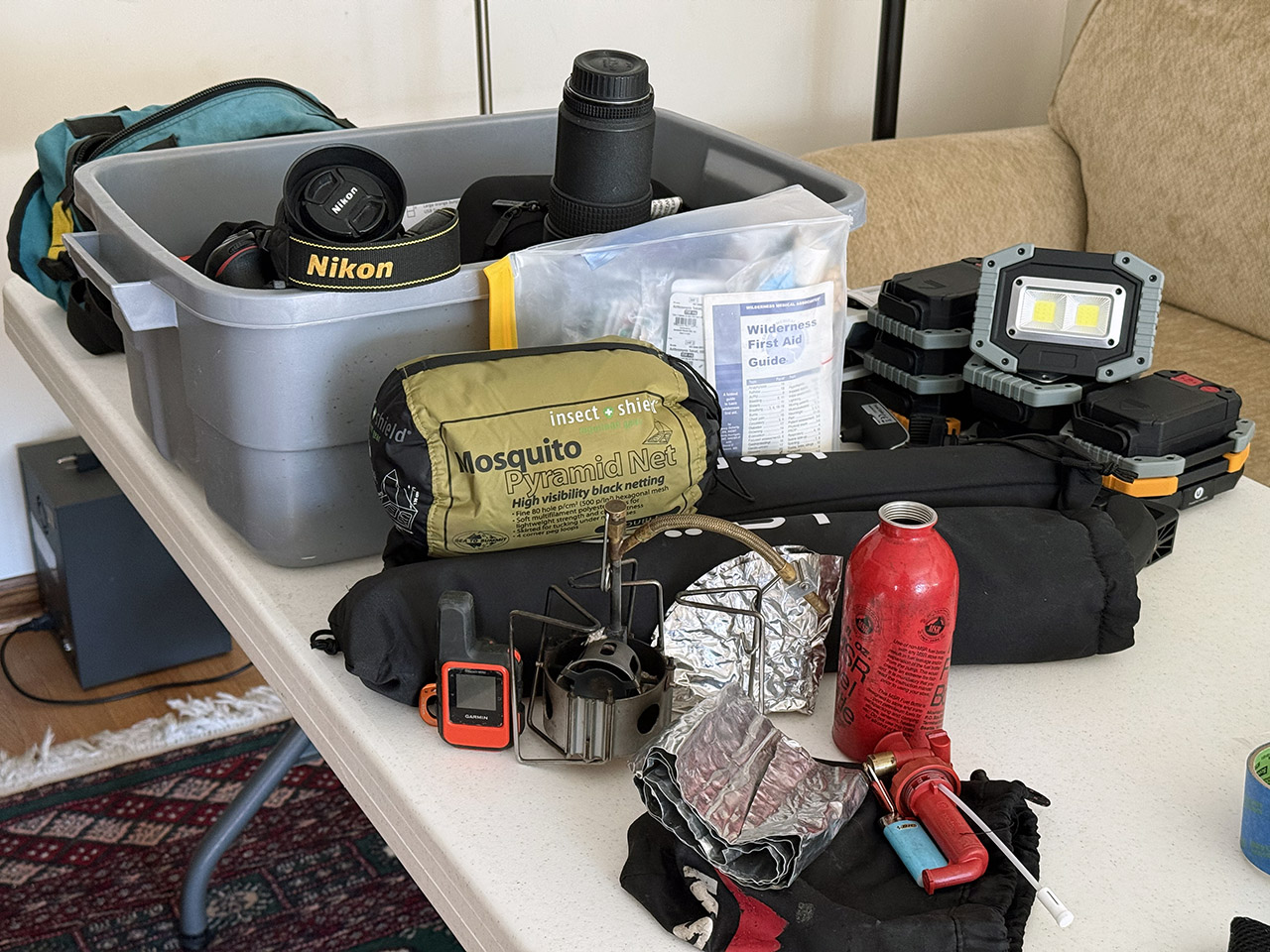
Some of the additional supplies we are bringing, should we hike up to the mountain village for a night or two

Fun

Ticking items off from a ToDo or packing list with an exaggerated flourish of the pen is rewarding. Yet, it is lacking creative, messy, fun. I’m just not so good at methodical, planned, predictable progress without a break for imagining, creating, and inventing. Maybe that’s why when plans go awry, I can enjoy both the anxiety and the problem solving.

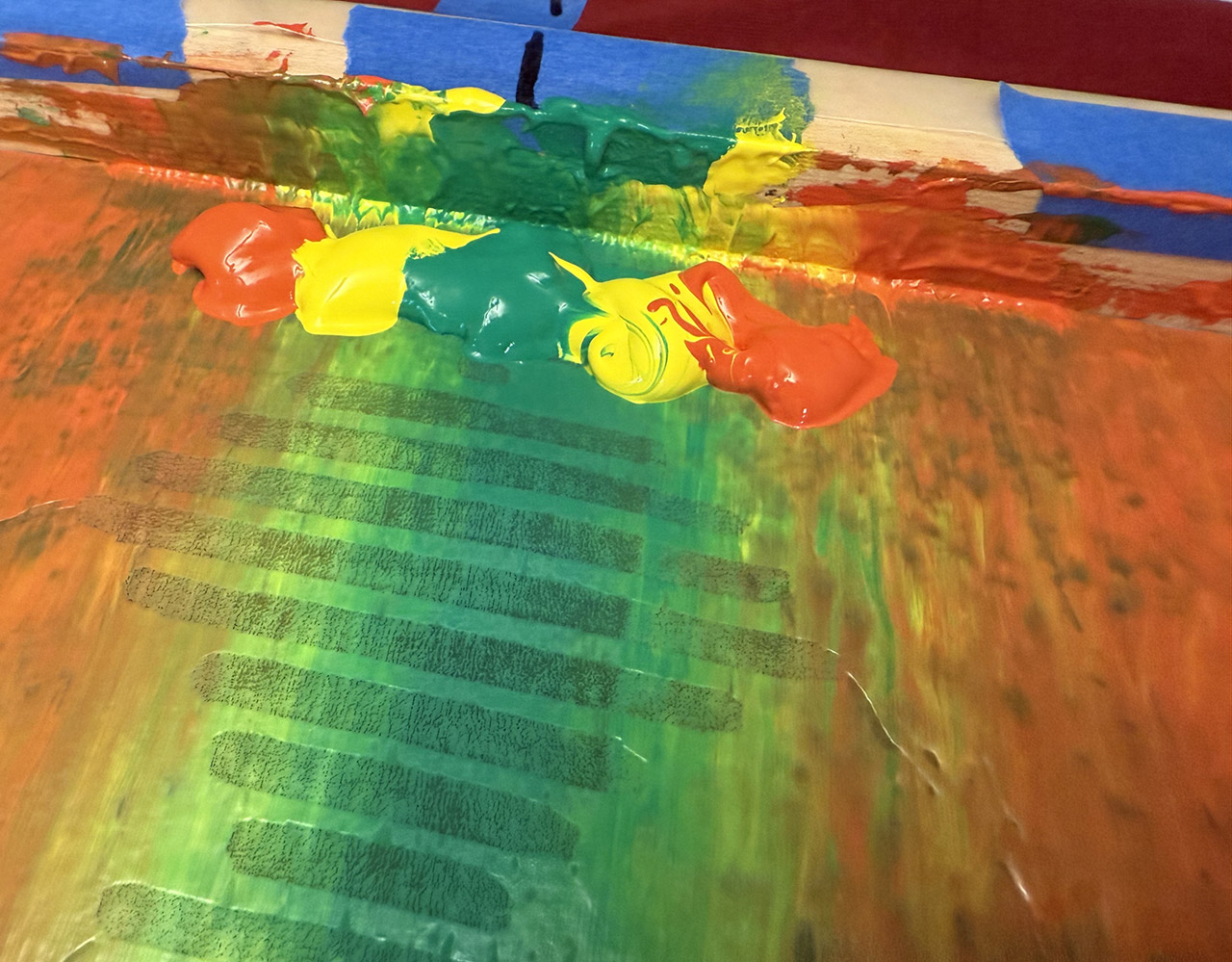
So… last night, before we finished all the packing, I roped Beth into helping me with an art project. Several years ago, our son Paul taught us how to do wax paper screen prints. For the last couple of weeks, we have been imagining a small project. I finished up at 1am last night, and this morning Beth and I ran the project through the washer and dryer, finishing about 45 minutes before LVH (thank you!) took us to the airport. No matter how long your packing list, make room for creativity and fun. When we get to Ghana, we will show you how they turned out.

Always Learning

In the James Bond movies, Q is short for Quartermaster. Q provides pens that explode and watches that shoot lasers. As a kid, I may have imagined myself racing speed boats up the Amazon or parachuting from a bridge to intercept a speeding train. But the truth is I’m more like a shorts-wearing, wilderness-loving, version of Q — but without lasers. Beth and are preparing the tech to advance the work in Ghana. Now, it is time to transition from planning to doing.

Quick Status Update: Our flight is delayed, and we are waiting for a plane repair. We hope the next blog post is from Ghana.
8pm Curfew

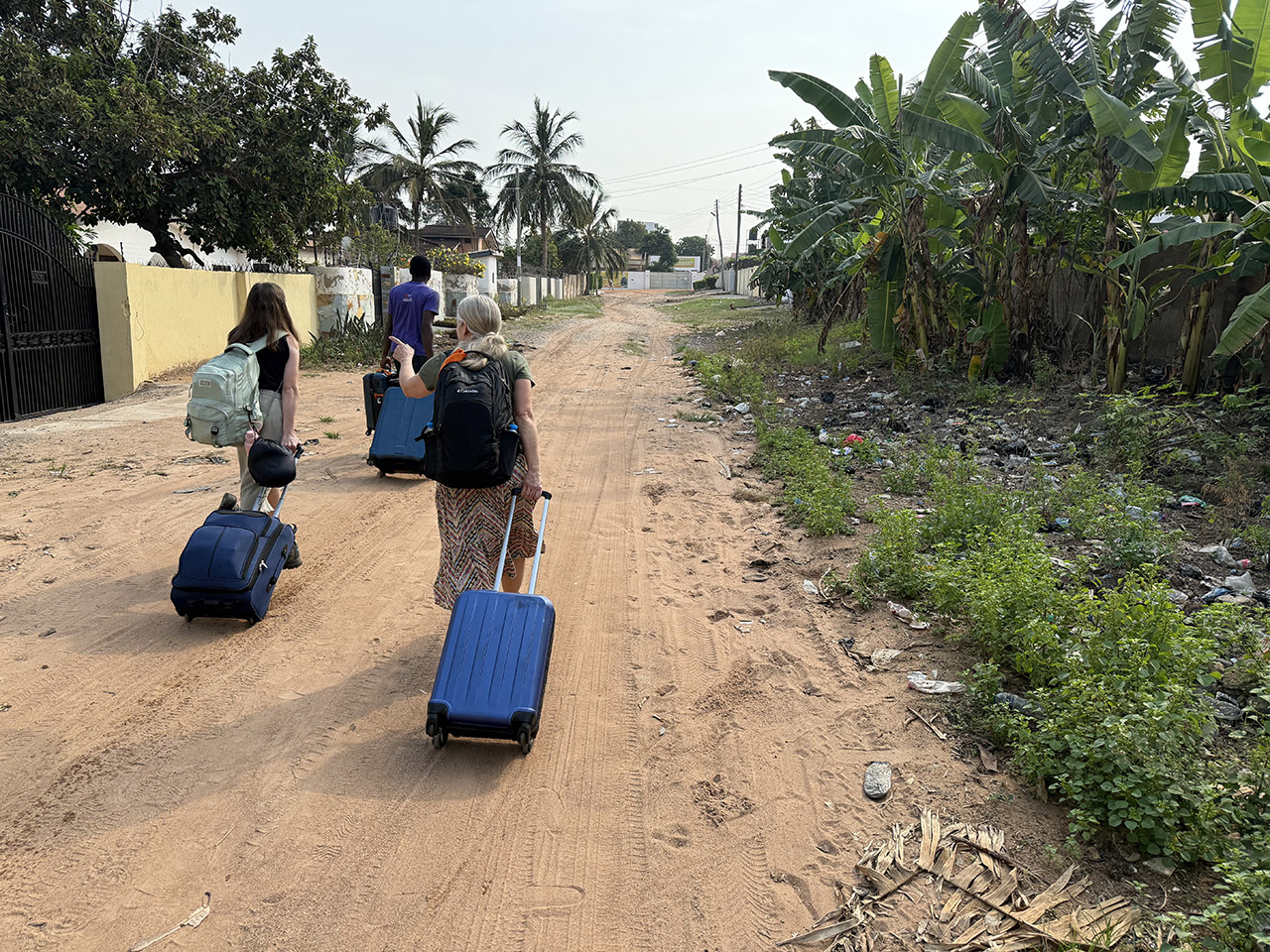
We arrived in Ghana 17 hours late, at 1:00am.  In Washington DC, our plane was “overnighted” with a mechanical issue.  Our plans were already changing, and the colors and sounds of Ghana were still on a distant continent. Nevertheless, one thing has not changed — the biggest smiles and hugs were waiting for Beth and I as we pushed carts piled high with gear out of the airport and into the warm night air.  Cyrus and Jacob were not discouraged by our arrival time. 

The pickup truck, filled with 50-pound suitcases, was also full of excited chatter as we sped down the traffic-free highway and caught up on events since we were here 9 months ago.  By 2:30am Beth and I were trying to wind down and get to sleep.

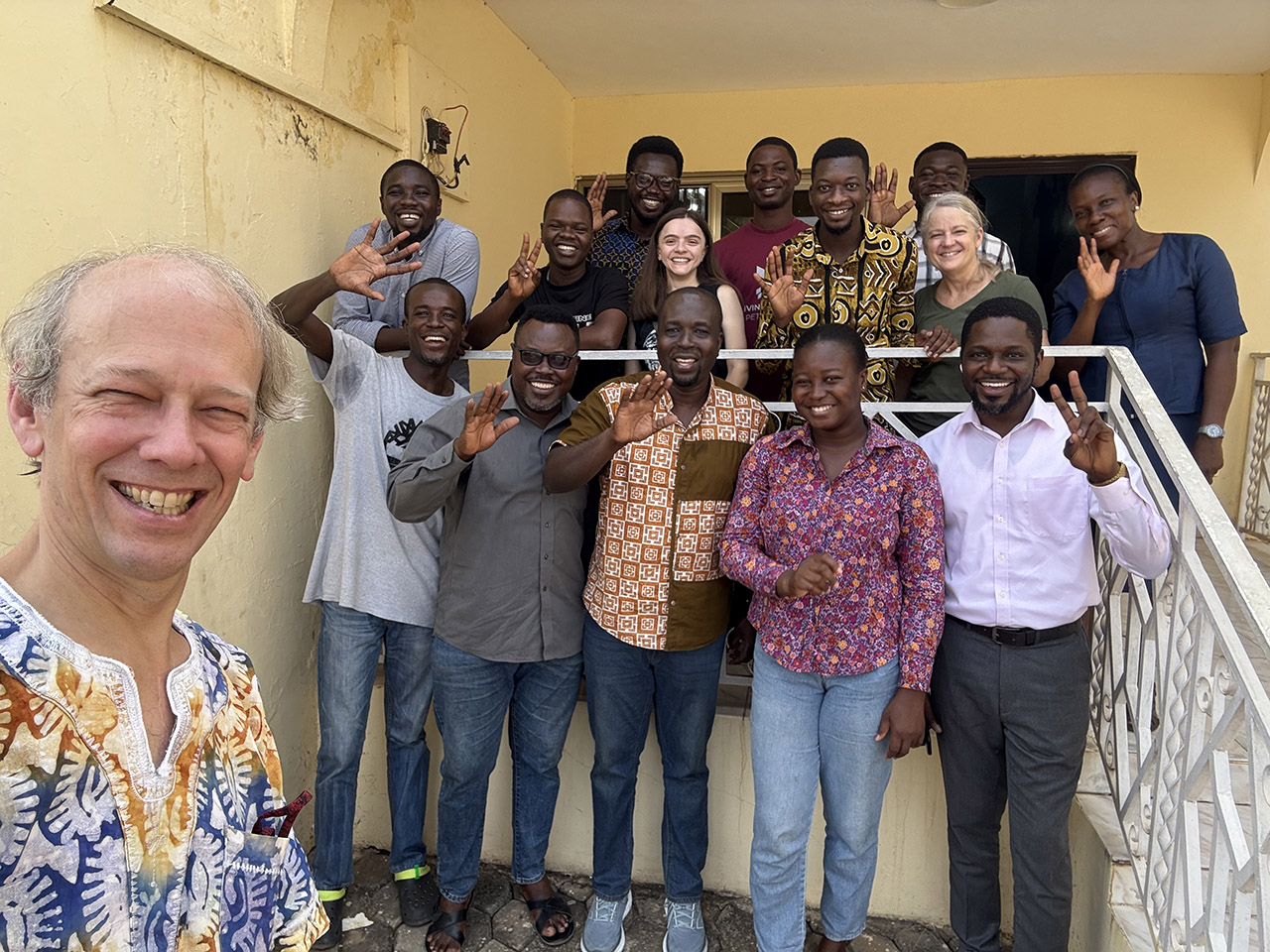
Early the next the morning, we dragged our bags to the Philip Center offices where the staff was beginning to gather.  A joyful reunion, this time in the daylight, echoed between the concrete walls and tile floors.  The laughter was followed by singing; earnest voices were joined by drums and possibly some tears as we thanked God for bringing us all together and prayed for the work to come.

But our time was short.  We needed to quickly begin driving north.  While many times are flexible in Ghana, we needed to be in Nkwanta by 8pm.

The original plan was to drive north together, in two trucks.  But one of the trucks was having some difficulty, and Ray was going to take it to the shop.  Cyrus, Clement, Marianne, and Beth and I hopped in the new truck and started north.  The drive was very smooth and fast in many places, but then non-existent in others.  Ray stayed behind and planned to follow later.

I quickly remembered how to drive in Ghana.  Motos sped by on the left and right, and small three-wheeled yellow-yellows zigged across traffic.  Tro-tros stopped unpredictably, picking up passengers who waved for a ride.  Over the course of the 7-hour drive, we passed through 6 or 7 police checkpoints.  Sometime police looked at us and just waved us through.  Other times, we were stopped. “Please, where are you coming from?” the officer would ask, followed quickly by “Where are you going?”.  As we neared Nkwanta, the checkpoints became more thorough.  A large man with an automatic rifle asked us what was in the back of the truck.  “Our luggage” I replied.  He walked to the back of the truck and opened the back.  On the other side of the road I noticed dusty red bags strapped to racks on motorbikes, being poked and prodded by policeman’s batons.  
The police are working hard to restore peace to the Nkwanta area.  The clashes between the Adele and Akyode had paused, but in town, the situation was still tense.  On the main road, many of the shop owners had temporarily shut down.  The city and surrounding farms are split between the two tribes, and lasting reconciliation remains elusive.  
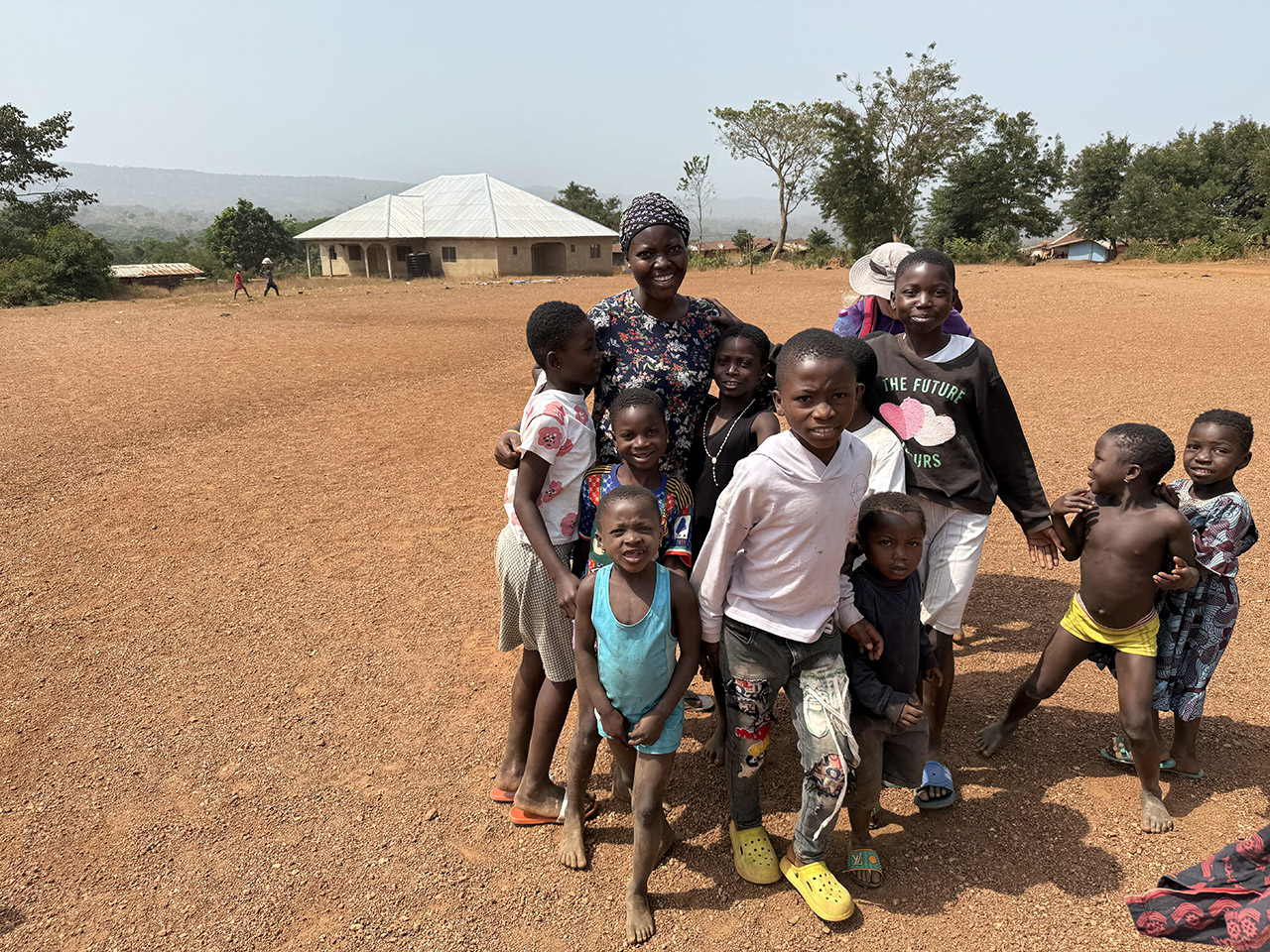
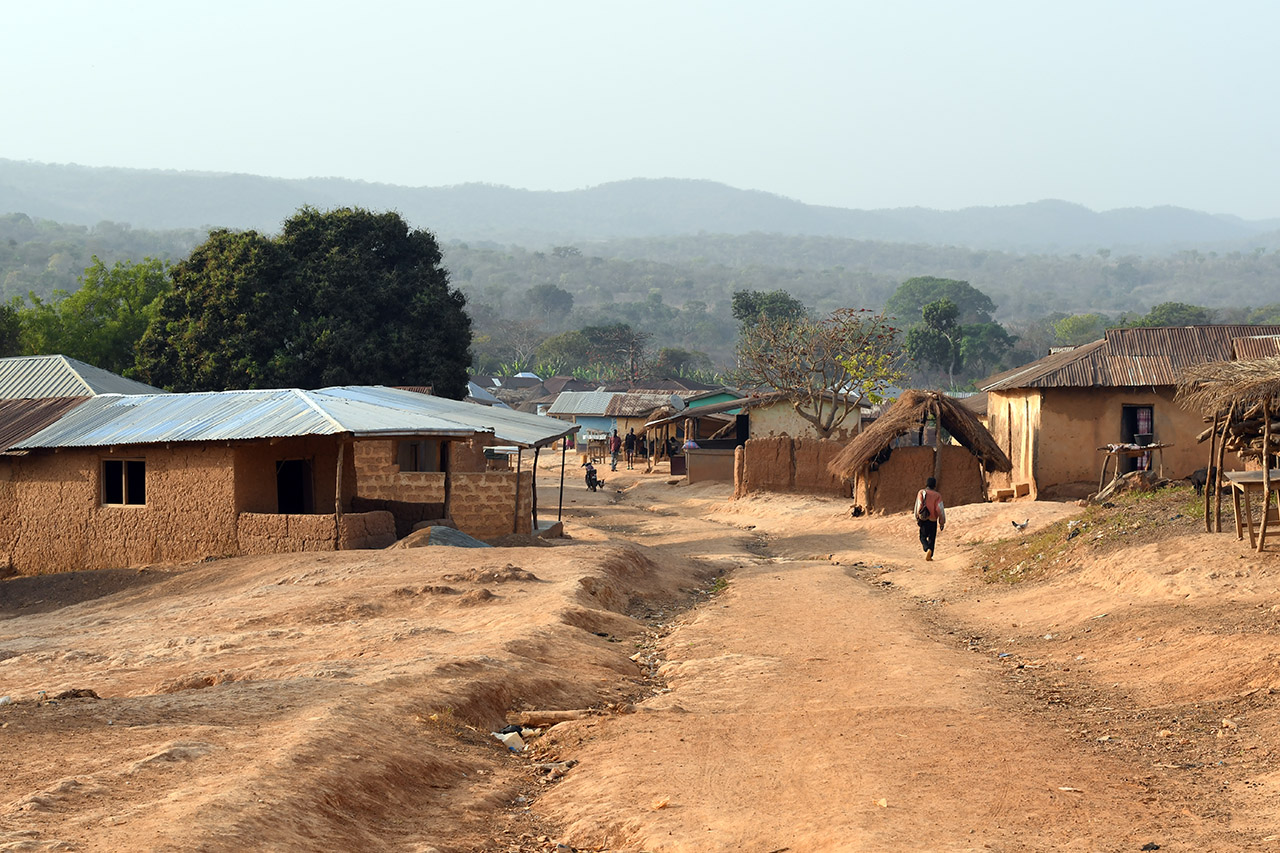
The military has wisely imposed an 8pm to 6am curfew.  We pulled into Nkwanta through a final military checkpoint with soldiers in black balaclavas, and we drove into a quiet town.

We checked into the hotel, parking next to a Police Toyota LandCruiser. Jollof helped restore our fatigue, and we relaxed to discuss our plans for tomorrow and discuss the situation between the Adele and Akyode tribes.  They need peace.  The military could enforce separation, but hearts only change with forgiveness.  I was reminded of the Matt Maher song with the lyrics “Love moves at the speed of forgiveness, one heart at a time”.  Reconciliation and forgiveness are not the same as a pause in the conflict.  Curfews and fear can enforce a cessation of conflict, but forgiveness is the only path to peace. 

By 7:15, we were beginning to become concerned about Ray.  He would not be allowed into the city after the curfew.  But before long, he was smiling and sitting down at our dinner table to receive his jollof and help us make our way through our plans.  By 8:00pm, the streets had become deserted; we welcomed the quiet — no lorries, no tooting yellow-yellows.  

We wrapped up the evening by praying for the Adele and Akyode tribes.  Maybe you would like to join us. 

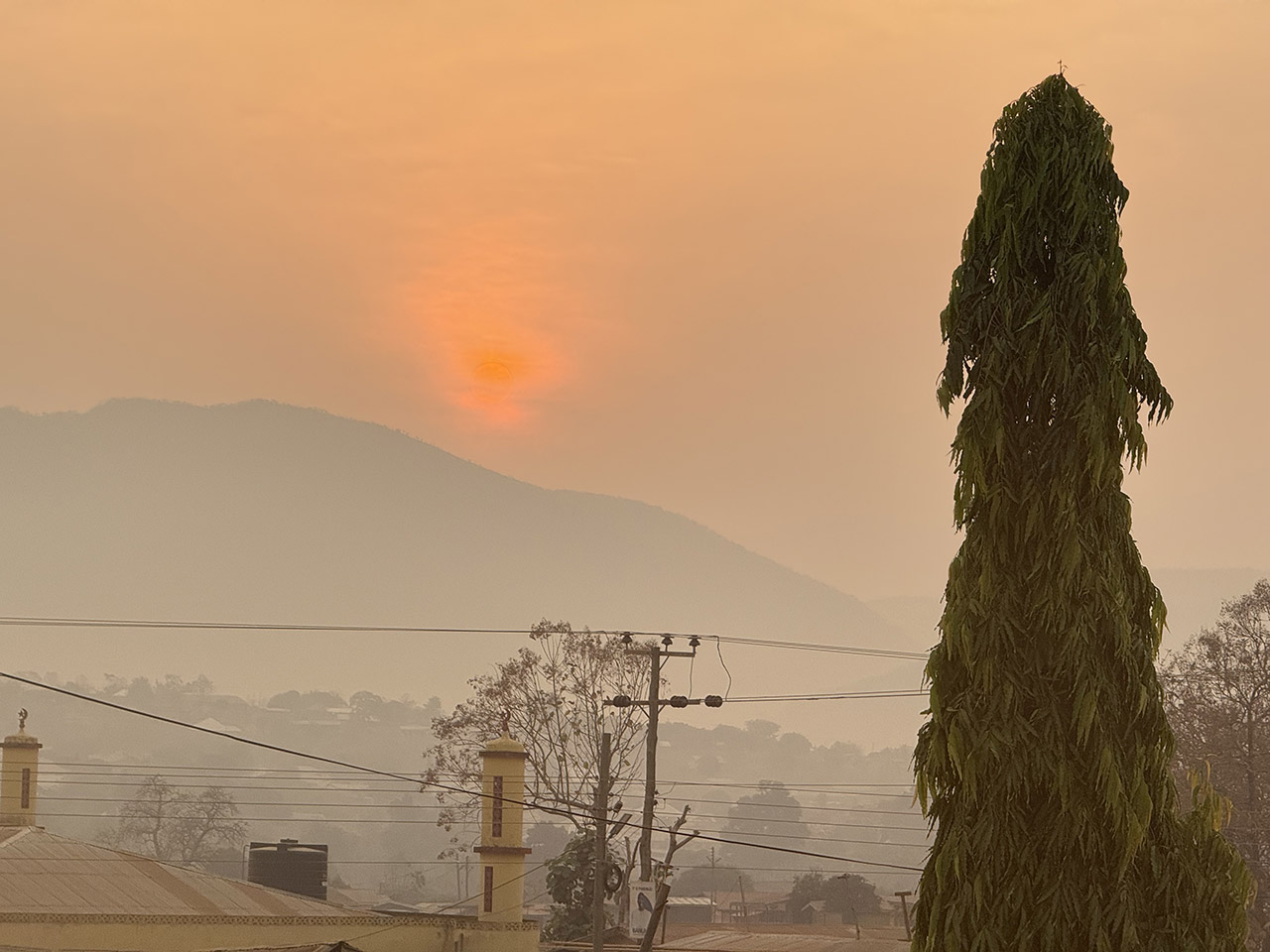
At 5:30am, I woke up quietly and made some instant coffee before configuring the gear we would use to record.  At 6:00am, I heard my first car horn in the distance.  I also realized that the roosters seemed to be obeying the curfew too.  Nice!  I peered out the window to see the sun rising over the mountains. Psalm 121 is a perfect verse for today.

While heading to breakfast, I saw a large, muscular man, maybe slightly taller than me.  He wore a smartly decorated uniform, with white braids hanging from his broad and  perfectly aligned shoulders.  I approached and thanked him for his work.  We chatted briefly.  Remembering the LandCruiser I had seen in the hotel parking lot yesterday, I shared that I used to have the same vehicle that he was driving, and they are rugged and nice.  He returned a puzzled gaze, saying, “I’m driving the armored vehicle”.  I laughed and explained the mix-up.  He smiled, and I went to breakfast.  It will be a great day.

Submission, Respect, and Singing

Long busy days.  The brevity of my text below will be compensated with plenty of photos and some dancing videos.  An important note:  Tomorrow morning we hike several hours up to a mountain village.  The top of the mountain has no electricity, no mobile phone network, and no other services.  Of course we are used to camping, so it won’t be a problem, but we will be offline for 2 nights, returning to Nkwanta town by Wednesday afternoon (in Ghana).  I have my Garmin InReach should we need to send a message, so don’t worry about us. We will share photos when we return.

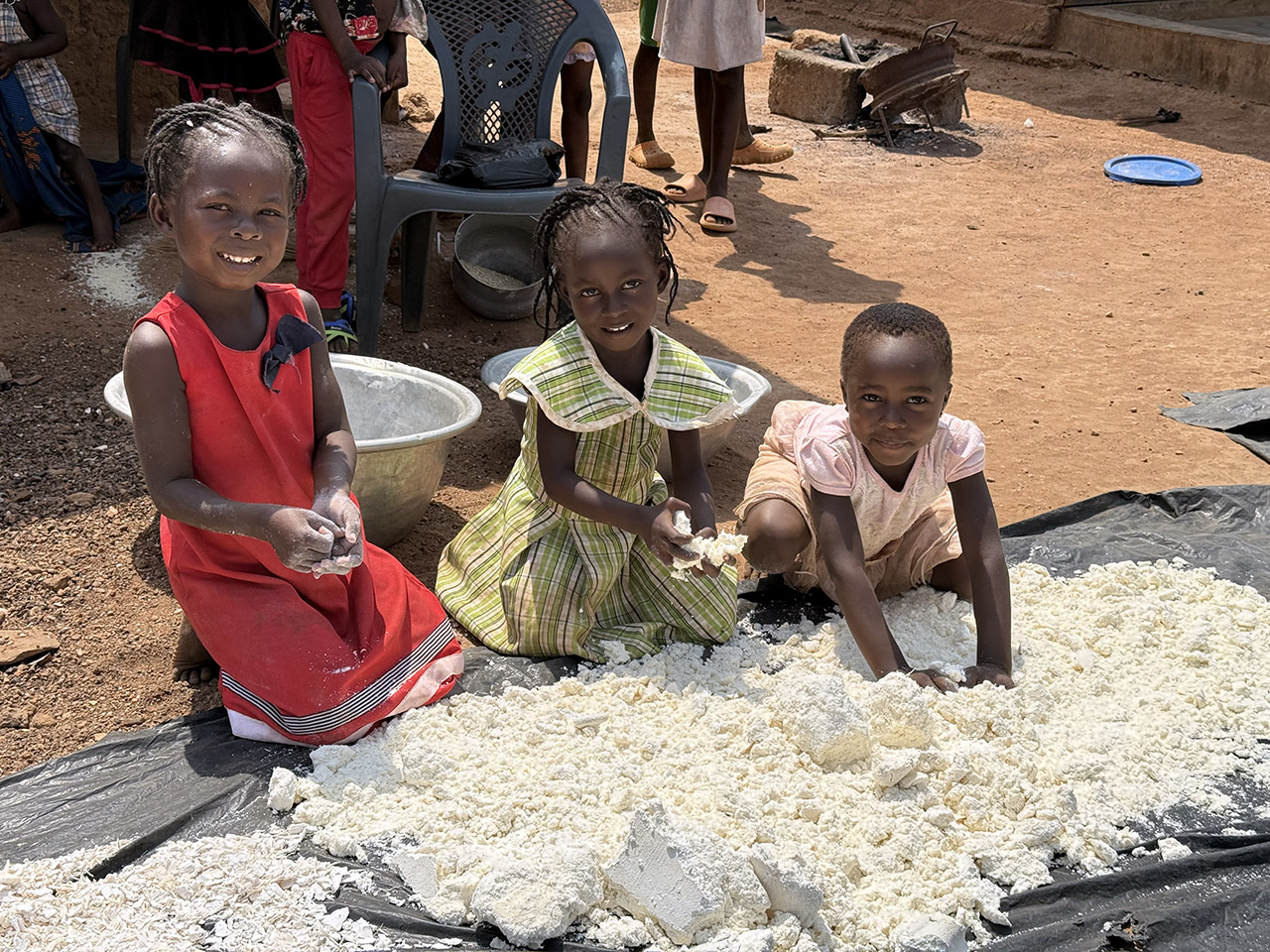
Children spreading out the cassava in the sun, preparing it for final drying before being toasted
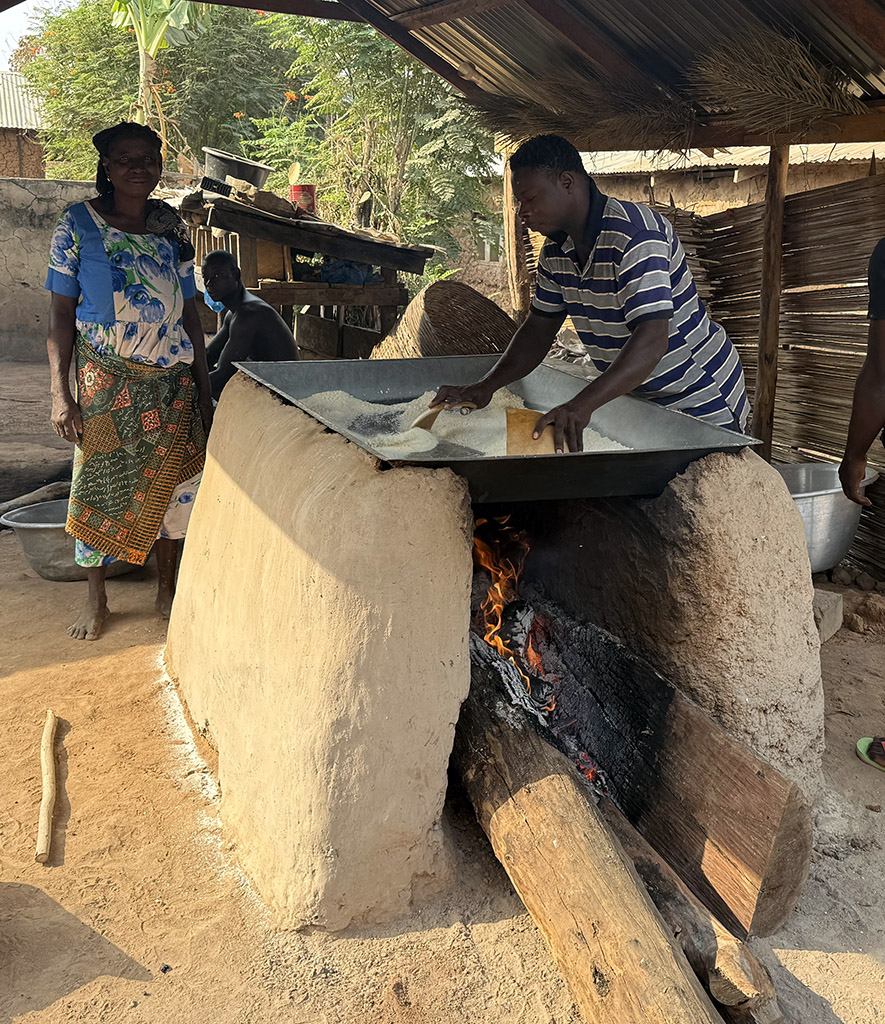
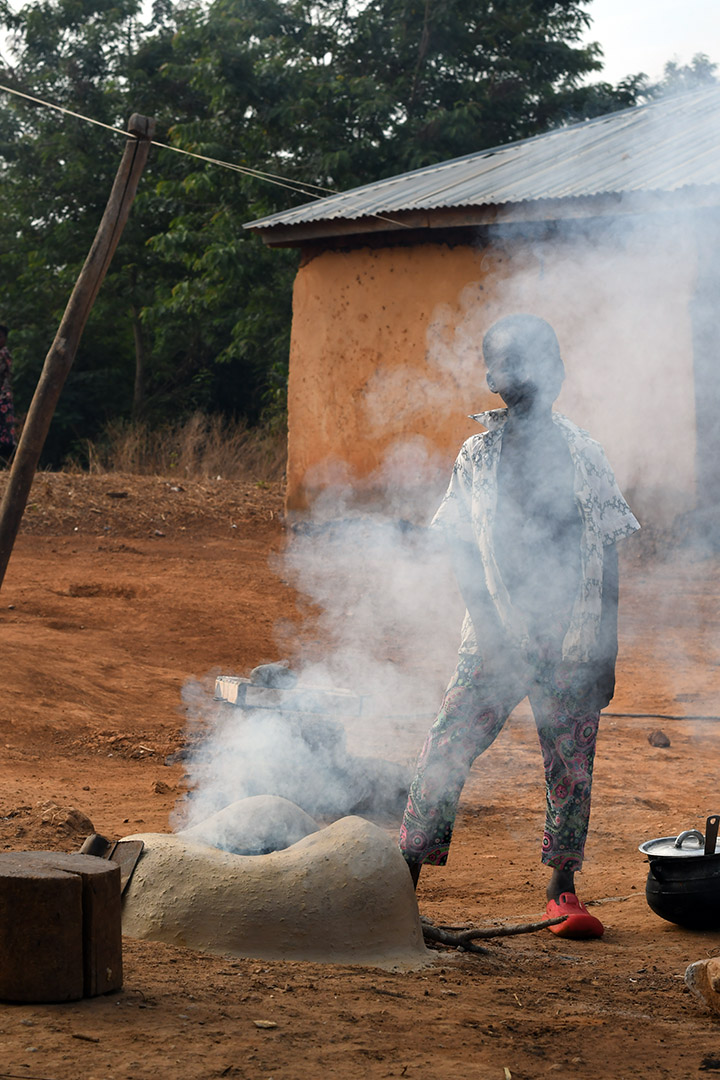
Toasting the small cassava bits before filling bags for the market.

Submission.  In America, it is associated with defeat — being unable to “stand your ground”.  Being “in submission” just irks us.  We have our rights! 

However, in many cultures that have deeply rooted honor and respect traditions, submission goes hand-in-hand with respect.  So here in Ghana, we always begin our work by submitting to the authority of the village chief.  Here in Nkwanta, where two tribes have suffered deadly clashes, it is especially important for us to respectfully approach the chief and request permission.  We will submit to his will.  If he forbids our work, we will turn around and leave – a sign of respect for his authority.  

Submission and respect are part of the spoken language system, and even influence the arrangements of our chairs and several of the scripted movements we make.

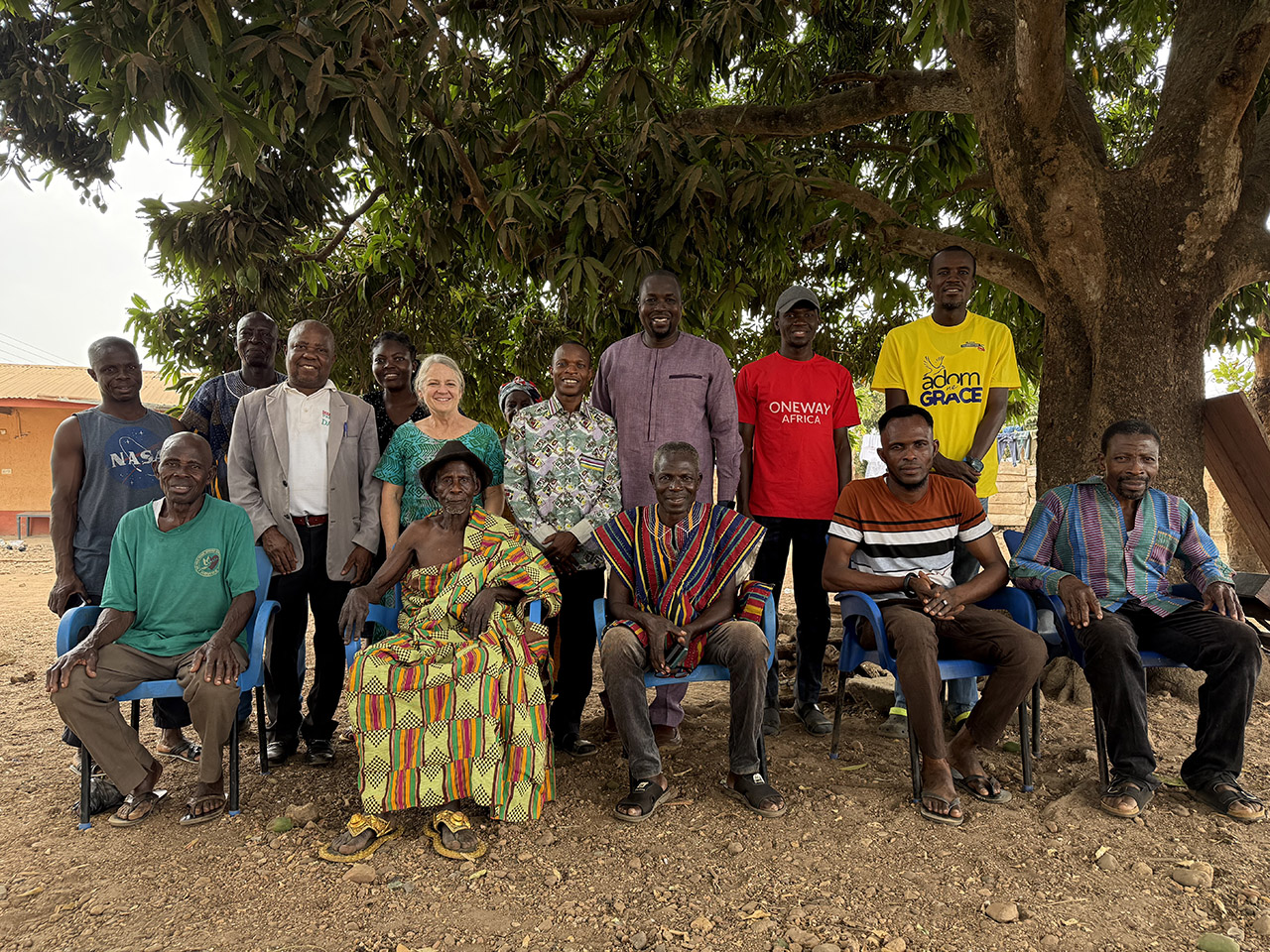
The chief is in the middle, with the red and blue traditional shirt.

Some of the chiefs are light hearted and match our smiles.  Others are stoic, flanked by elders that manage introductions.  

Before approaching the chief, our host pastor instructed us on the protocol.  There was a scripted reply that we were to all repeat several times in unison.  Men and women had different works.  While we didn’t need to kneel, part of the exchange required we leave our seats, squat low to the ground, and say either “eeeeeaaaa” (women), or “Yoawwwww” (men).  After three or four of the scripted exchanges the pastor explained to the chief that “we come in peace”.  The Tribal leadership then asked if we would like water. 

One of the best smiles ever from a chief conducting official business

That step, the hospitality to ask if we needed water, was critical.  In one of our meetings, we dove straight into the details of our visit before we were interrupted by the local pastors and asked to pause.  “Our culture requires we offer you water now” they said.  We politely said we did not need water, and the meeting continued.

After the official business of asking permission was completed satisfactorily, Ray sometimes asked me to pray for the chief and the village. Then we posed for a photo, and thanked the chief one more time before respectfully returning to the trucks.

After submitting to the authority of the chiefs and elders, it was time to record — music, exhortations (preaching), Bible stories and testimonies.

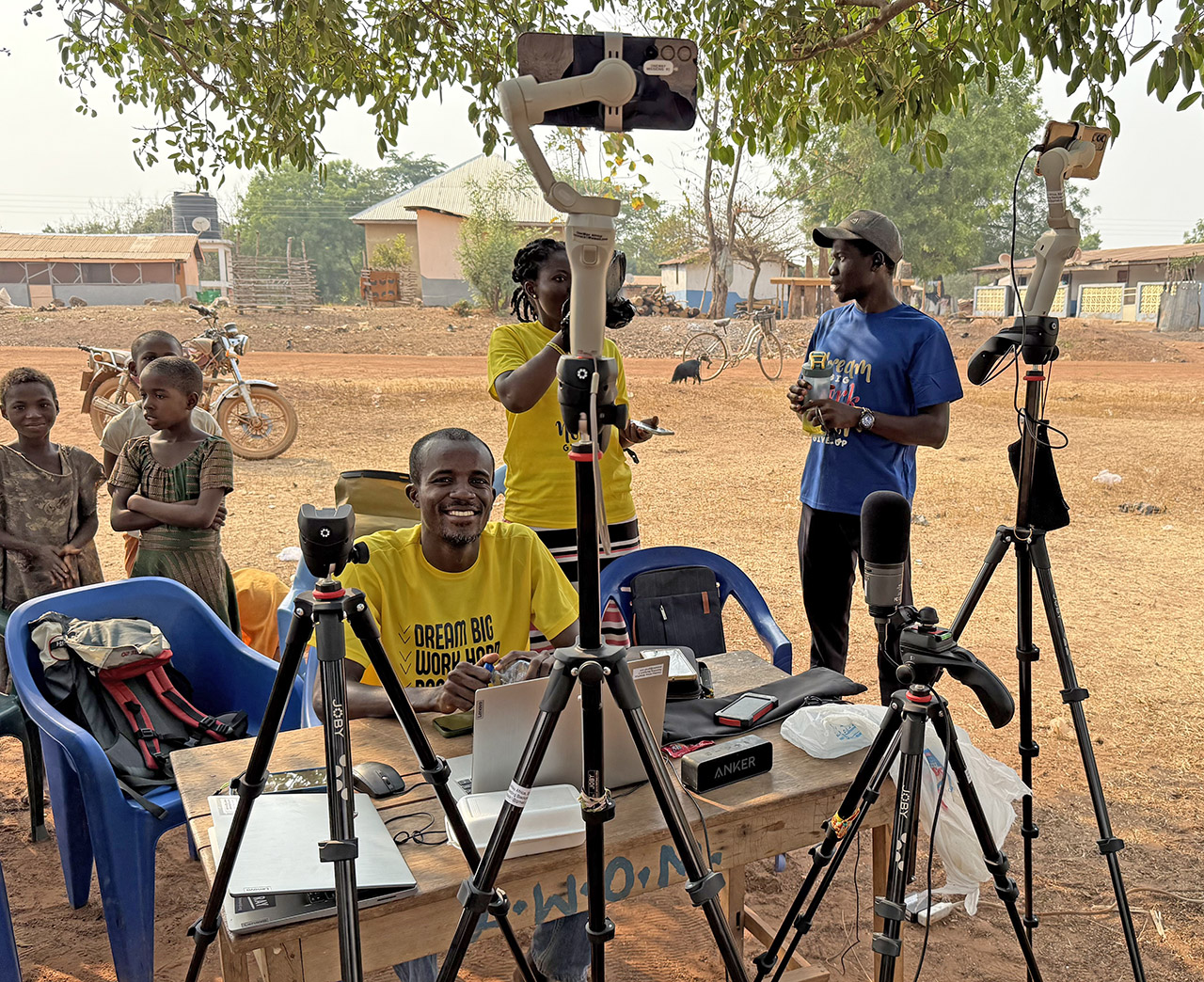
Cyrus and Clement (C&C) did the heavy lifting.

C&C Productions

One of the most critical recordings was from one of the senior pastors, often called “The Chairman”. He had prepared a special message on peace and forgiveness. We prayed again for the tribes involved in the conflict and we recorded his strong and clear voice calling for peace in the land. After we complete the video, it will be shared via WhatsApp among the people.

Cyrus, The Chairman, and Ray

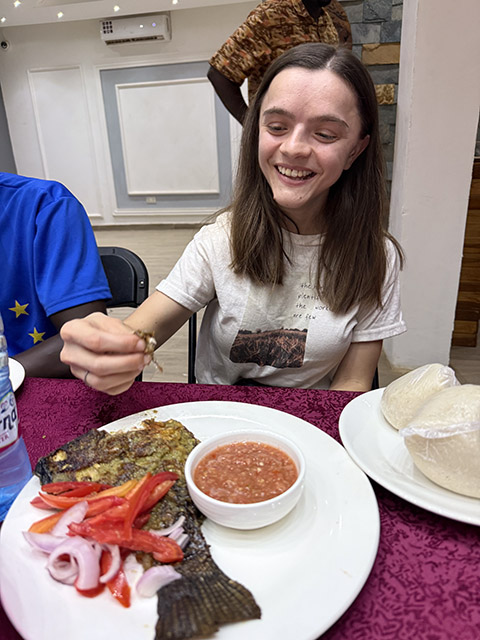
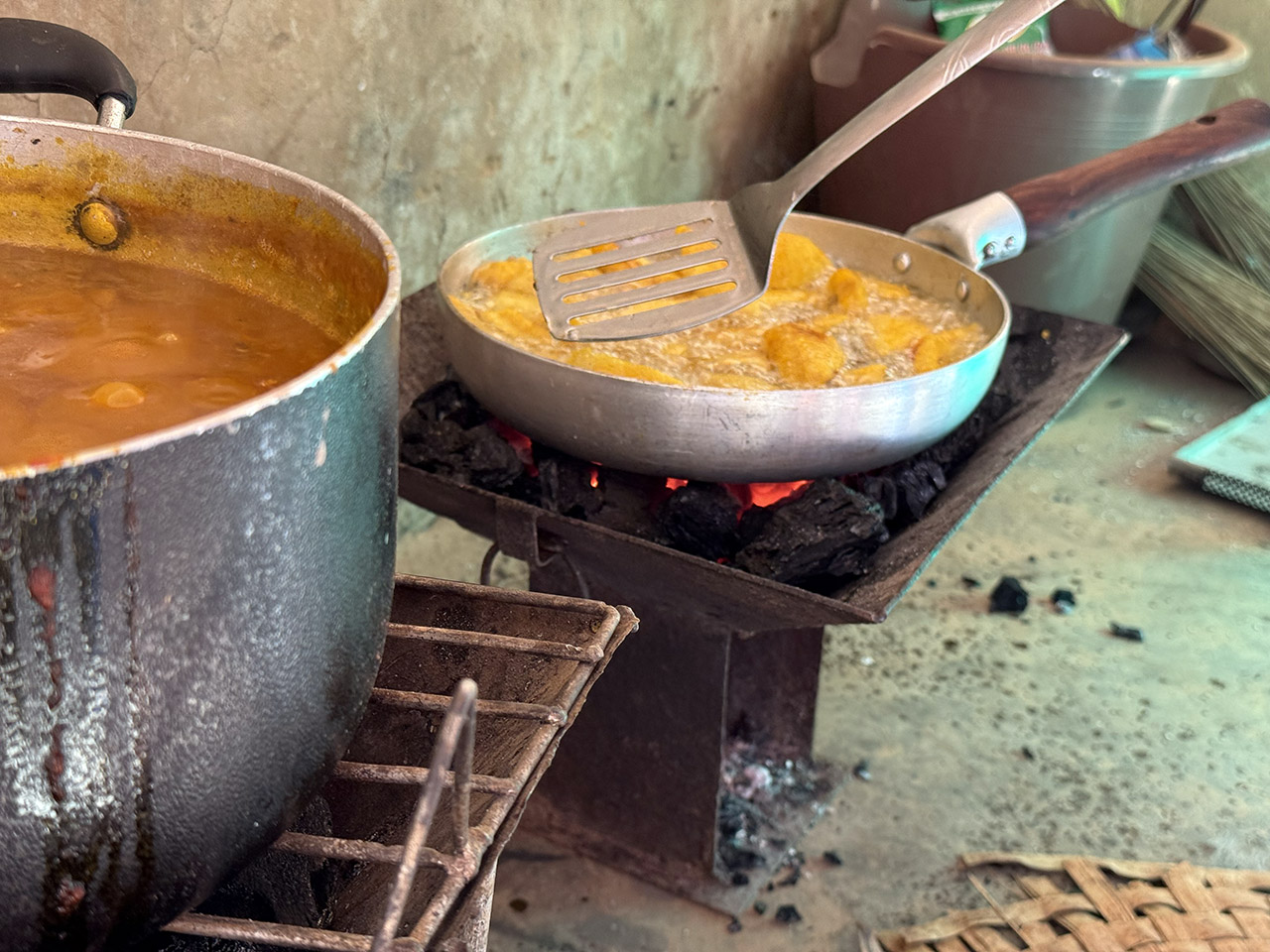
The long day (Saturday) was topped off with fish, banku, yam fries, and spicy “peppa” sauce — all eaten with our hands.

Sunday

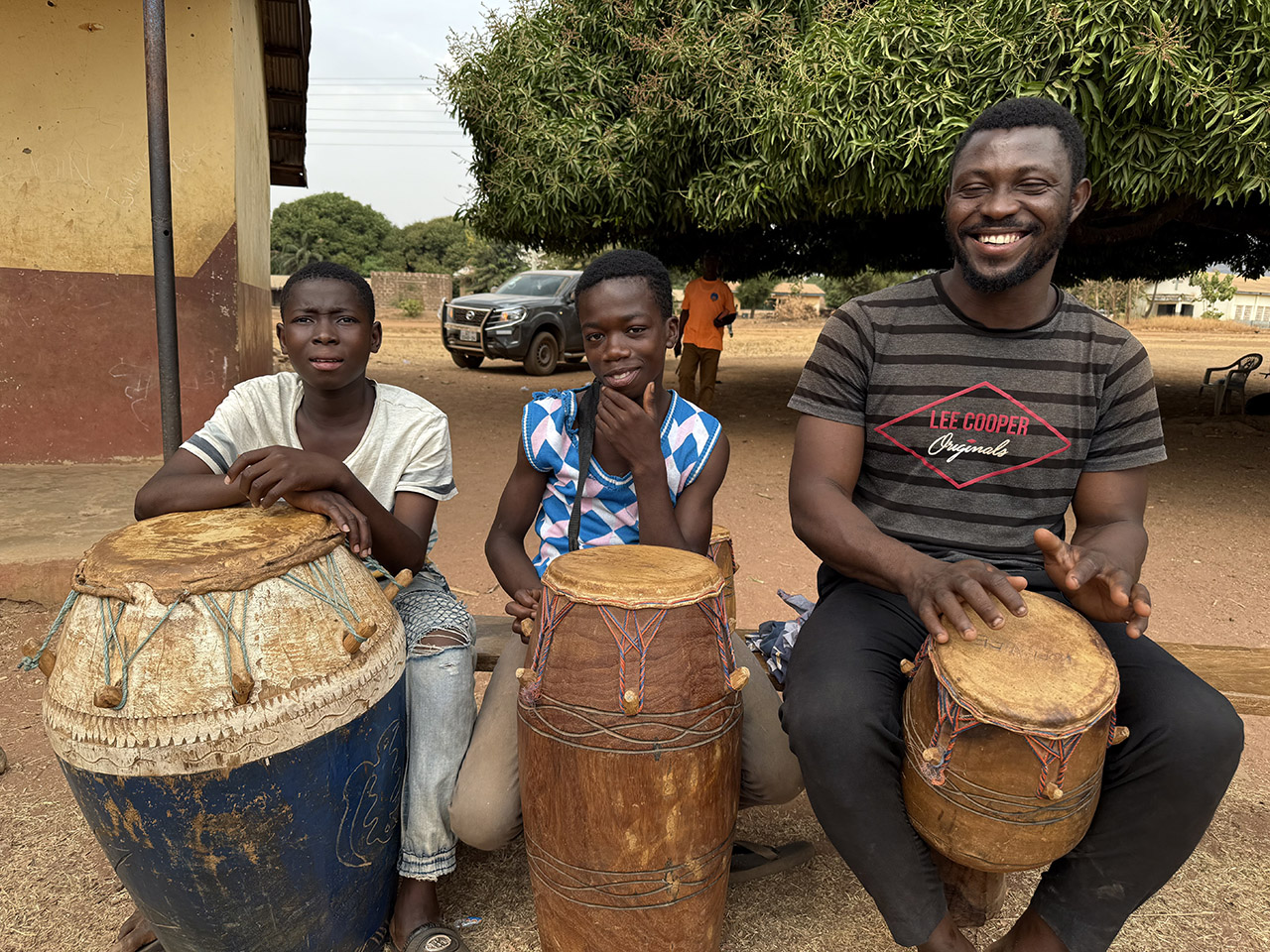
Most of the day was spent recording choirs — always the highlight of our trips. Worship, drums, and dancing, how beautiful! Some photos and videos below.

VIDEOS! Click the images below to watch the movie.

Wrapping Up

I wish is was not 12:30am. There are so many wonderful things to share. We will bring back photos and notes from our hike to Chillinga. We will be hanging our mosquito netting and cooking food we brought on our camp stove. We pray for peace and forgiveness.

Climbing to a remote village

We knew it was going to be difficult.  Clement’s explanation, “It is three hours of climbing”, bounced around in my head as Cyrus and I rode in the back of the truck bed, red dust billowing behind.  Cyrus smiled as we pulled away from the last police checkpoint, their armored vehicle parked in the shade, with soldiers relaxing nearby.  We were heading to the end of the road.

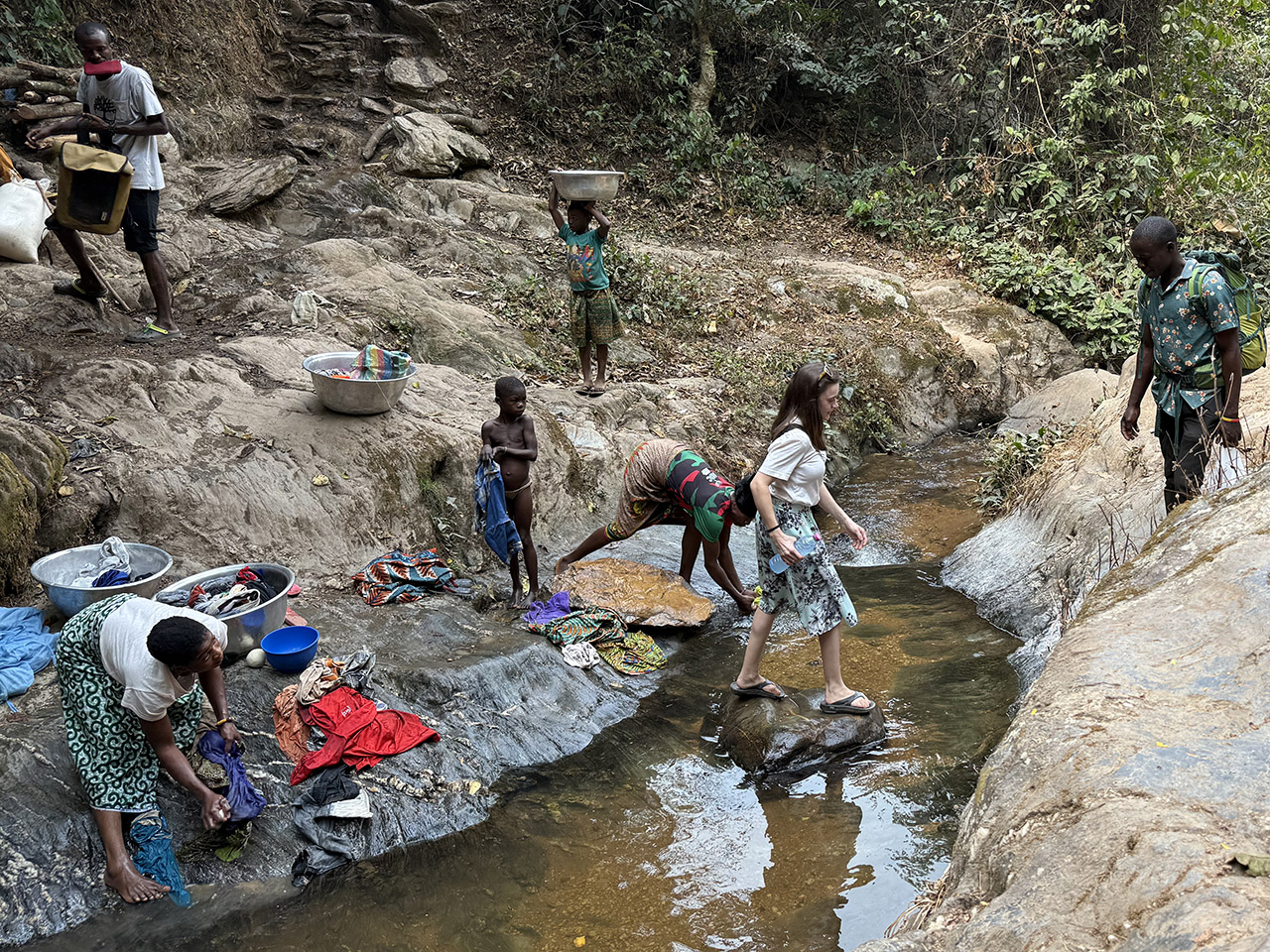
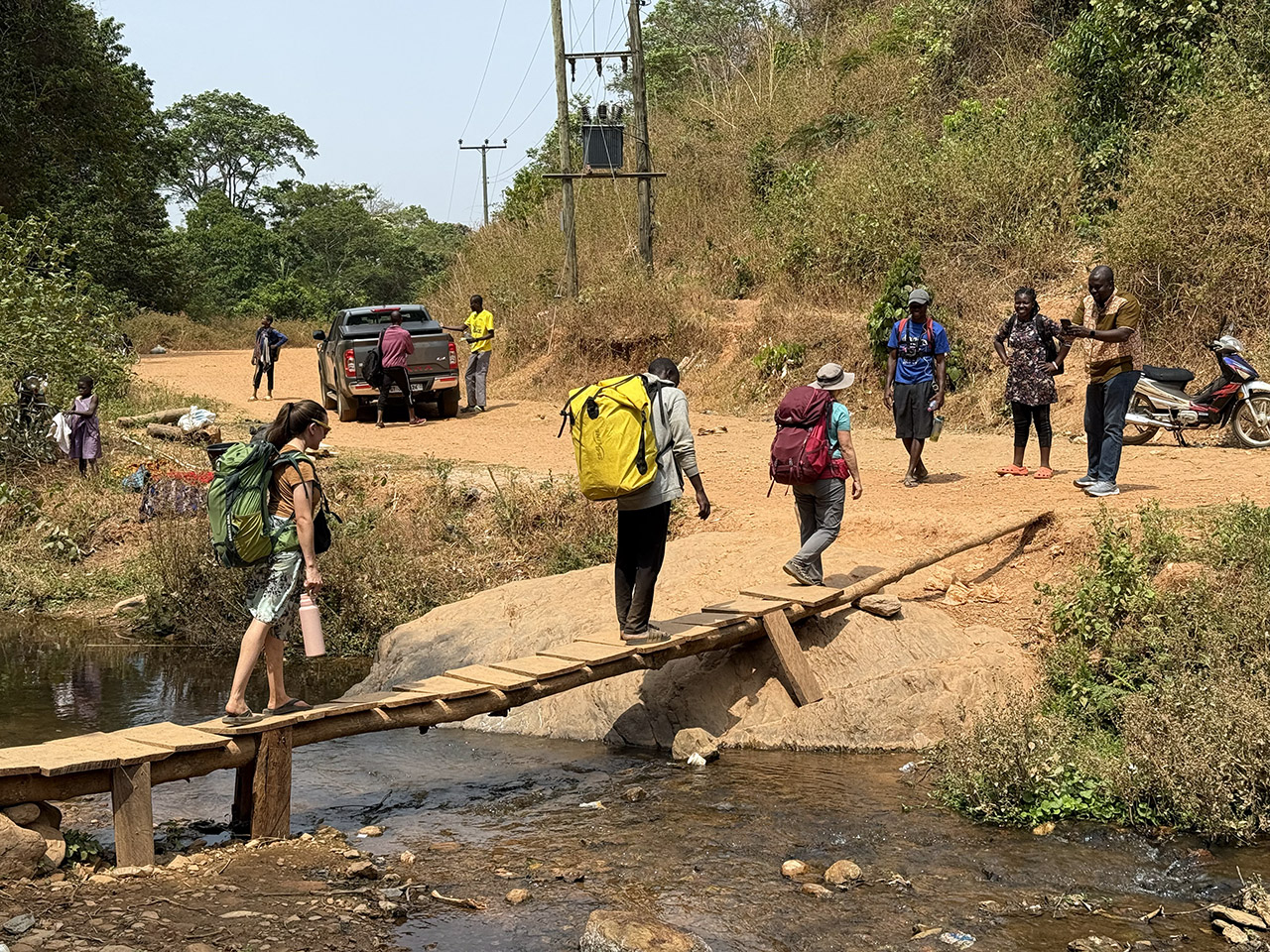
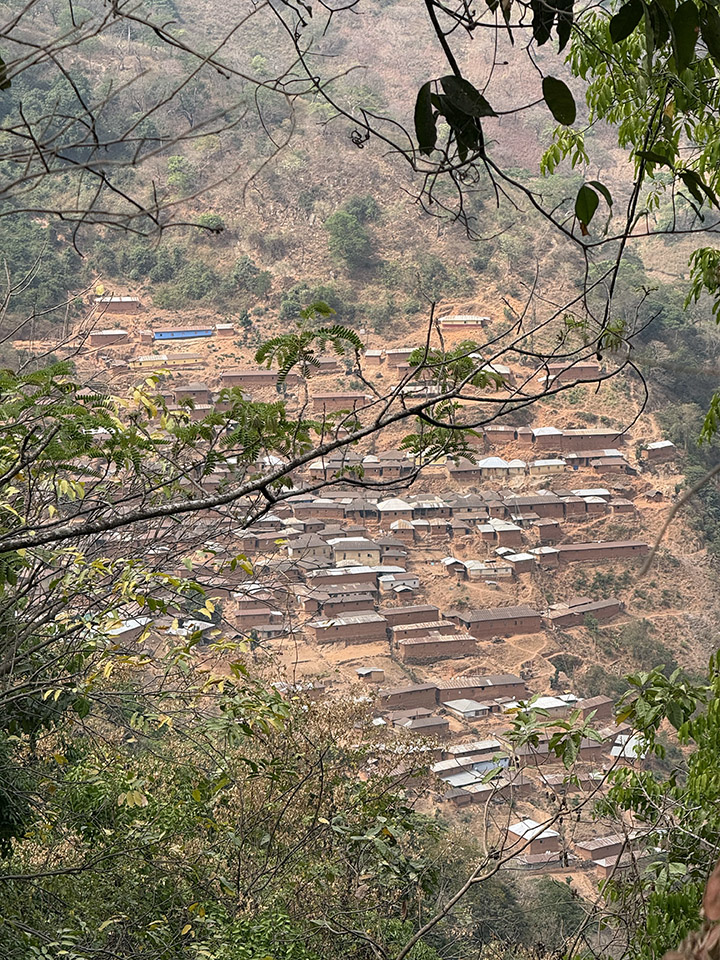
“We are here!” Clement energetically shared.  The road abruptly ended at the foot of a small mountain.  The gleam of metal roofs, high above, marked our first goal.  With excitement, we strode across the small river where children were helping their mothers with laundry.  The climb up to the “hanging village”, provided no warmup.  The trail just went up.  It was not long before our speed up the mountain was regulated by our heavy breathing.  Our strides shortened and our progress slowed as we felt the full strength of the equatorial sun above the clear skies. “Oburoni!” a small child in undies exclaimed as we rounded an adobe house and zigzagged higher thru the dense warren.  Soon, small kids were giggling and chanting in unison “O-Bu-Ro-Ni, O-Bu-Ro-Ni, O-Bu-Ro-Ni” as we labored by.  They returned my occasional smile while gulping for air with vigorous waves and more laughing.

The village

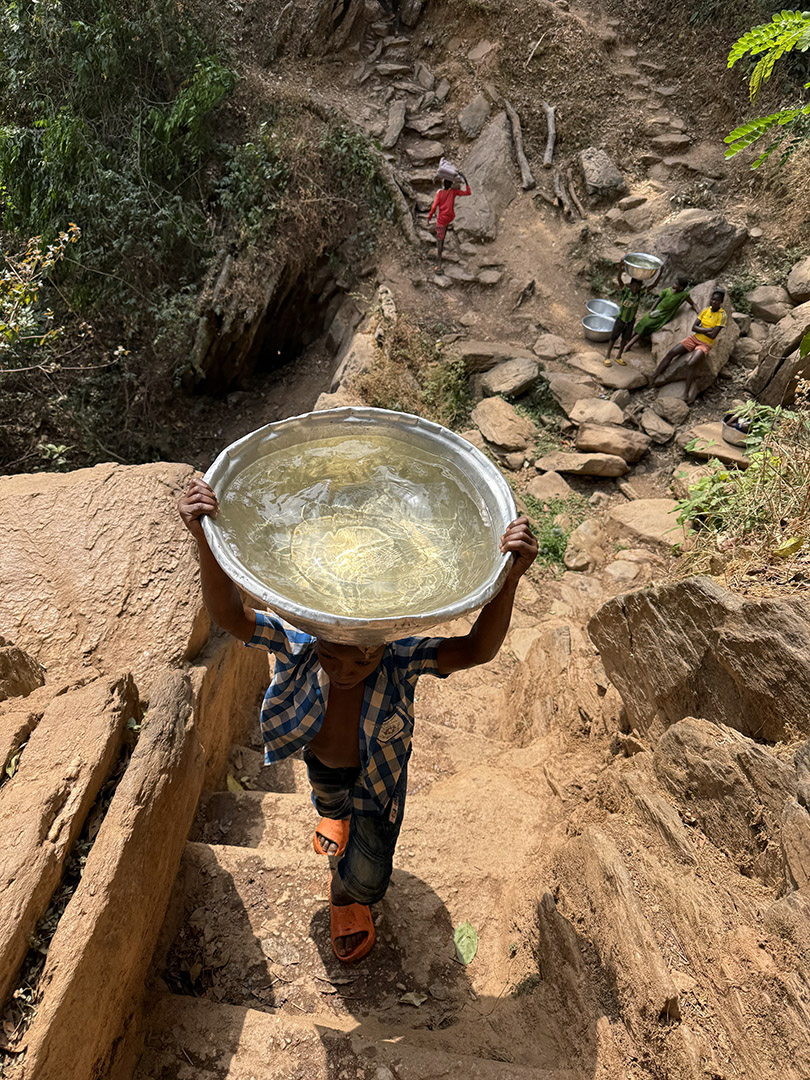
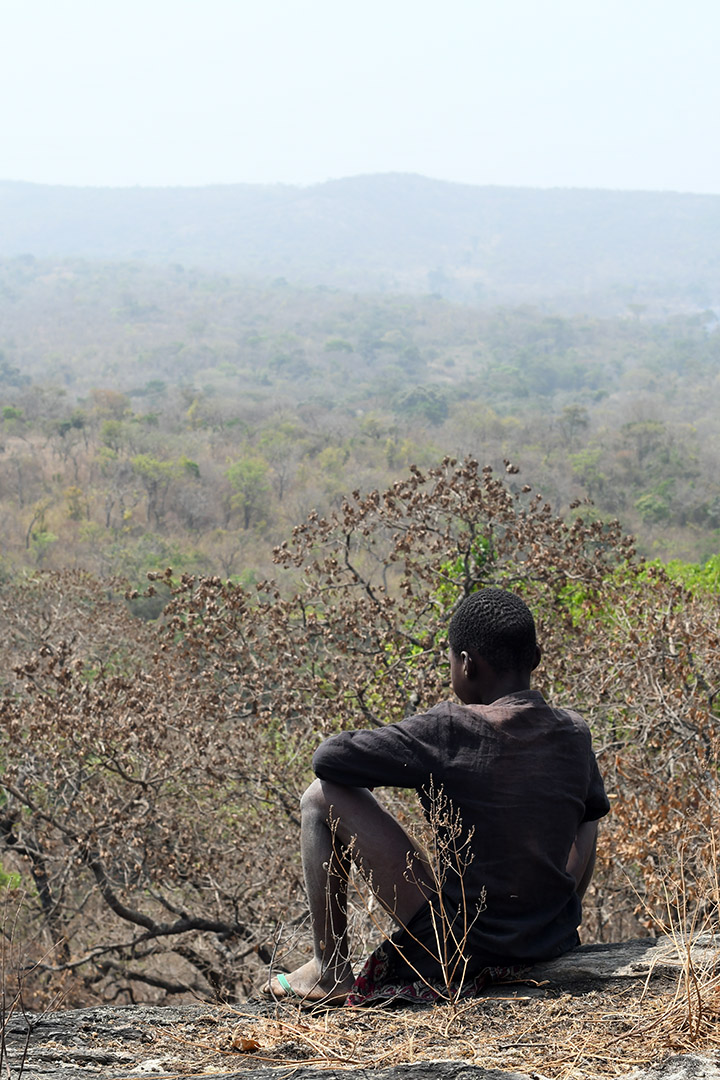
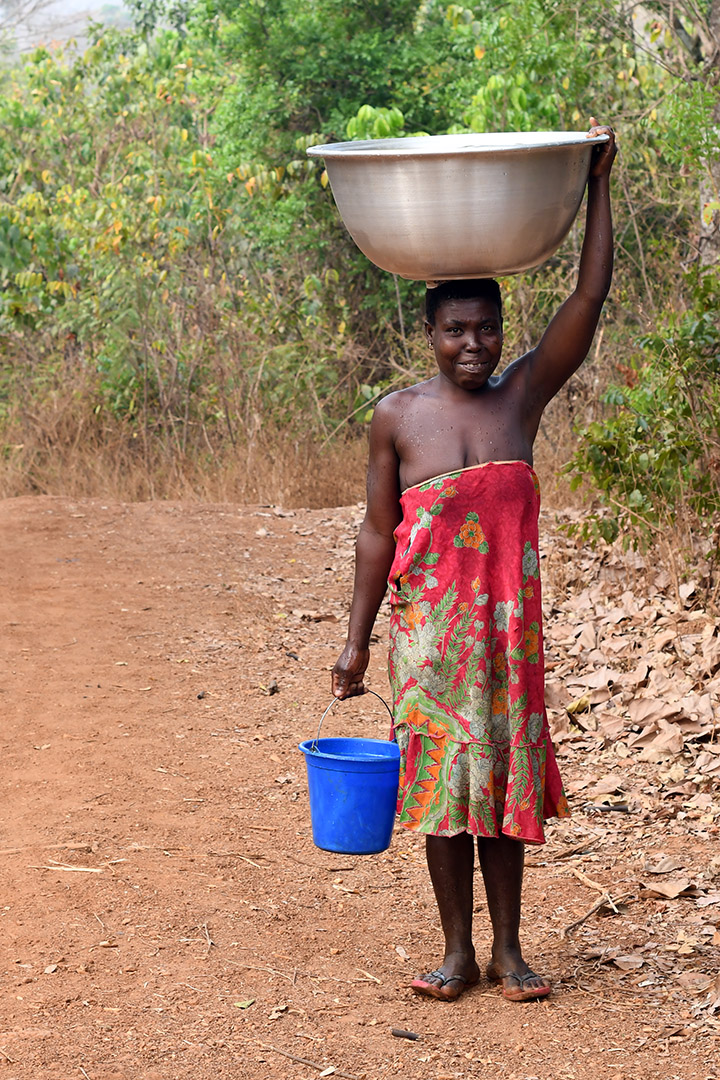
Soon, the Akyode dwellings began to thin, and we joined a trail headed down to a river.  While the hanging village does have “network” (mobile phone service) and electricity, only footpaths connect the town to supplies, from firewood and rice to water.  The rocky trail meandered up and down, and we were thankful for the short break in climbing.  Sturdy children and mothers in the colorful dresses of Africa passed in both directions carrying laundry and fresh water.  Ghanaian children are taught how to persevere.  They are not sitting in the shade, waiting for something exciting.  Life is full.  As we crested an embankment we saw the cool waters below.  Young boys and girls stood tall, waiting for pans of water to be placed on their heads. Eight-year-old girls did laundry with babies on their backs.  Life is now. The children too large to be carried but too small to carry water splashed in the water, playing.  Life is beautiful.

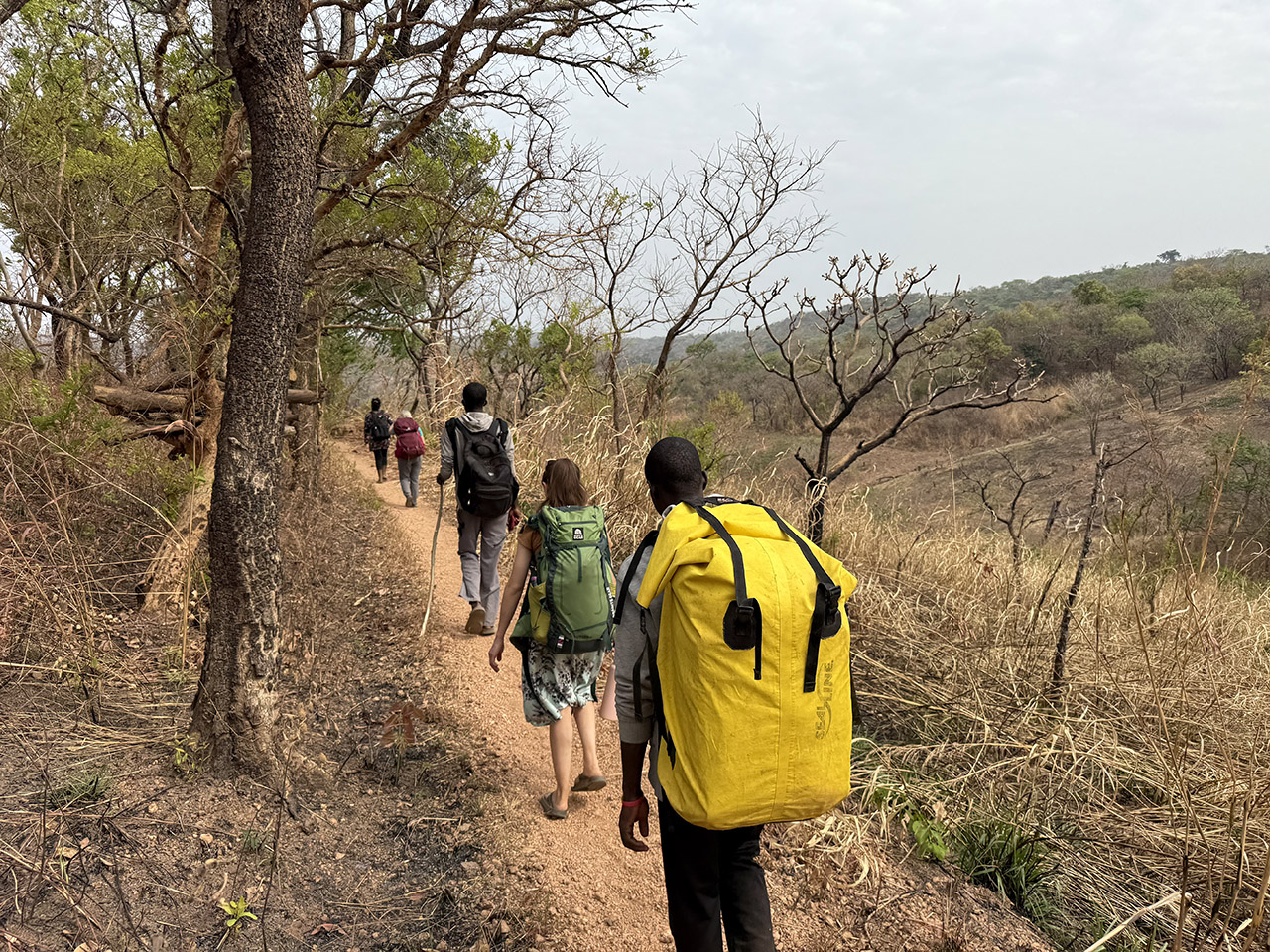
I looked down at the sweat dripping onto my shoes. The trail pushed up through the forest toward the peak. Oof.  The heat and terrain turned the 5.25 mile hike into a very strenuous three hour workout.  The beauty of Ghana and the anticipation of reaching the village propelled us forward.

After several hours of hiking, we could almost smell the smoke of the cooking fires in the village.  A small house!  I glanced at my wrist — three hours had elapsed.  Soon we were crossing an empty soccer field toward a joyful group of youth sprinting toward us. We were almost knocked over as Beauty, the fastest and most energetic of the young ladies leaped toward us.  Beauty had the kind of smile that you cannot turn away from. It was a Psalm of praise written as a smile.  

Our shoulders sang with their own praises as our backpacks fell to the dusty floor and we took a moment to take in and celebrate our accomplishment. Beth and Marianne were already meeting people and starting conversations.  I was trying to reconstitute myself, from a gel to a solid. 

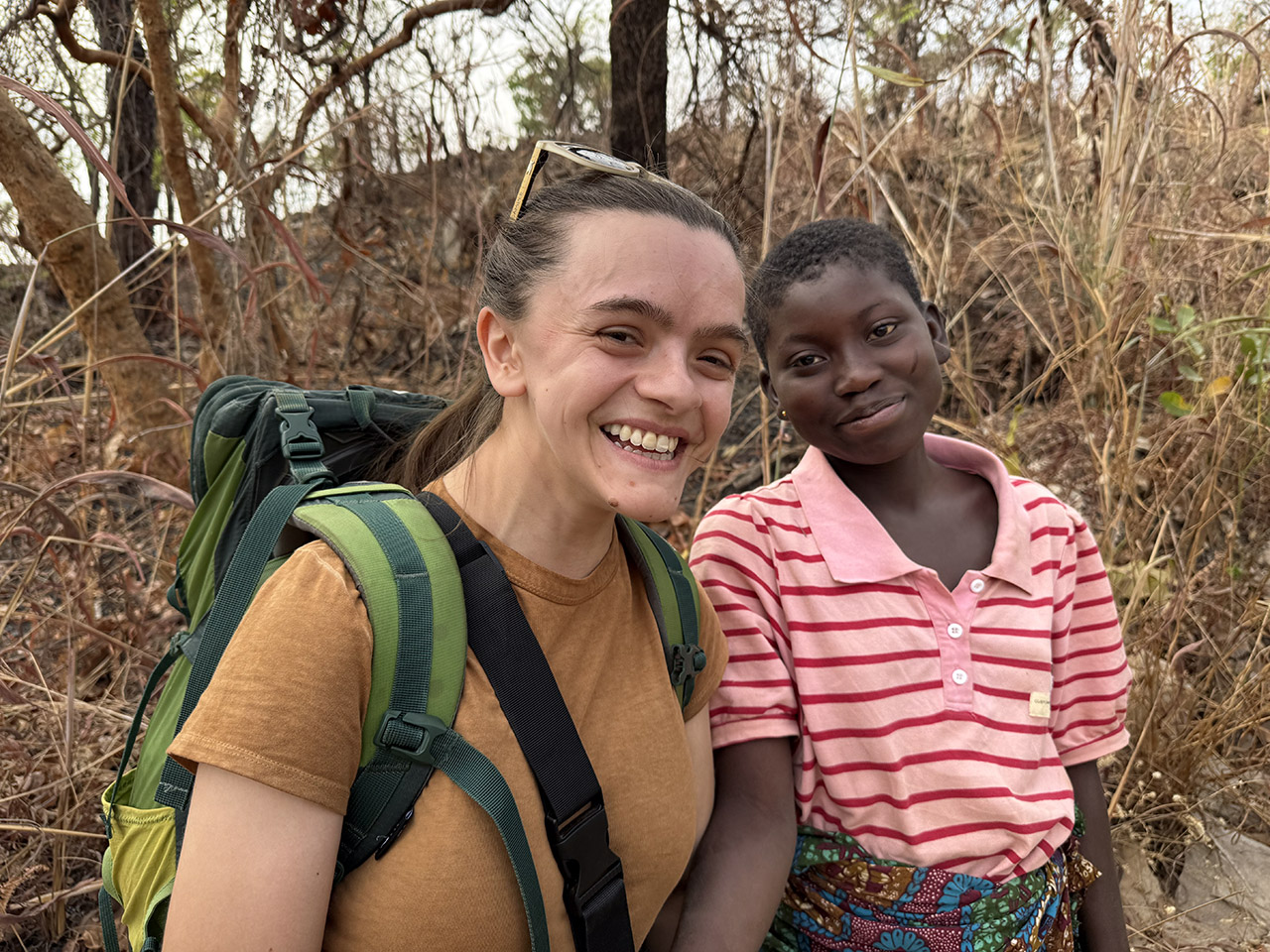
Our friends
The town

Before long, it was time for the second most important activity, a visit to the Chief.  We were received warmly.  Putting our previous experience to use, we slide from our chairs, squatted, looked down, and attempted to join in unison the requisite replies to the Chief’s greetings.  “We come in Peace” Clement explained.  We were once again offered water and then begin formal introductions.  Forty or so curious children stood quietly nearby, only occasionally needing a “ssssssssssss” (the Ghanaian equivalent to “Shhhhhhh”).  We wrapped up with smiles and a photo.  Our friends have been working in the village for a couple of years. All was well.

The Chief (center bottom) and the school headmaster (bottom right)

A warm and hearty meal brought restoration. Speaking quietly, we learned of just a few of the challenges faced by the small village.  For more than two years, they have each worked tirelessly to reach the people of the remote village with kindness and love to share the Good News.  There are no churches here, just a small Bible study.  The recent conflicts have disrupted daily life.  A few weeks ago, a police helicopter landed on the soccer field and troops walked around the town before leaving.  The show of force has left the town of only 1500 cautious.  School has been cancelled.  Compounding this recent issue, respected authority figures in the community have told residents that if they become educated, they cannot serve the idols spread across the village.  Our hearts are broken for the people of this village.

Red Red (left) and Plantains (right)

Yet there is hope. Friends have been sharing peace and showing the youth what Jesus taught – to love God and love your neighbor.  Their faces beam with true joy. The Chief has allowed Clement to show the Jesus Film outside a home.

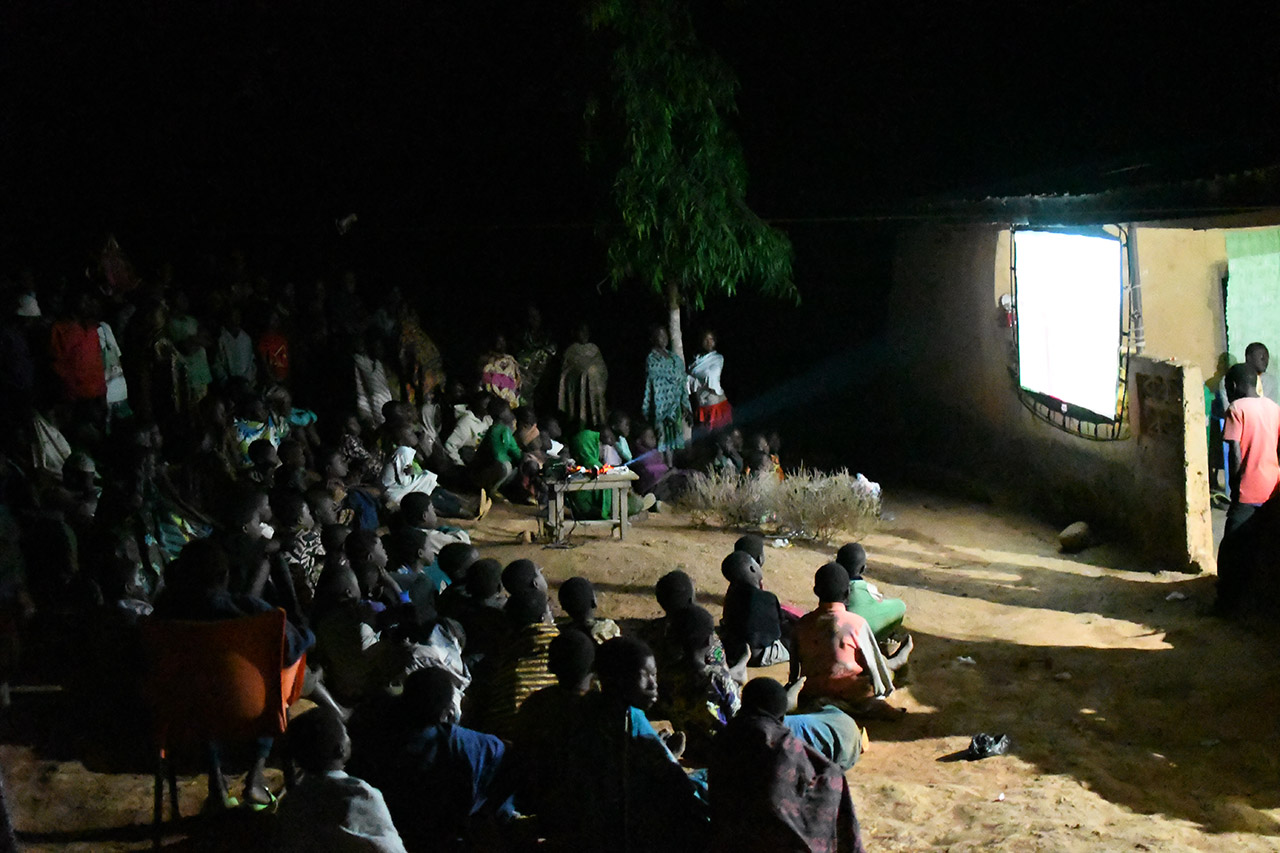
With an orange moon hanging over the village, Mars, Jupiter, and Venus all made an appearance, lined up across the inky sky.  Chilly and still, the night air breaths vigor back into my exhausted body.  More than one hundred gathered to watch the video in Gikyode (the language of the Akyode).  Beth, Marianne, and I pulled chairs into the darkness, beside the attentive audience, and just soaked it all in, snapped photos, and prayed.  At the end of the movie Clement spoke to the crowd, prayed, and everyone quietly returned to their homes.  Minutes later, we were laying on our mattresses, listening to the sheep.

The Jesus Film, played for the town

The School of Fun

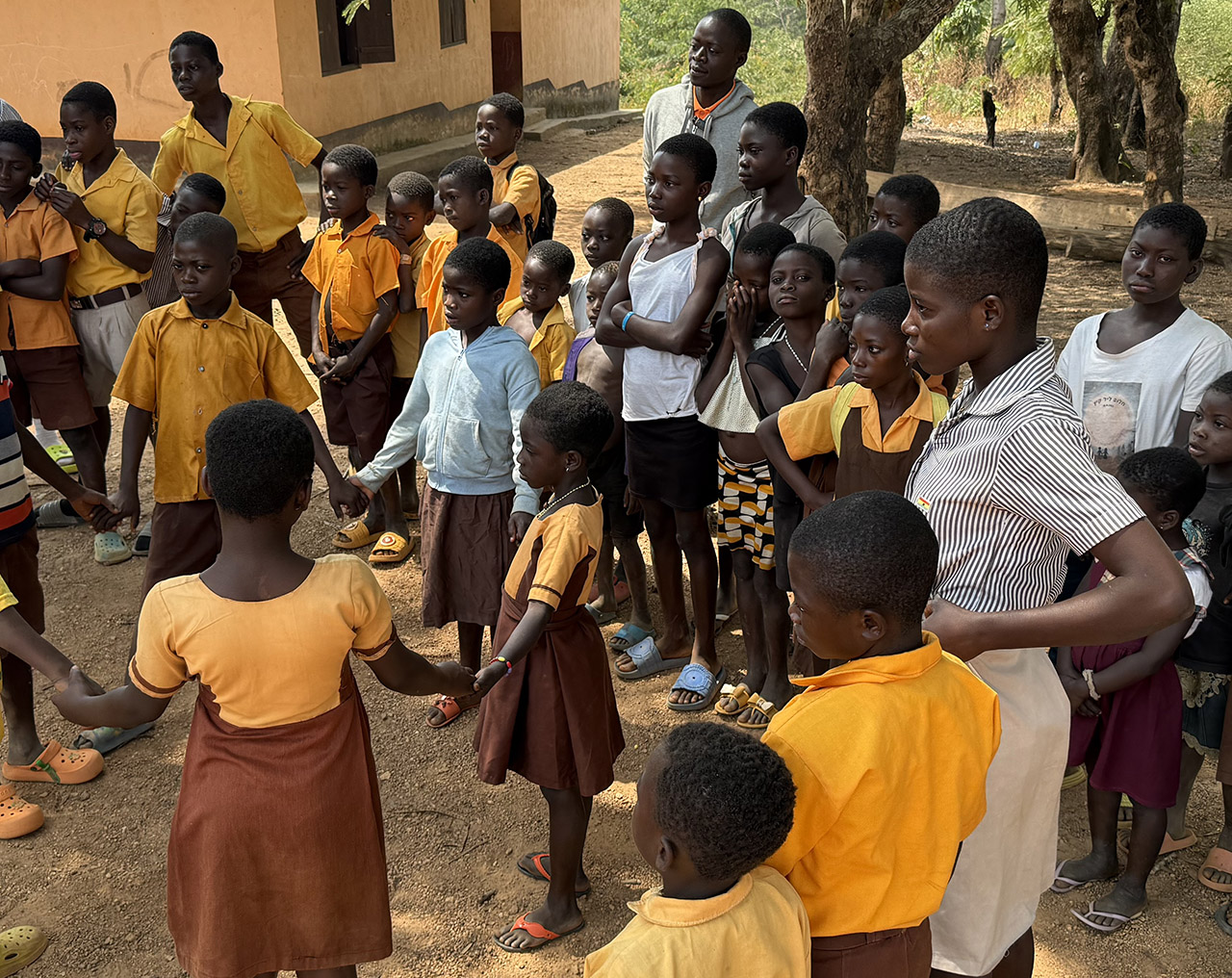
After a quick breakfast, we strolled to the school.  Even with school cancelled, about a third of the young children have donned their school uniforms and play outside the empty classrooms.  Their eyes are bright and attentive.  Small grins of curiosity flash across even the most stoic and cautious of the children.  The irresistible draw of learning pulls them toward us.  With the headmaster giving his approval and selecting a young man as translator, Beth steps forward with confidence and smiles.   “OK! We are going to teach you a song.  Boys stand here, Girls stand over there”.  The kids are unsure.  How will they participate?   It feels like as many are looking at each other, to understand how to react, as those looking at Beth.  She starts with the girls.  “You will sing this:  Hallelu! Hallelu! Hallelu! Hallelujah!”.  Before long, the girls are in unison, singing freely.  “Ok, now it is time for the boys” Beth explains.  I moved to a position in front of the boys and young men to help bolster their timid voices.  Sing “Praise ye the Lord” Beth instructs.  The boys have weak sauce.  I flail my arms and belt it out like Pavarotti. Their giggles and smiles provide fuel.  With laughter and joy Beth leads the kids in faster and faster rounds, instructing the school kids to squat when they don’t sing and leap to their feet when it is their turn to praise.   WOW.  Applause and cheers end the song time.

Then Marianne takes the lead.  With a strong clear voice she explains that they will learn a true story from the Bible.  After Marianne shares how Jesus calmed a storm while standing in a fishing boat, we pull together the children to help act out the story.  Six children holding hands form the boat.  A tall young lady in a tidy pinstripe dress is assigned the part of Jesus.  Two small boys tag along as the disciples – our boat was small. Everyone else gets to be wind and waves.    Marianne tells it once again, and again, and again – each time the actors playing their parts with increasing enthusiasm.  With a little prompting, one of the older school kids is ready to tell the story on their own.  We provided encouraging smiles and nods as the young man repeats the story.  How wonderful.

A small village with no electricity, no internet, and reached via a three hour walk from the nearest Ghanaian road.  Two young adults, dedicated to sharing the Good News of Jesus live in that village. The work is hard.  The opposition from traditional authority figures is real.  

The next morning, scattered clouds, high and thin across the sky provided relief from the heat as we followed the trail back to the final river crossing, where Ray was waiting.  As we hiked, my pack was lighter, yet my thoughts were occasionally heavier.  The faith, courage, and strength of the young Ghanaians serving here in Northern Ghana is humbling, and I was feeling the weight of self-reflection.  I know the Ghanaians appreciate that Beth and I have helped them build the BiblePlus program over the last 13 years, yet every trip to Ghana forces me to reflect on the obvious – I learn more from their faith, courage, and strength than they do from me.  The trip was a powerful reminder.  Thank you, Lord.

Deep Wrinkles

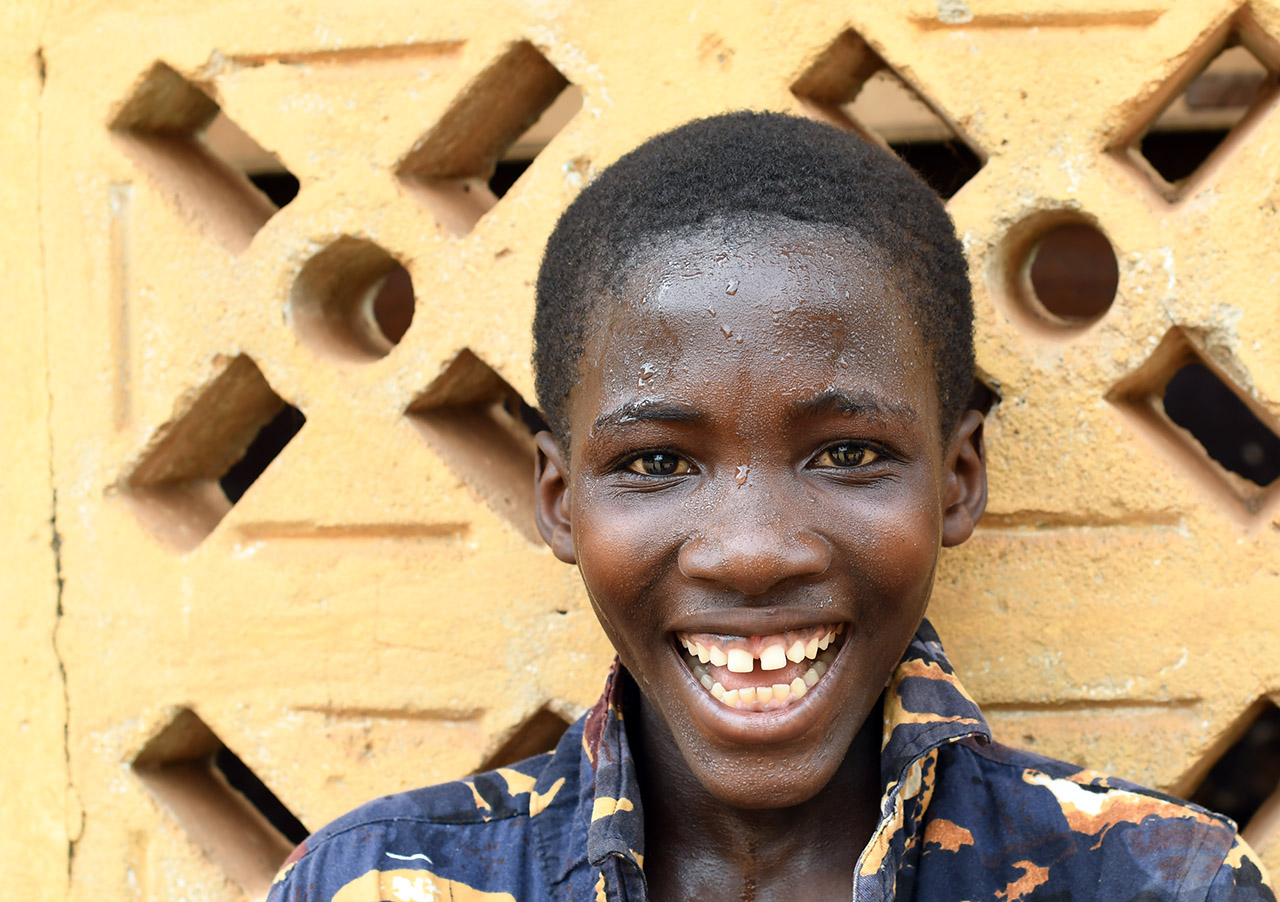
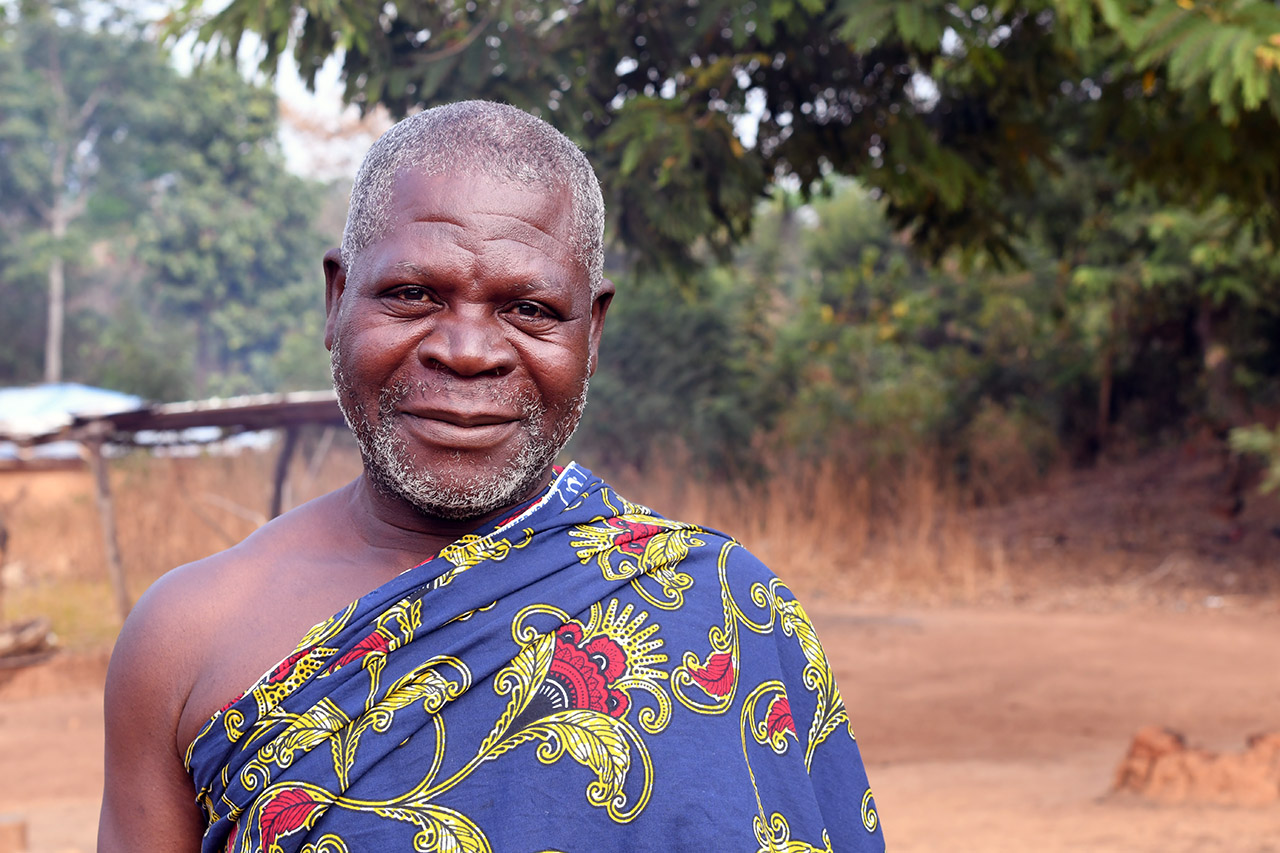
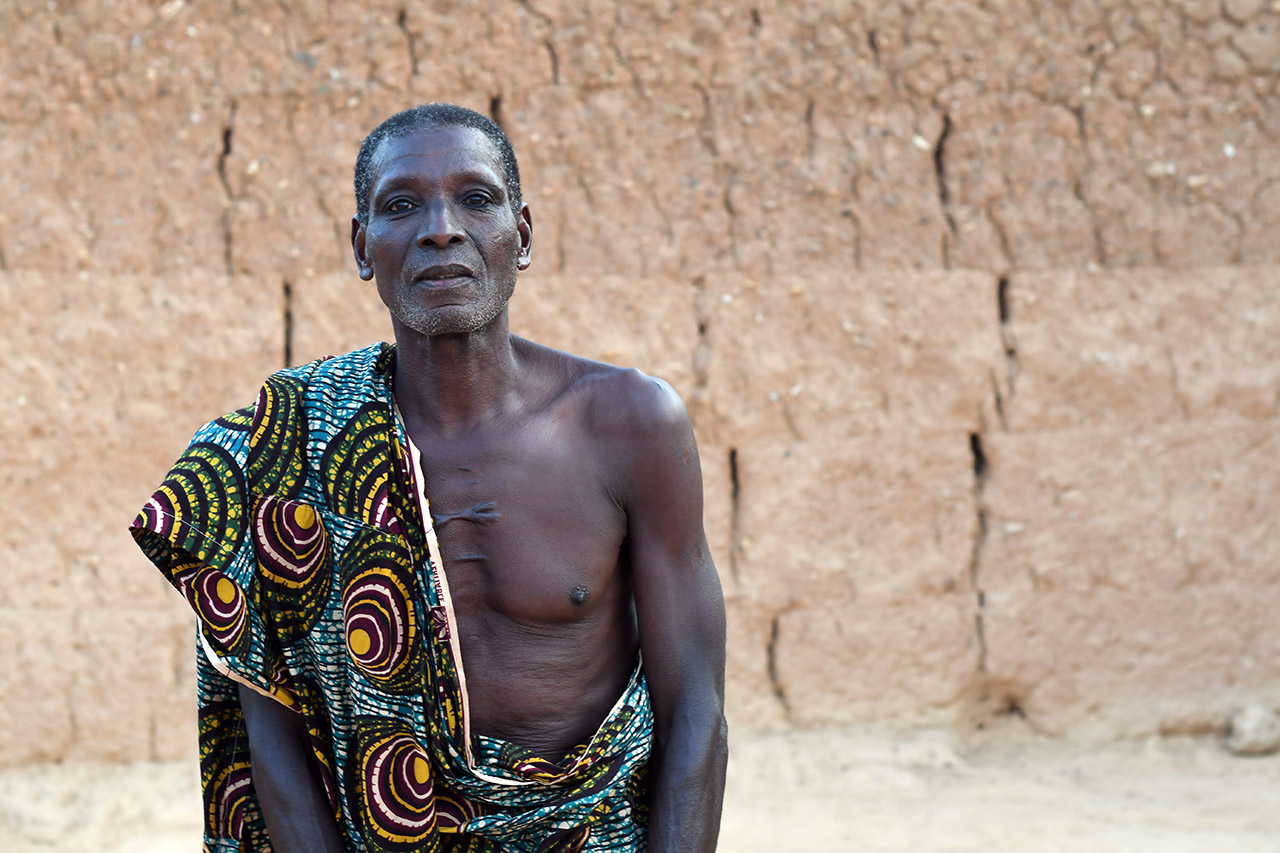
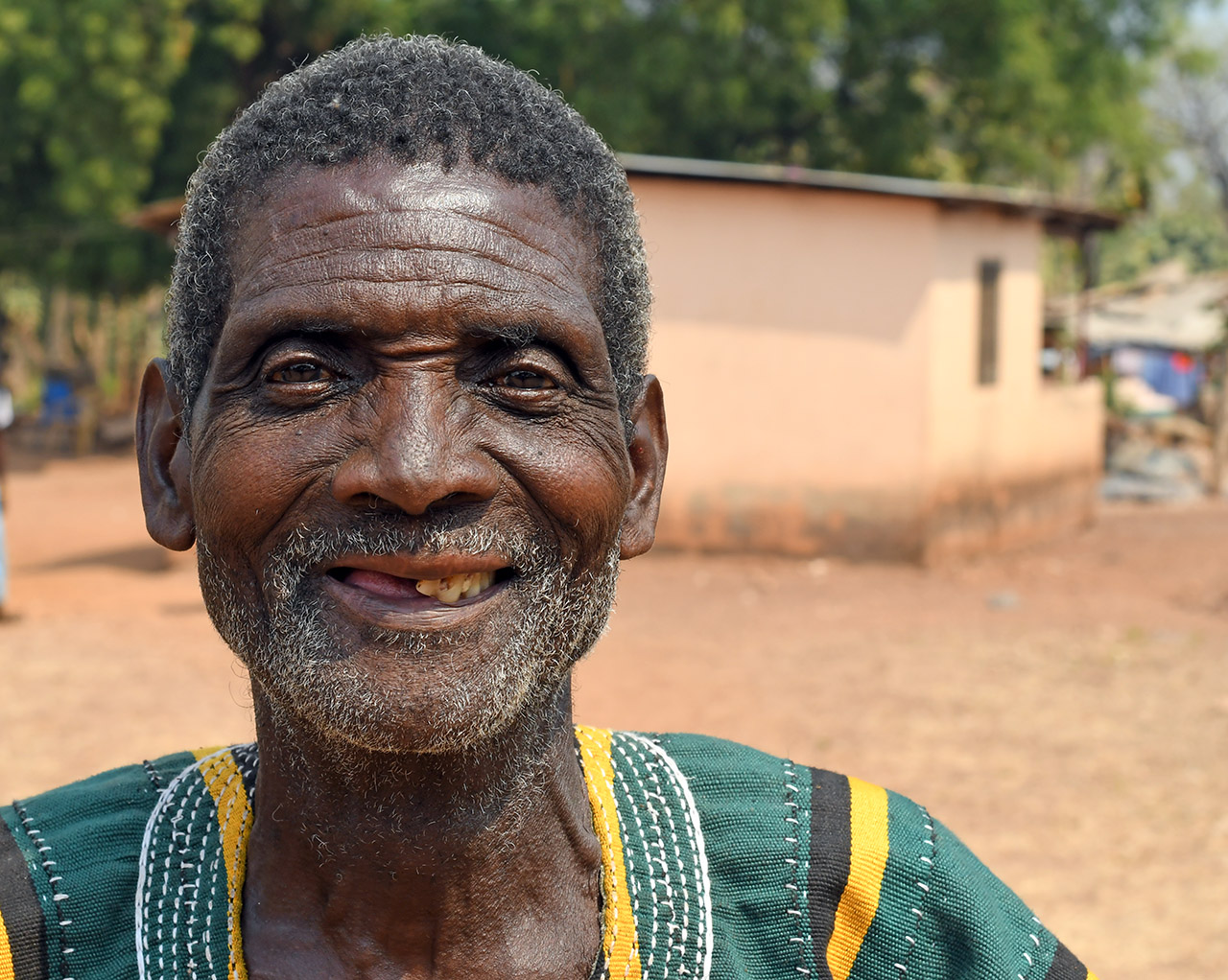
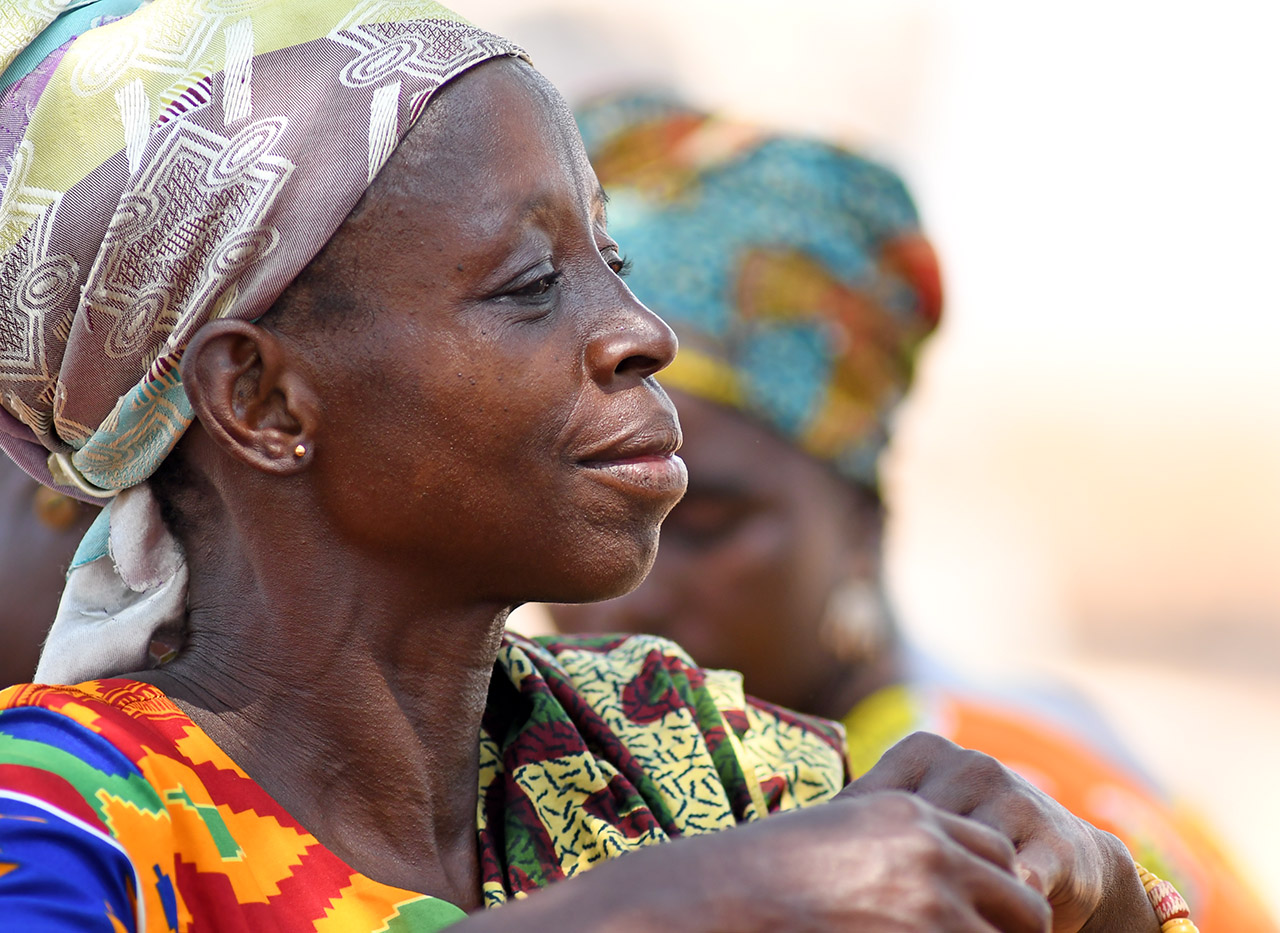
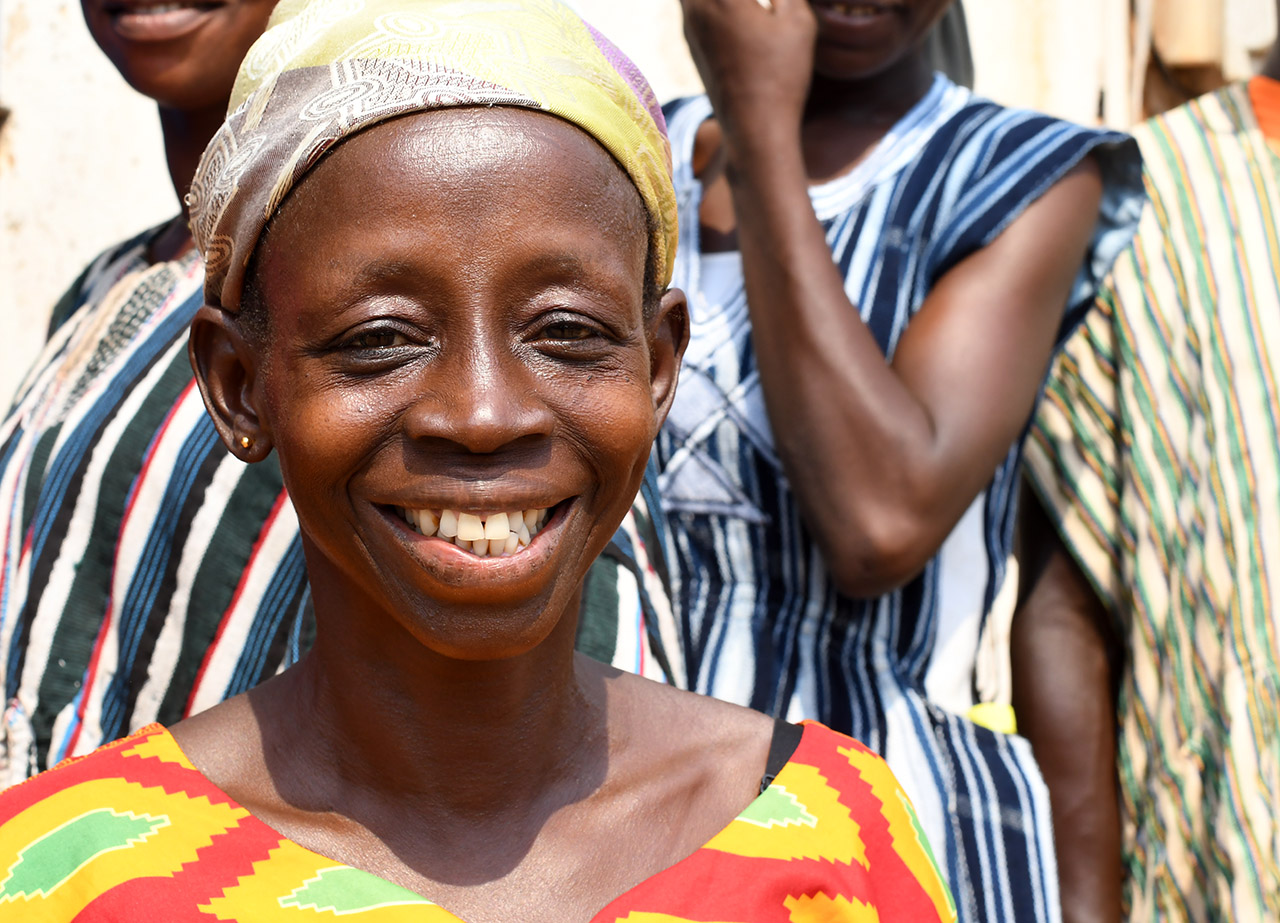
What can a smile, framed with the deep wrinkles carved by a lifetime of farming under the sun reveal?  

Can his eyes sing of joy, when his voice is weak, and he offers his praise from a chair?

The author of Ecclesiastes asks:  What do people gain from all their labors at which they toil under the sun?

We were invited to assemble, to sit, to hear the melodies, to celebrate their dances and experience the rhythms of praise. 

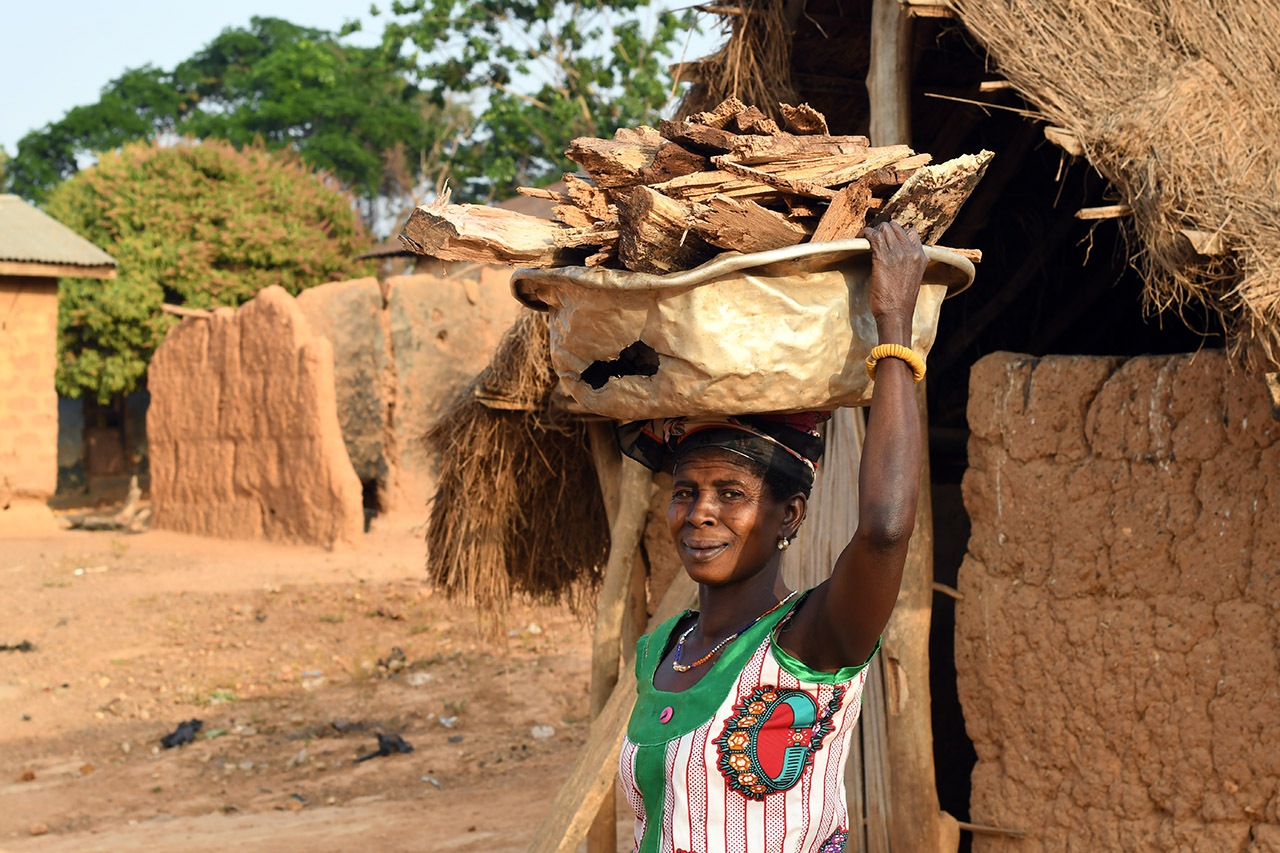
But praise?  There is toil under the sun to fetch water, to find firewood, to tend fields and care for livestock, to pound cassava into fufu, to scrub the red dust and animal dung from clothes, and to build homes block by block.  

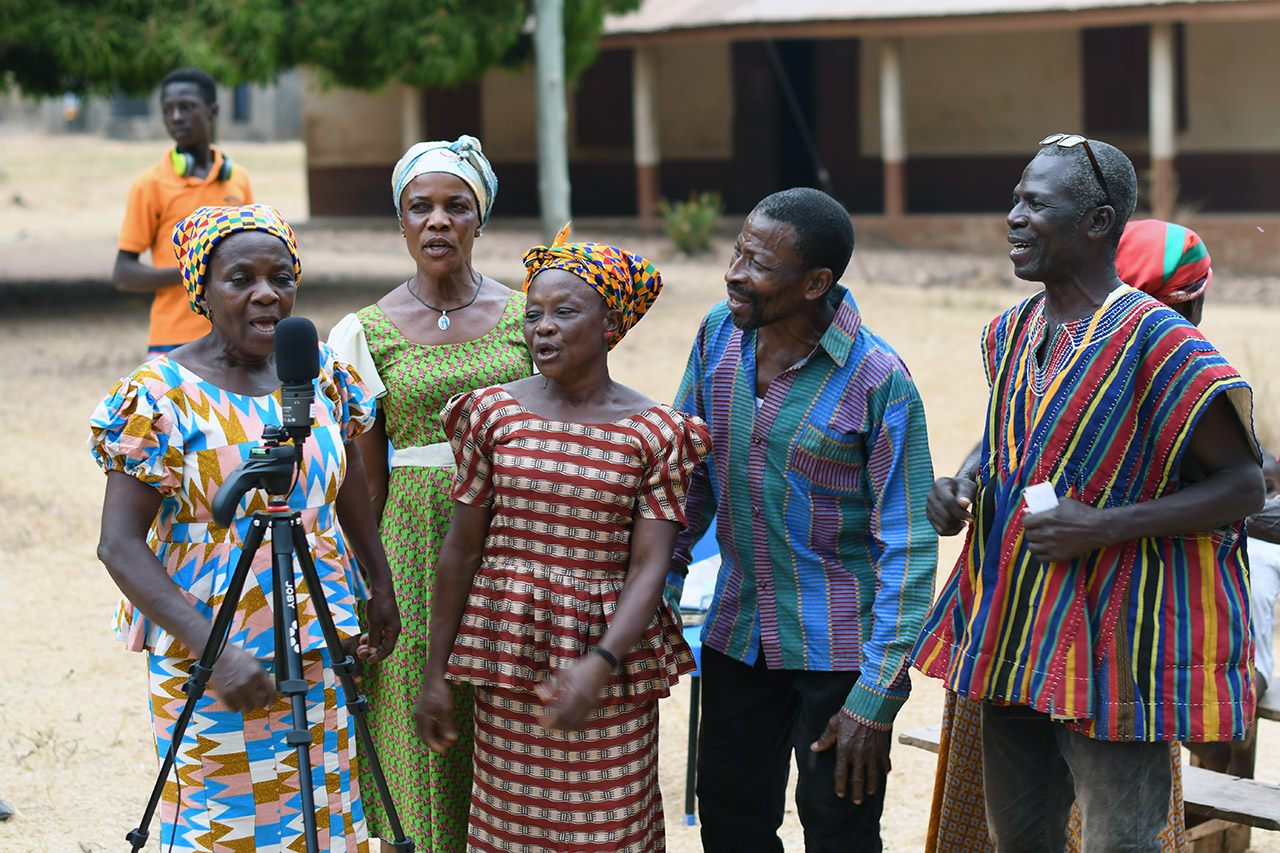
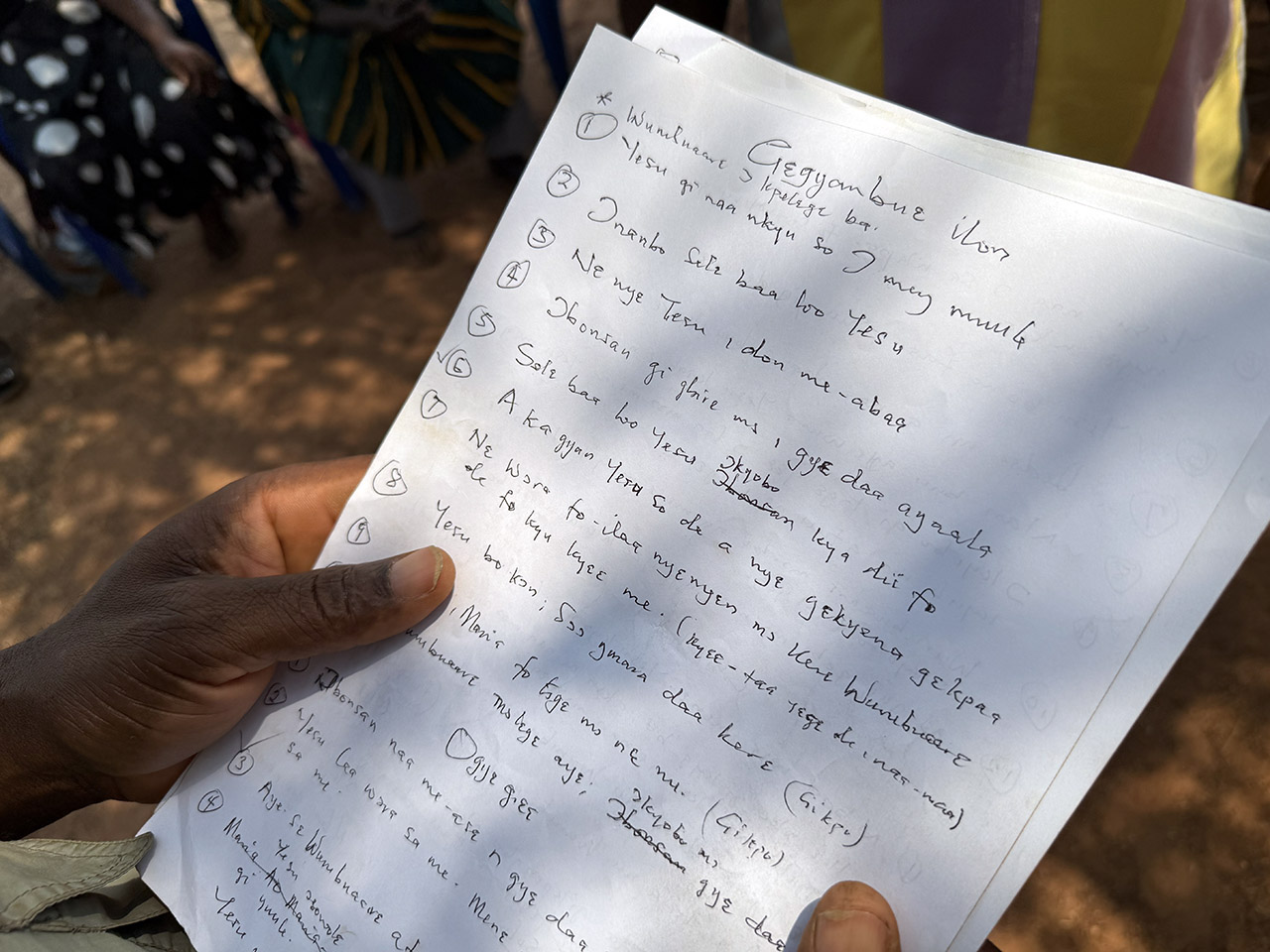
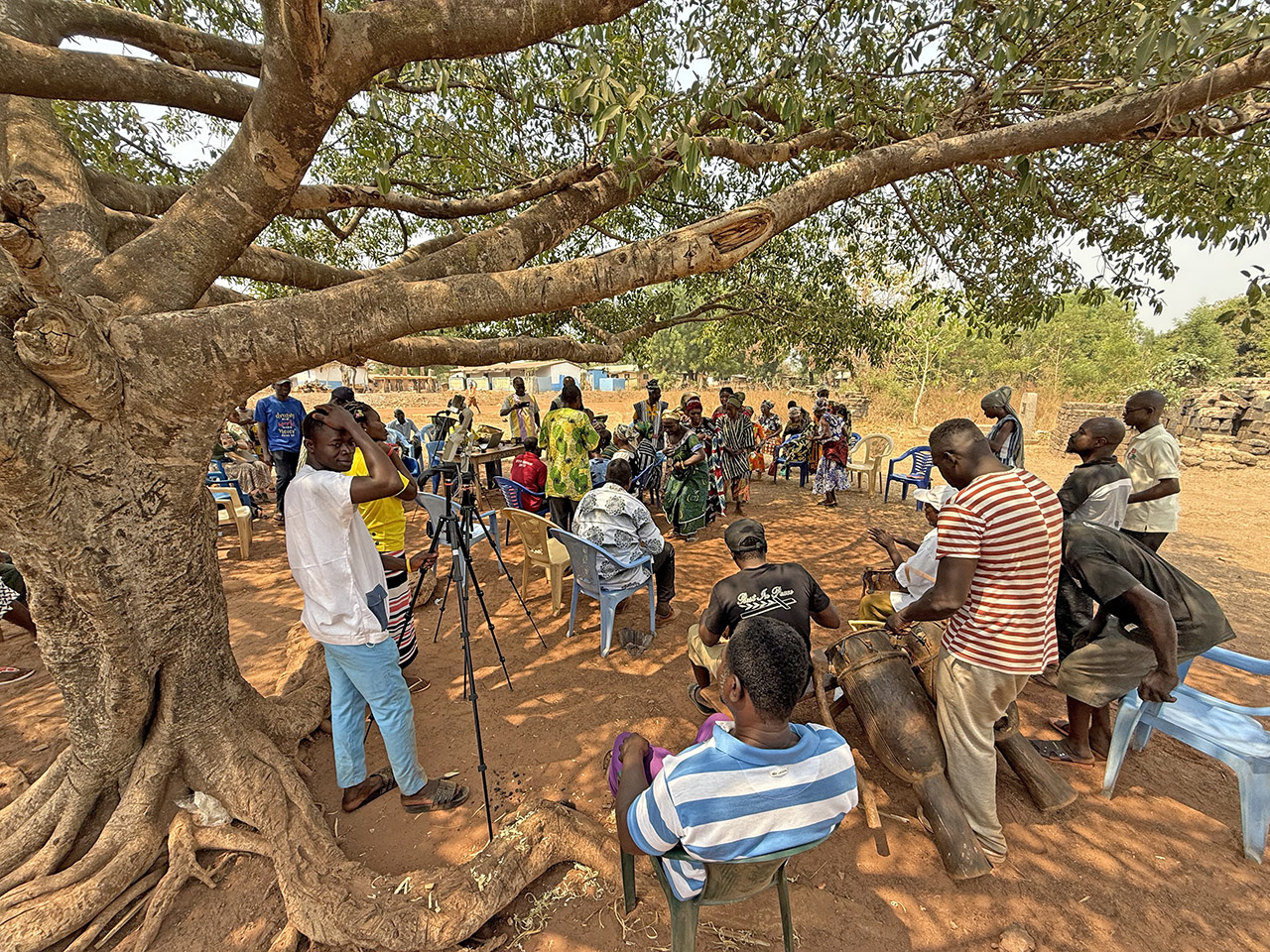
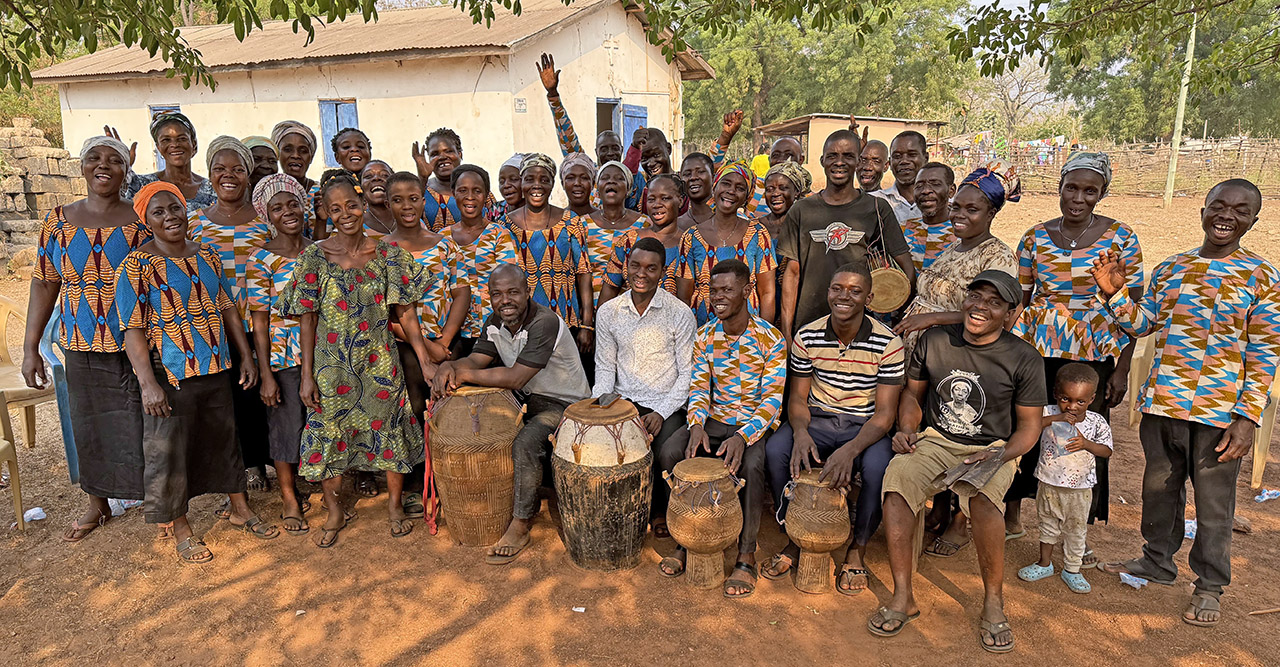
We built a studio under a massive tree, its branches lifted up, poised for celebration. Dozens of indigenous songs were carefully prepared by two choirs.  When everyone was ready, they began.

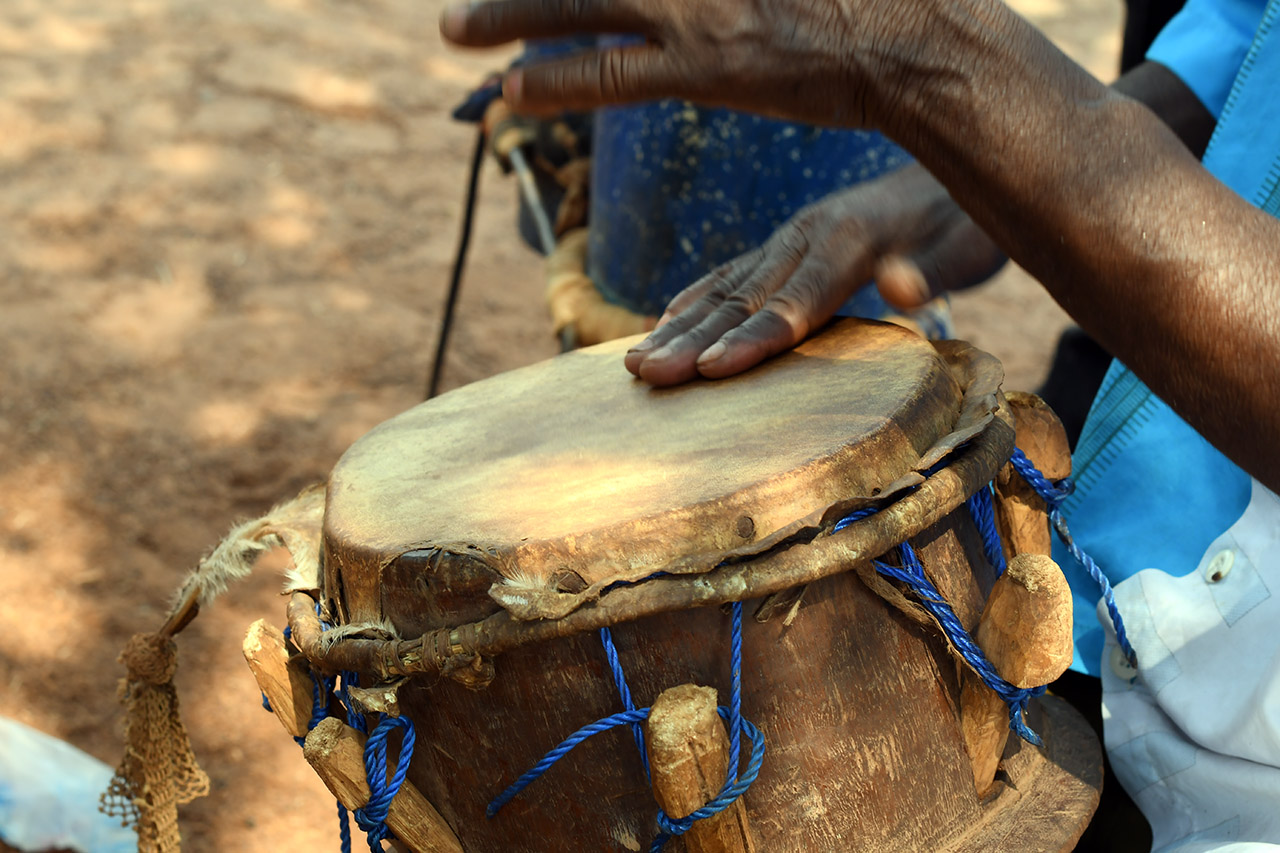
The praise grew slowly until the crescendo of drumming unlocked voices and the choir transformed from singing to praise.

After checking on some of the video and recording gear I sat down next to Beth. I reached over to squeeze her hand.  She tried to speak, but her voice was so full of emotion she could only smile, her eyes glistening.  She finally just exclaimed, “Do you hear the harmony – it is so beautiful”.   

Enjoy the videos below, even though the short iphone videos could not capture the richness of the music (we will produce the audio tracks from the studio mics later).

Penned 3000 years ago, it remains a relevant question.  “What do people gain from all their labors at which they toil under the sun?”

When we stop chasing the wind and follow the Lord, will our toil under the sun bring satisfaction? Can our lives blossom with joy?  Beneath the shade of an old tree, the bright colors, vocal harmonies, and complex rhythms were woven together into a musical Kente. The answer is simple.

When the choirs were finished, we recorded Bible stories and exhortations
Community health topics, provided by an employee from the local clinic,
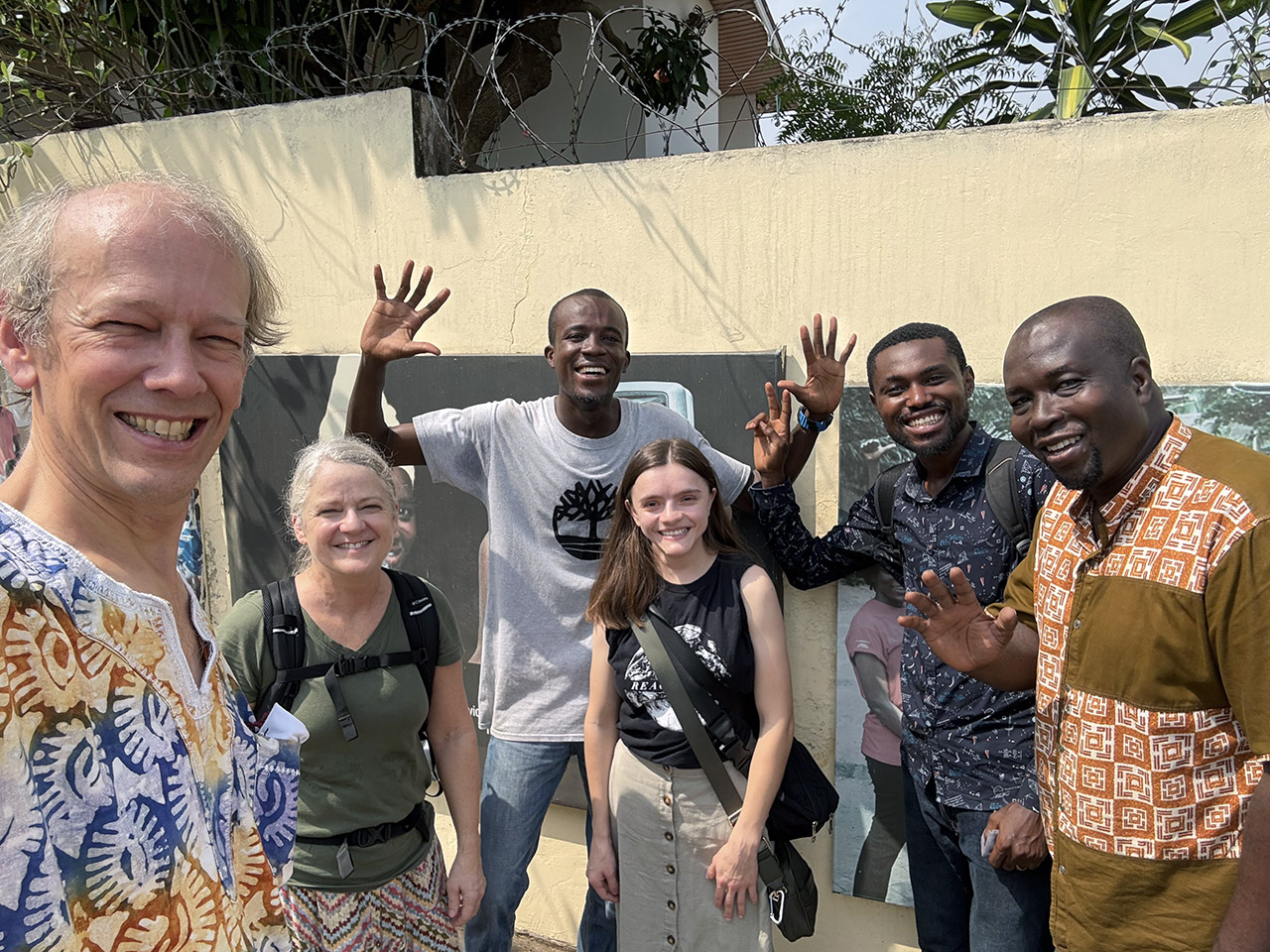
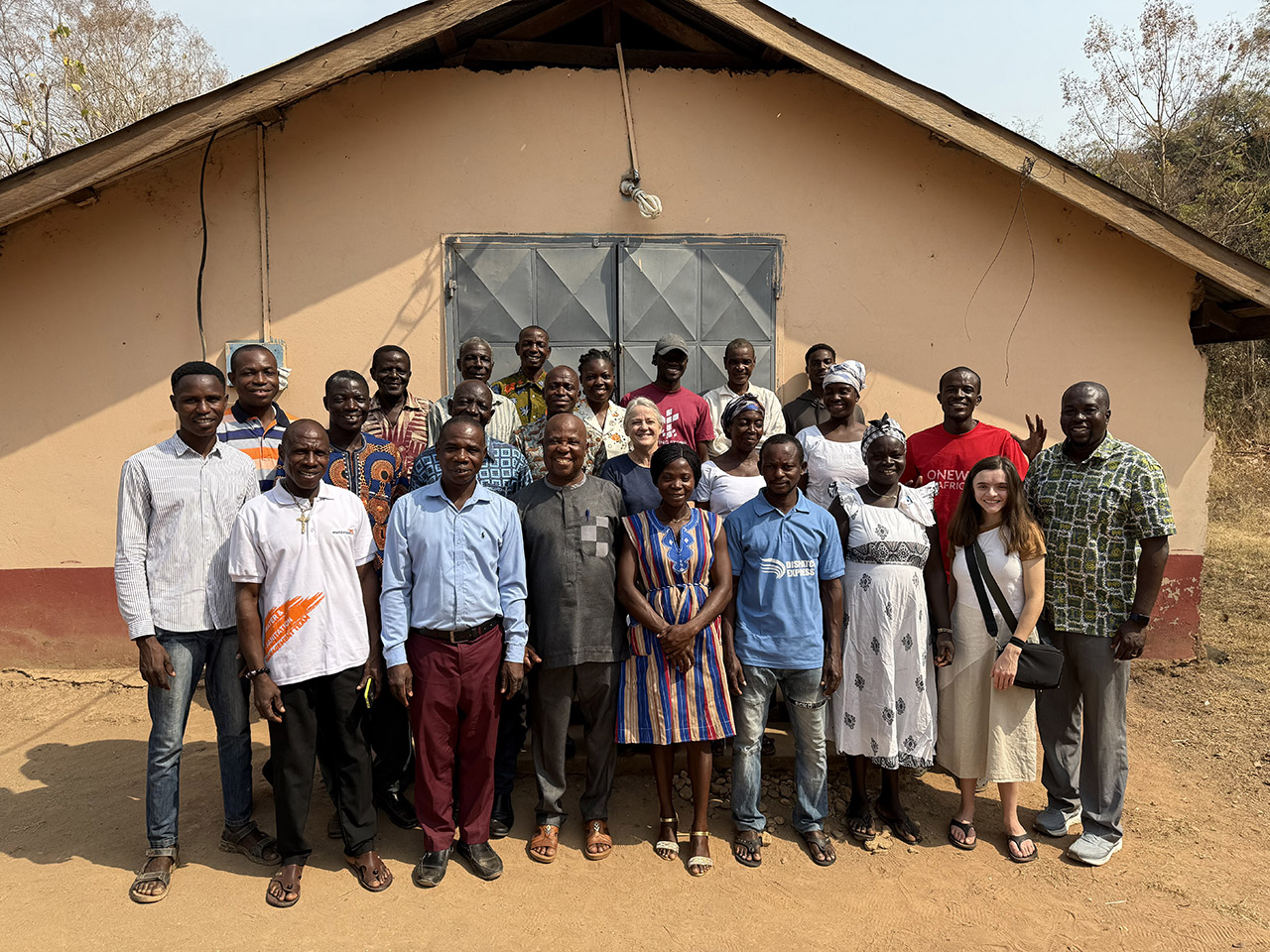
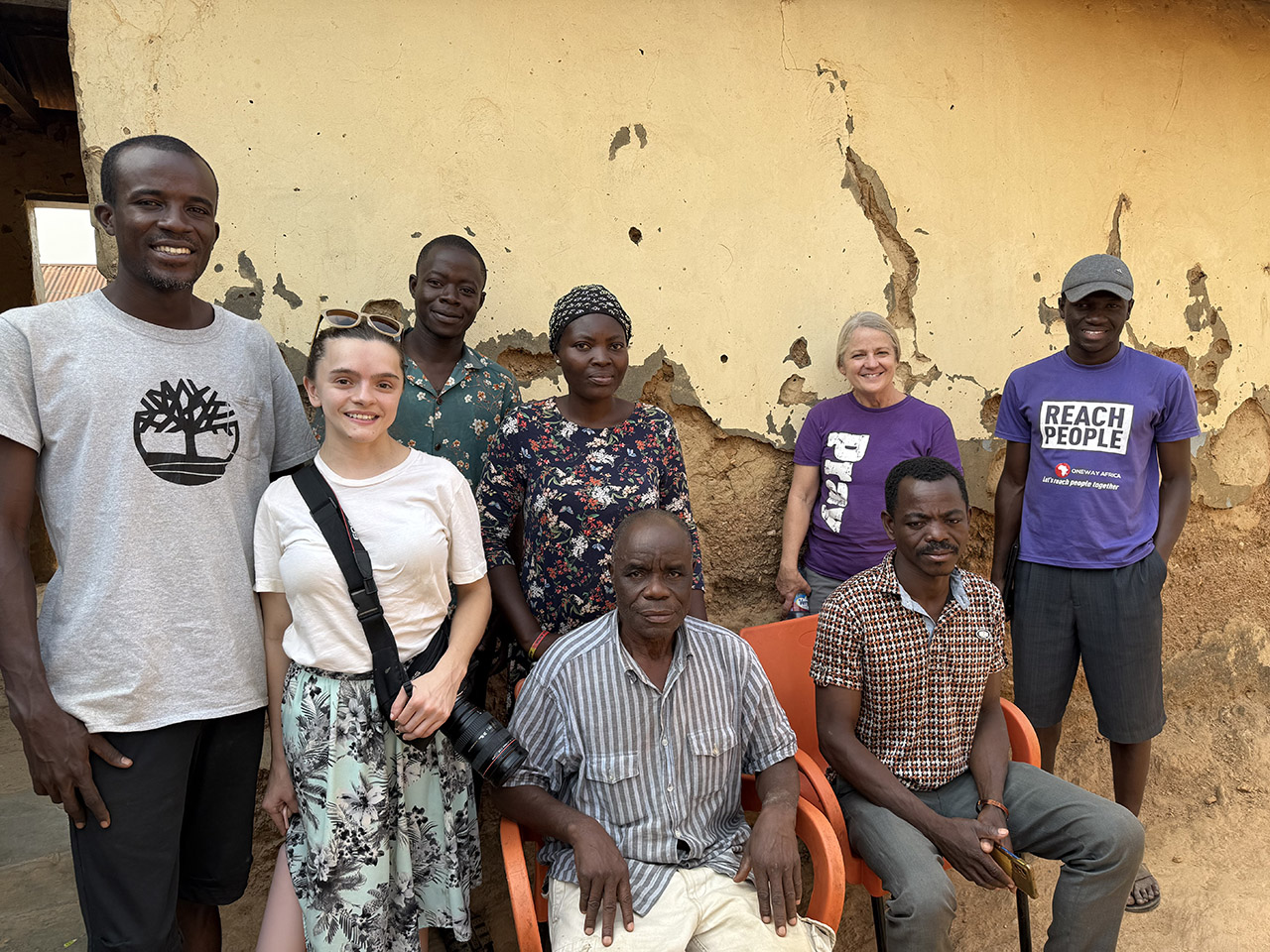
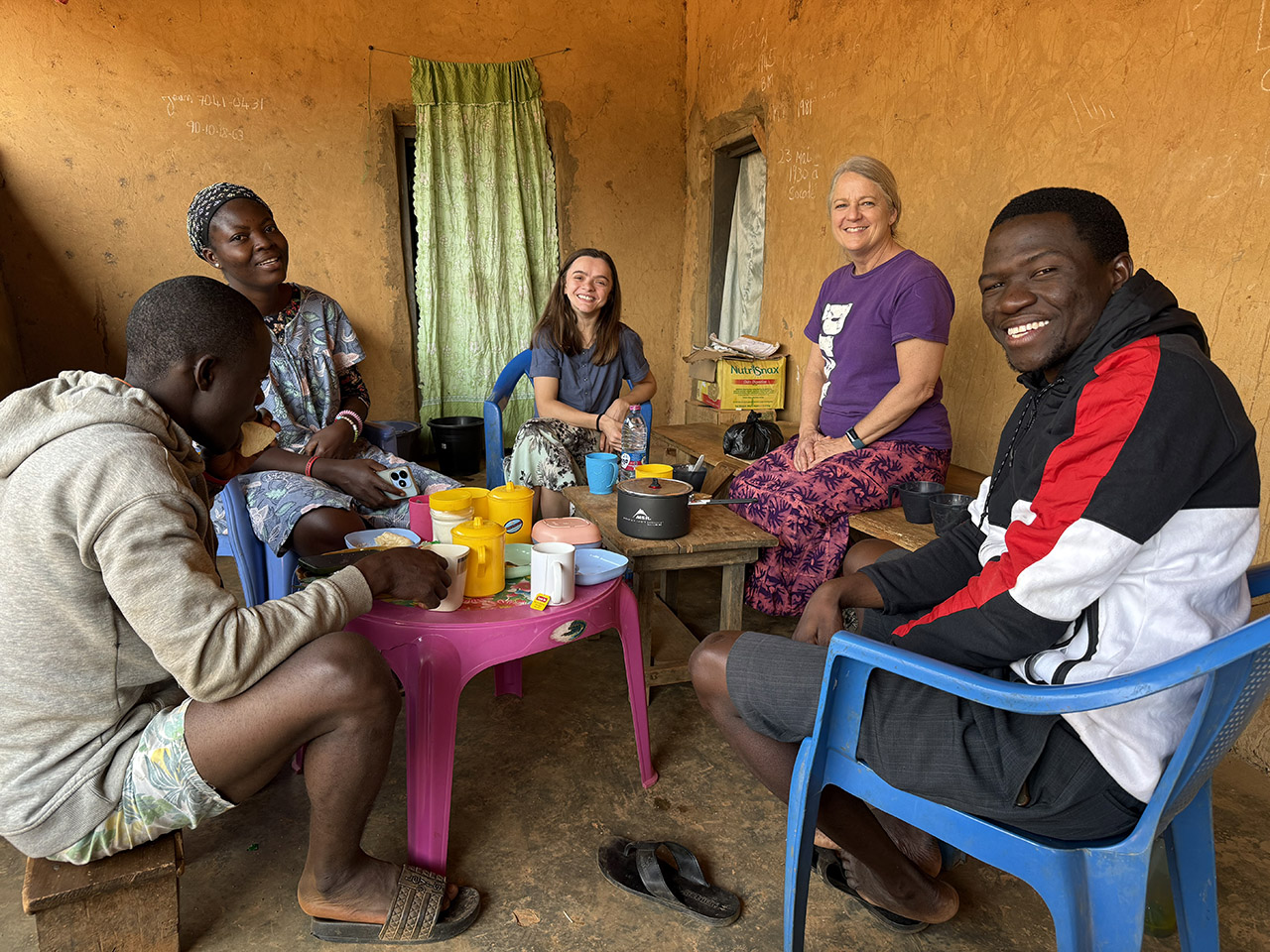
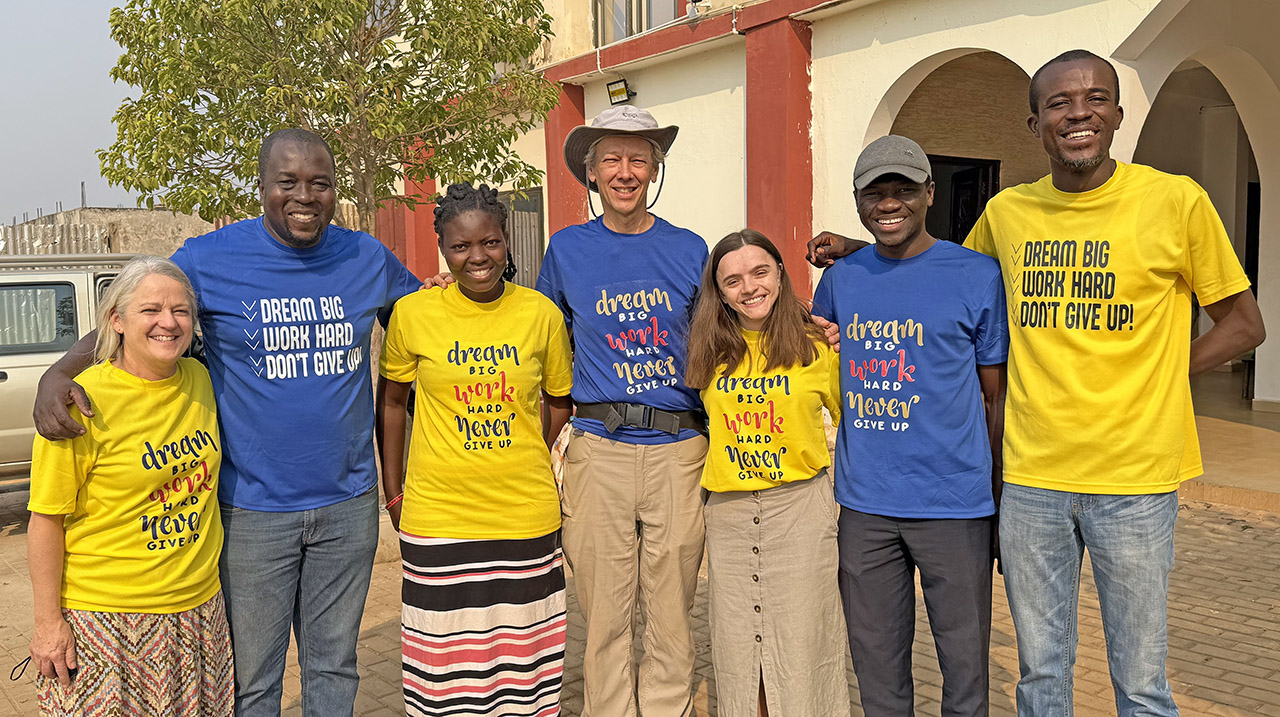
A team photo before we said goodbye to Marianne, who went on to Greece.