All posts by Pete

Office Work

We are safely in Ghana, all is well.
Catching up on catching up

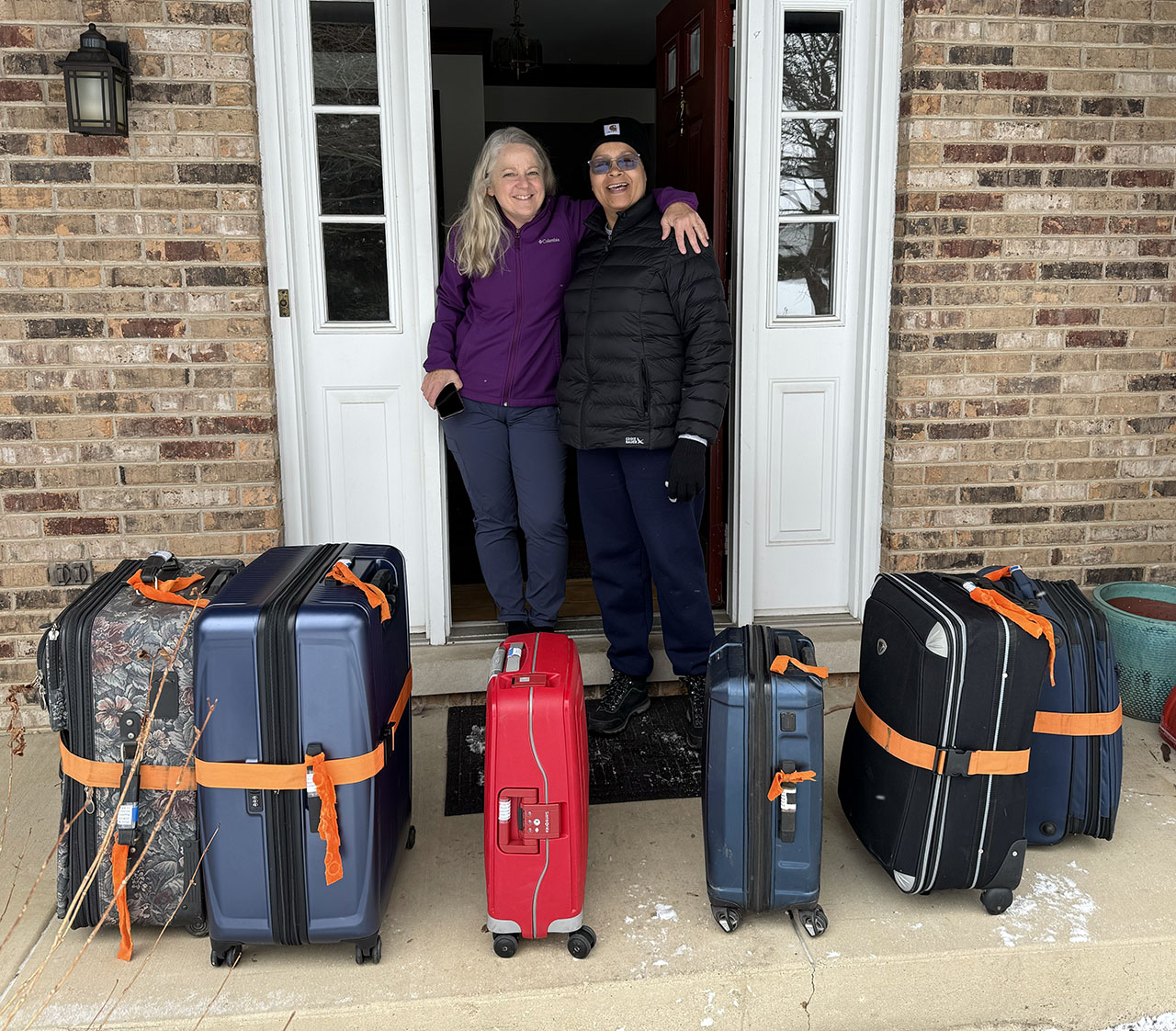
Saturday morning, we went to O’Hare in style. Over the years, we’ve asked friends, neighbors, and staff at OneWay to help schlep up to 500 pounds of gear to the airport. Then it dawned on us: at our local church, we know a retired professional truck driver! She was eager to help and didn’t mind stuffing her back seat and trunk with gear bound for Ghana—everything from knee pads and protective jackets for motorcycle riders up north to soap and toothpaste for the urban missions.

100 degrees later and we were in Ghana. The young customs officer smiled and asked if this was our first visit. We explained that our first visit was 15 years ago. She smiled even larger, asked a few more questions, and we were on our way.
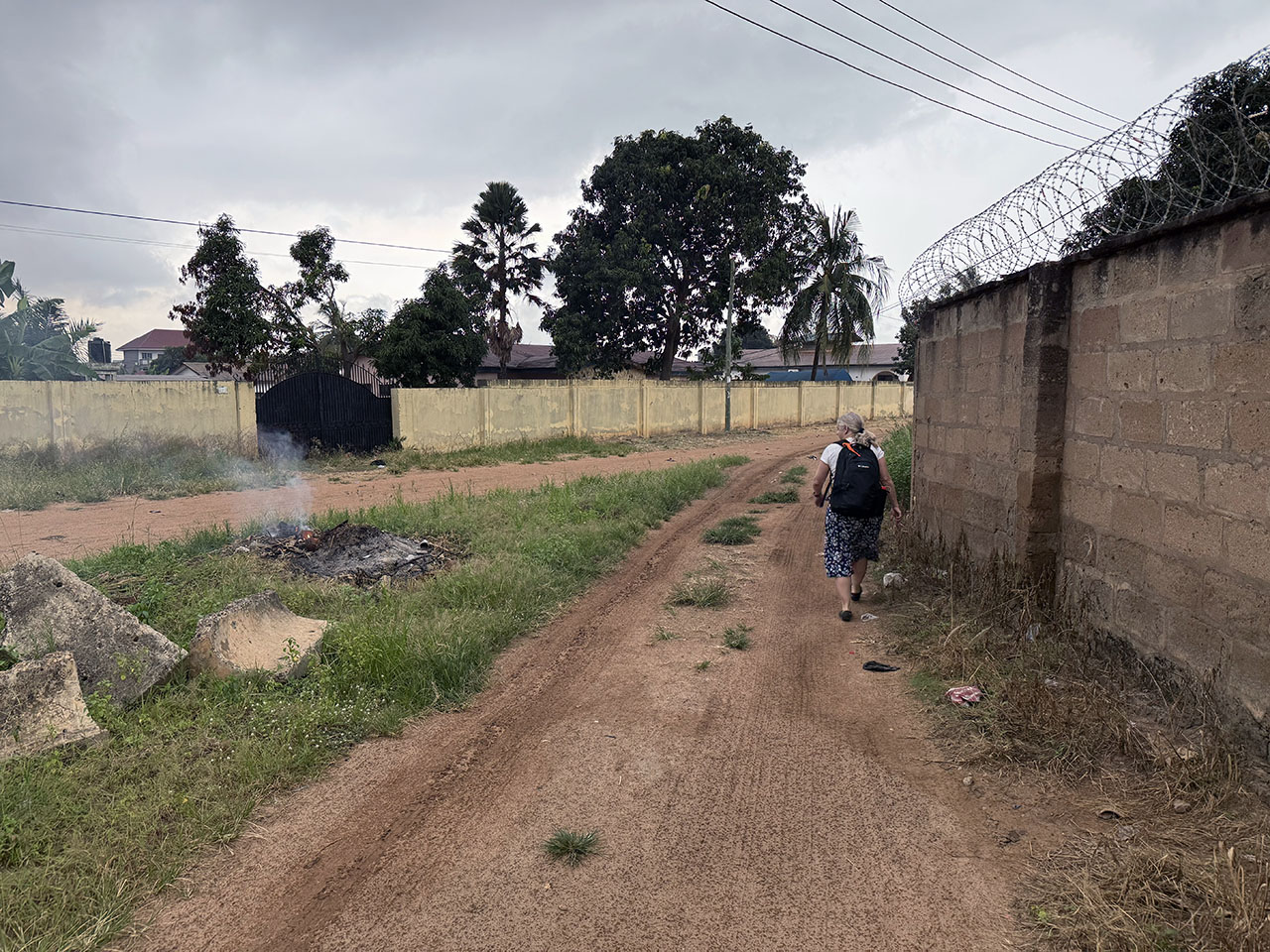
Walking from the hotel to the Philip Centre.

Our previous recording trips enjoy a somewhat predictable pattern: arrive, shower, repack everything, sleep, and in the morning, head North into the bush. 15 Languages have been completed with that pattern. It works. Well… maybe not for every people group and language.

Our packing lists help us remember all the details, everything we need to bring, from malaria meds to bluetooth headphones. But I suppose it is time to revise them. The packing list should include things to forget, such as expectations.

Just before Christmas, the original recording plan, which included working in Togo for much of the time, fell through. So with short notice, the team jumped to another language that had been on our list, and began preparations to record the Hausa.

Often, immigrants form residential communities as they migrate across countries and regions. In Chicago, we have Ukrainian Village, China Town, La Villita, and neighborhoods of Polish, Puerto Ricans, and Italians. In Ghana, the Hausa have clustered into Zongos. They are spread across the Sahel, and across Ghana. They are nearly all Muslim — only 0.1% are Christian. Connecting with Hausa churches to plan for recording choirs, Bible stories, and more has been daunting for the team here in Africa. So while Cyrus and Clement and the OneWay network of partners have been working on the Hausa recording plans this week, we have been working with the local Philip Centre staff on a long list of catchup items… everything from discussing computer network updates to planning for a large October training (more on that topic next week, when we head up North).

On previous trips, we would have already recorded 100 tracks by the third day. On this trip so far, we are doing something I’m completely unskilled and unprepared for… Office Work in Ghana. We are working out spreadsheets, catching up with friends and co-workers, planning, organizing, budgeting, etc.

Tomorrow we hope to have our first few audio recordings in Hausa.

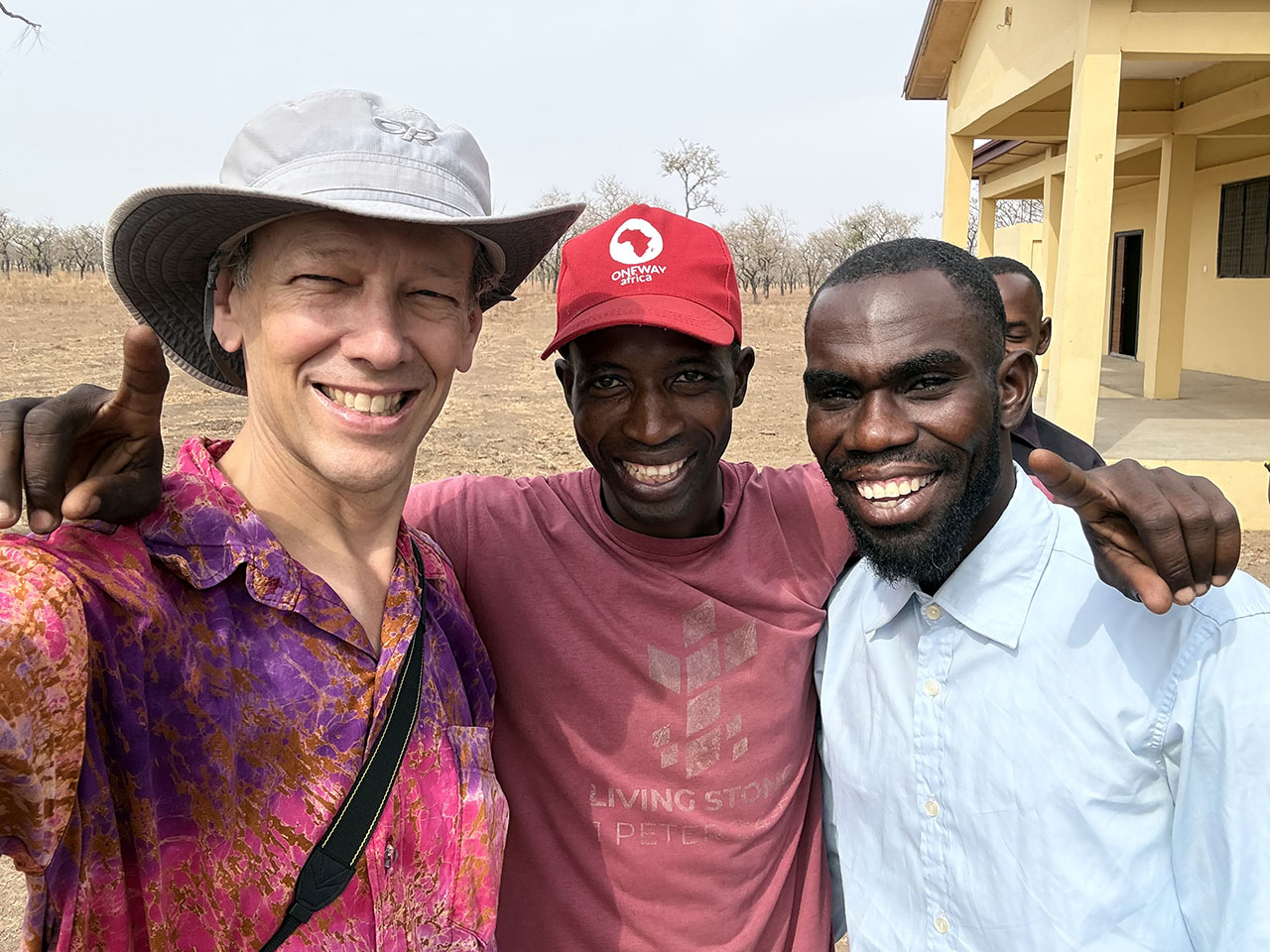
But the change of pace has been good. We have enjoyed spending time getting to know the people behind the WhatsApp messages that dart between Chicago and Ghana. Many of the staff know us, and text us questions or send photos, but we have all too often sped through the Philip Centre on the way North, with nary time to hug, wave, and selfie. So we thank God for the time to enjoy the planning, organizing, and repairing while deepening friendships.
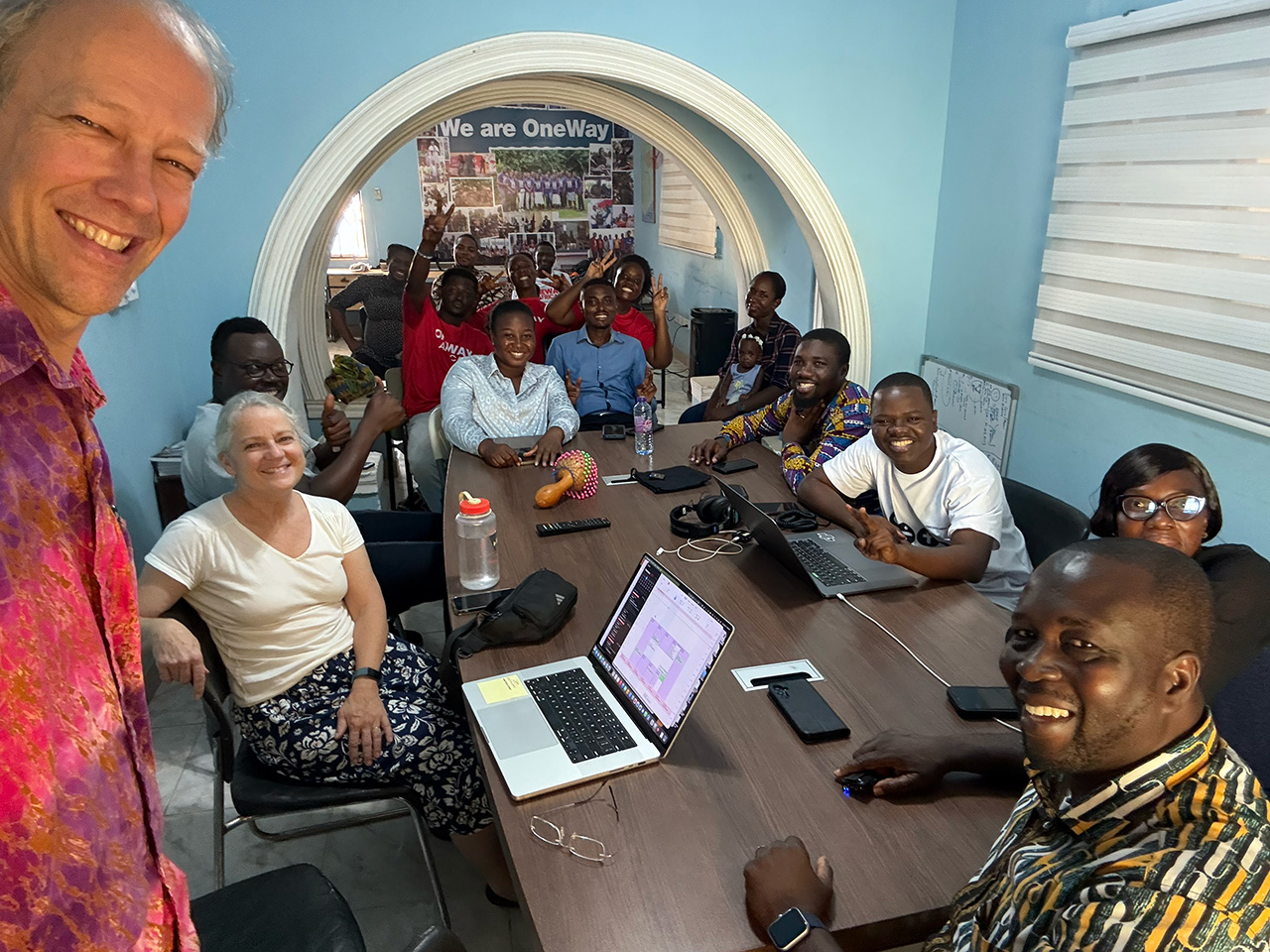
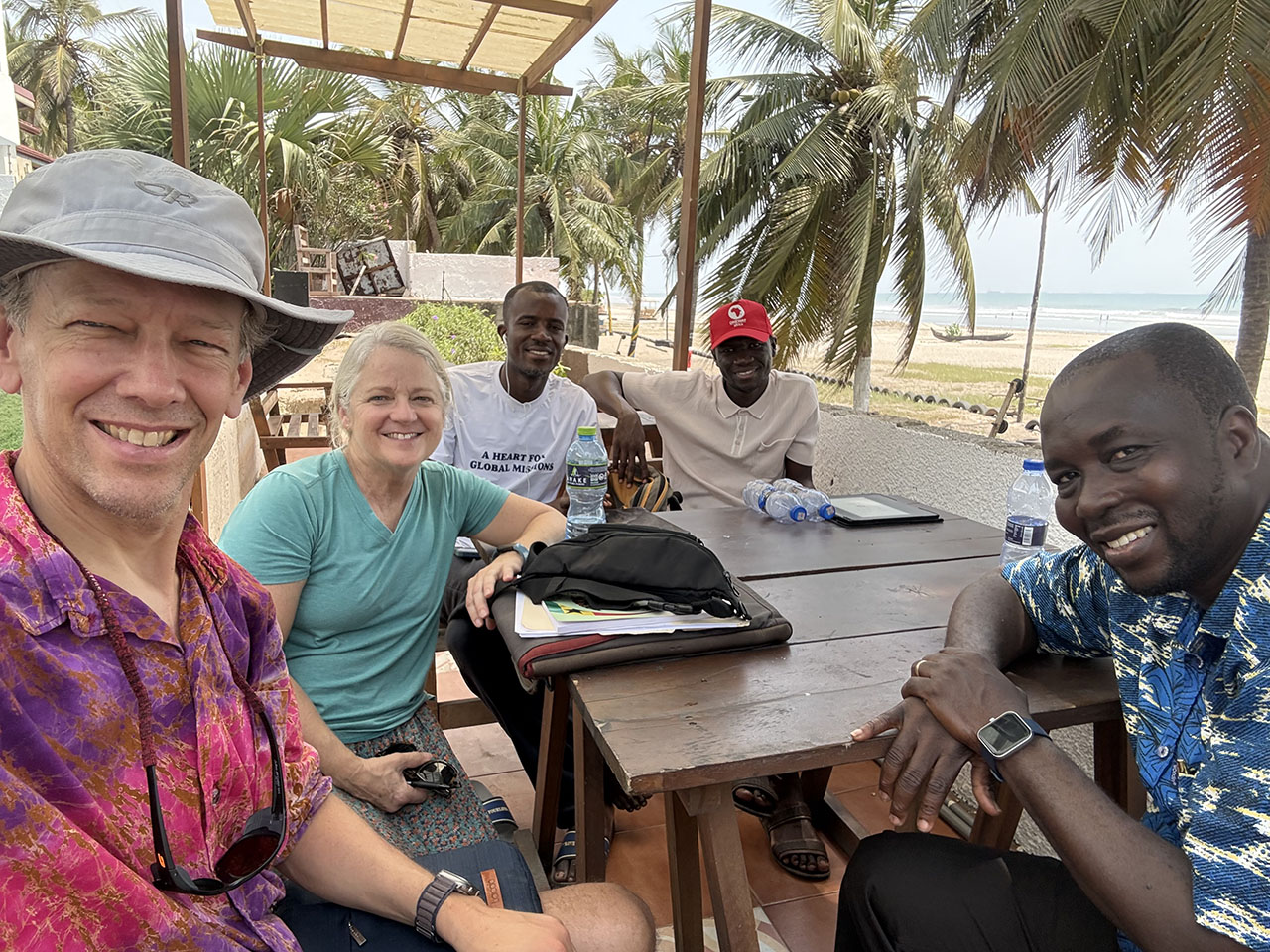
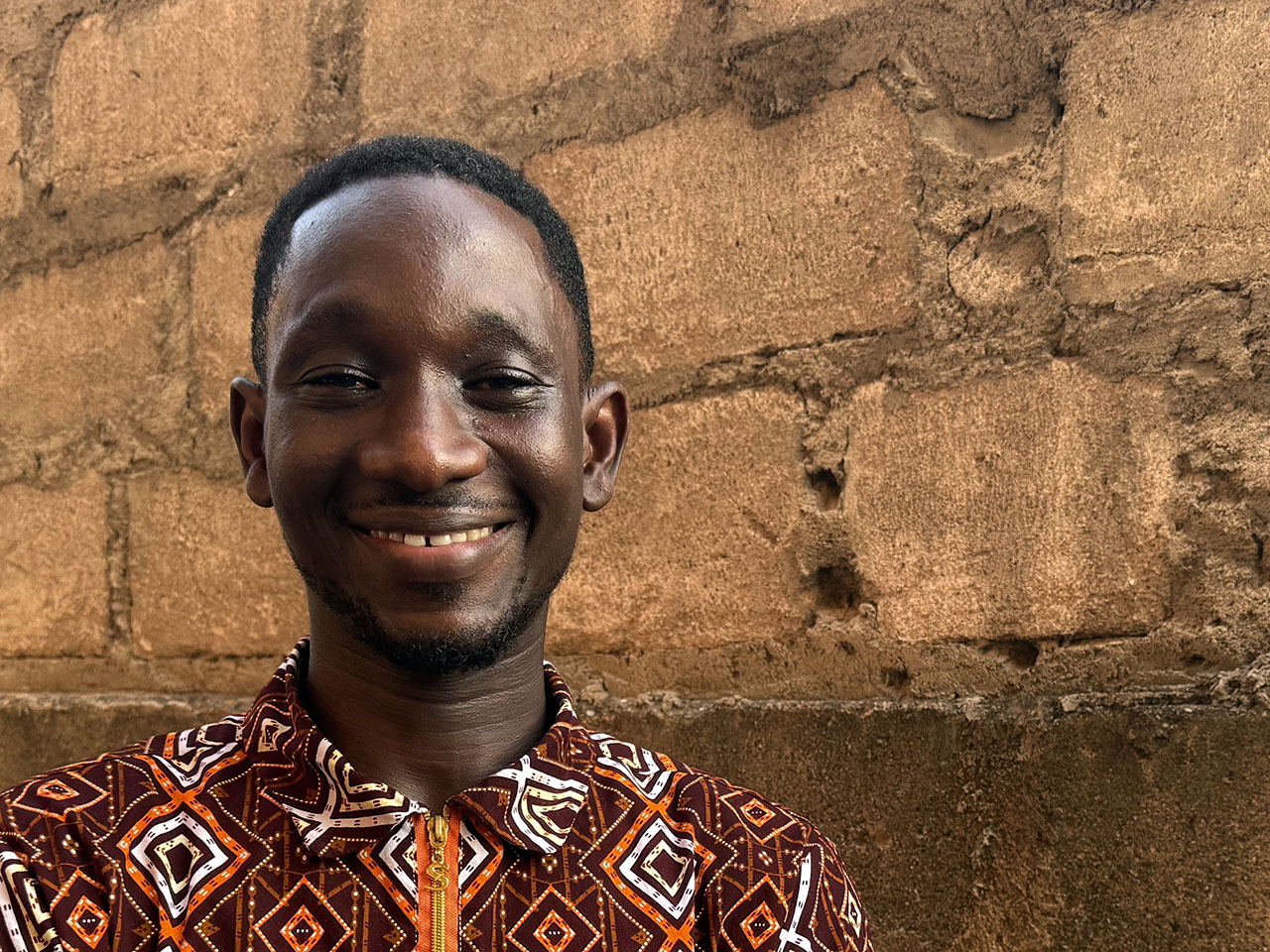
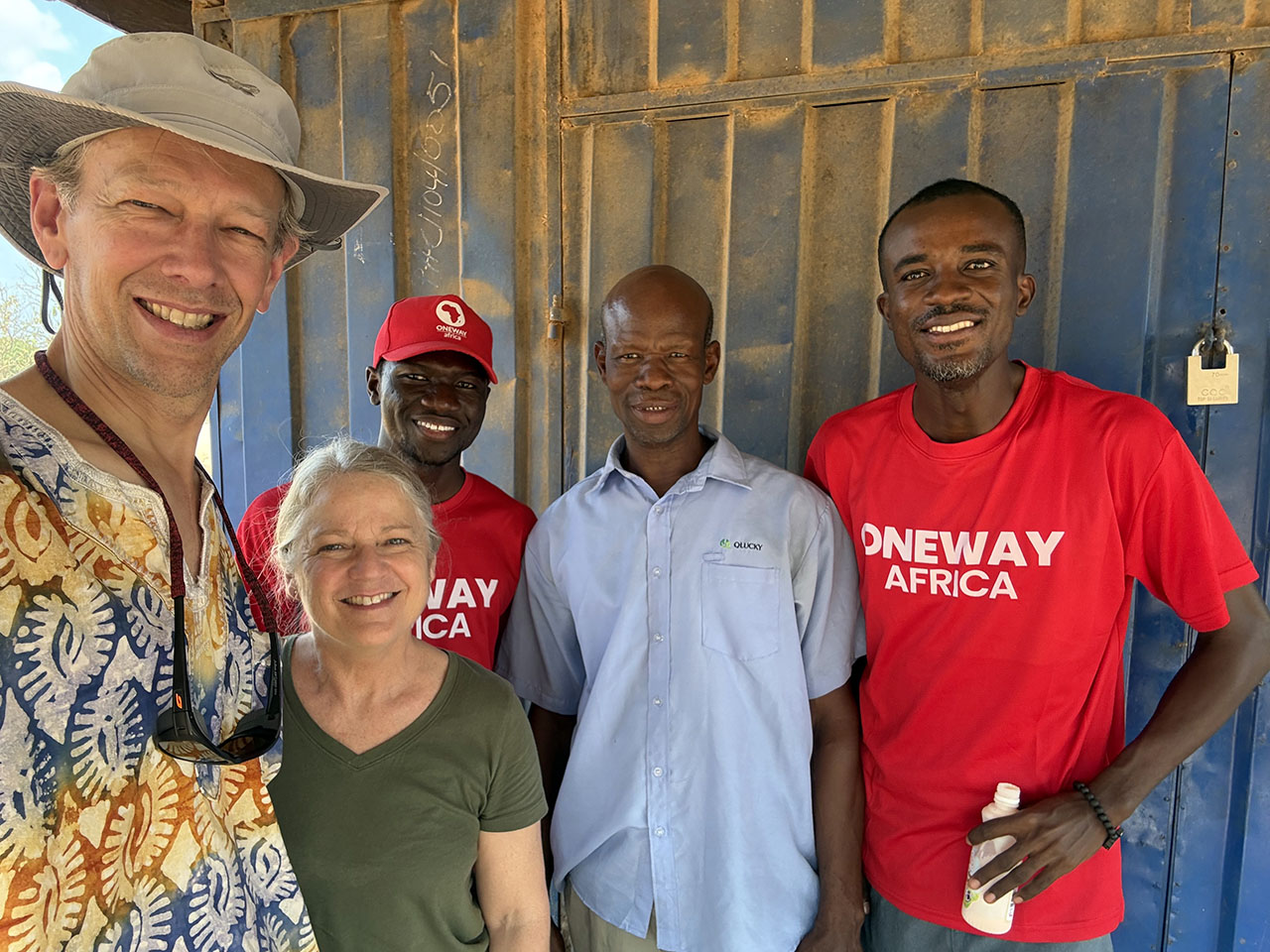
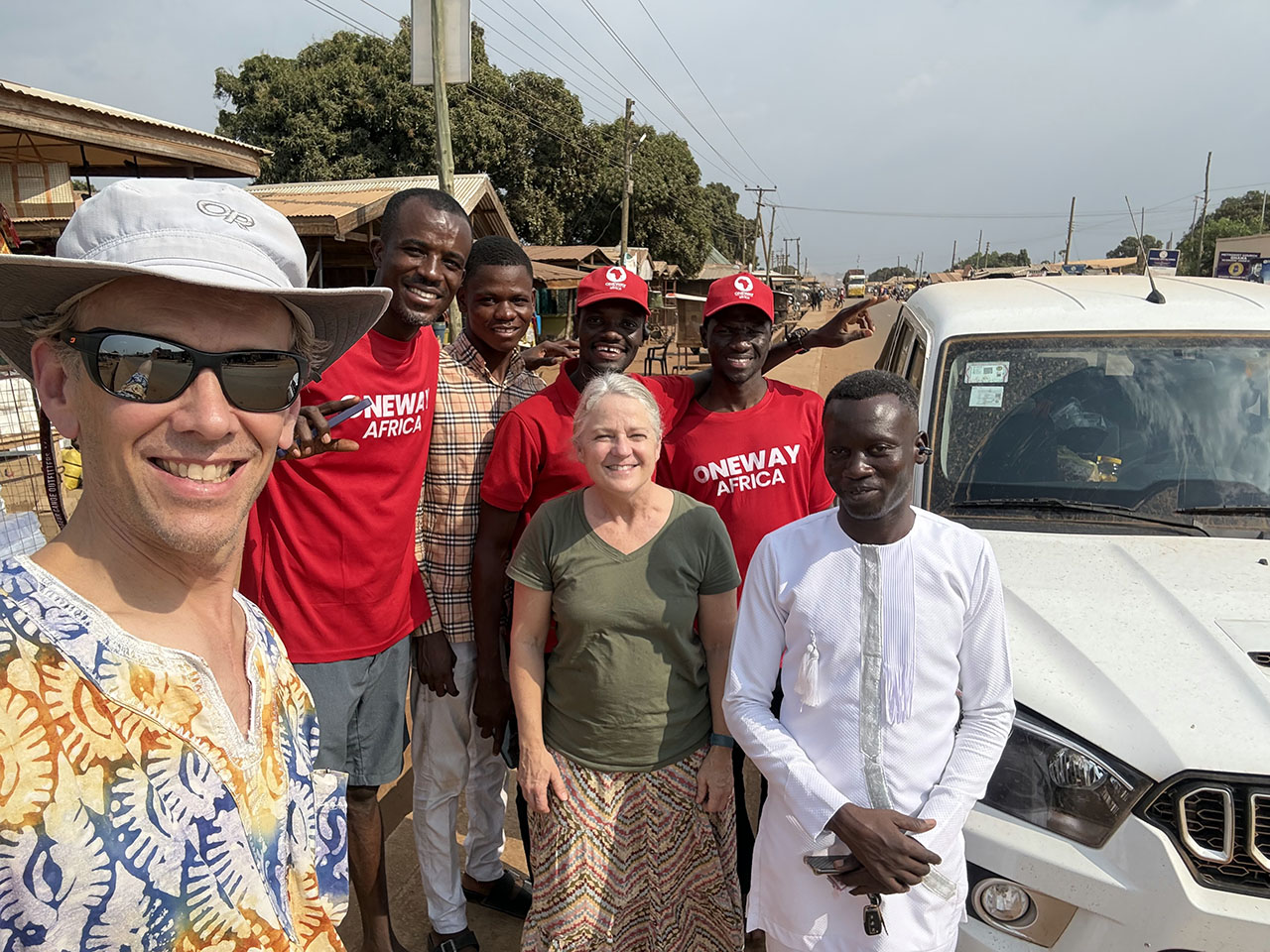
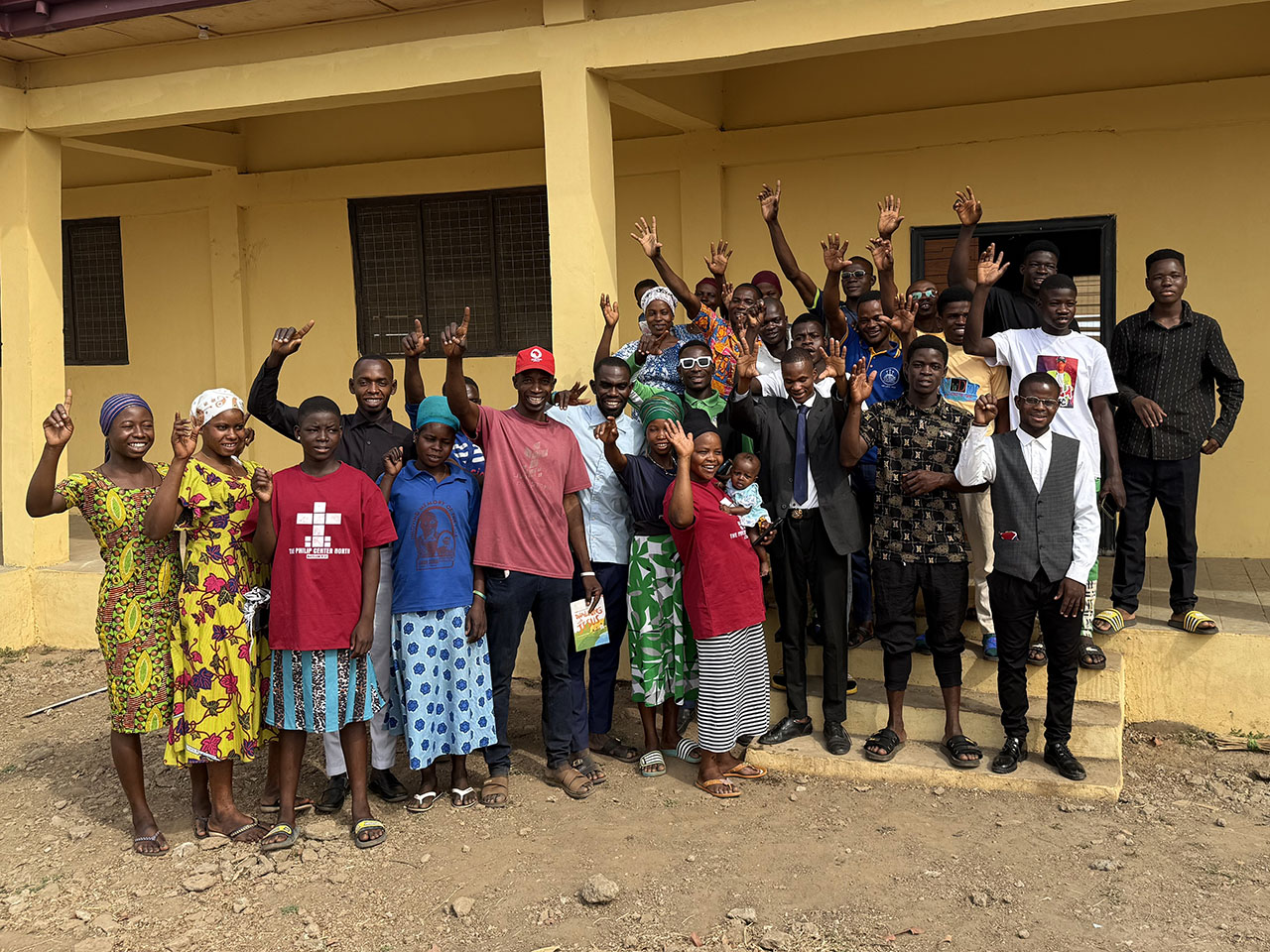
The photo above shows the team after we spent 2 hrs singing and praying to start the week on Monday. The man in the white T-shirt on the right, across from Beth is Josias. His birthday was today. 28 years old. He came to Ghana to attend Ray’s Livingstone School of Missions and decided to just stay and work! He is from Benin, speaks French, English, and his mother tongue. His always-ready-smile is delightful.

For his birthday, one of the former staff members composed a song for Josiah. We were all singing along by the end. Who needs the traditional Happy Birthday ditty when you have creativity, singers, and a guitar and djembe.

The Birthday Video

You may find yourself singing along. Click the image below to play the video.

"https://leopardshark.com/ghana-trips/wp-content/uploads/2026/02/Josias-BD.mp4"
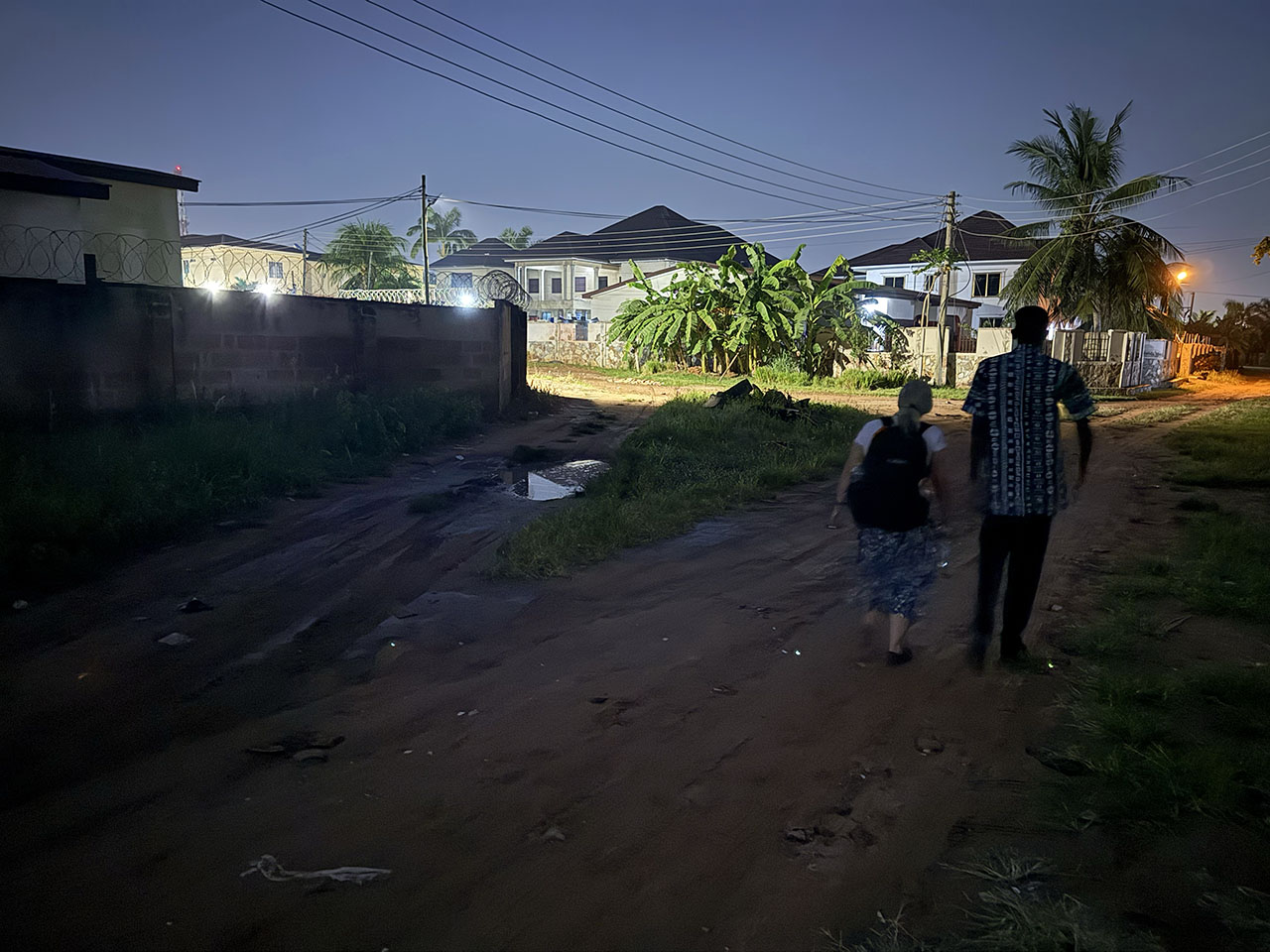
Walking back the hotel in the evening.

Good night.
The Metric System

Good progress: we are still learning.

It feels a bit like our strategy this year was to shop for new home furnishings by visiting the Chicago Swap-O-Rama flea market and hoping we would walk away with a well-matched ensemble. We wanted to make progress on recording Hausa; plan for the expansion of BiblePlus to neighboring African countries such as Togo, Benin, Sierra Leone, Chad, and Guinea; make local arrangements for Create Mobile instructors to visit in October for a month-long training; mount a mobile phone directional antenna at the Philip Centre North; repair computer equipment; and plan for new video content for C&C to record.

On other recording trips, all of the 100+ raw audio and video tracks would have been collected, and by today we might be bouncing down a dirt track to a new village, preparing to record a second language. In the cool of the evening, after a meal of jollof rice and chicken, we might be sitting outside under a “summer hut” (a thatched-roof gazebo with no walls) and editing in earnest.

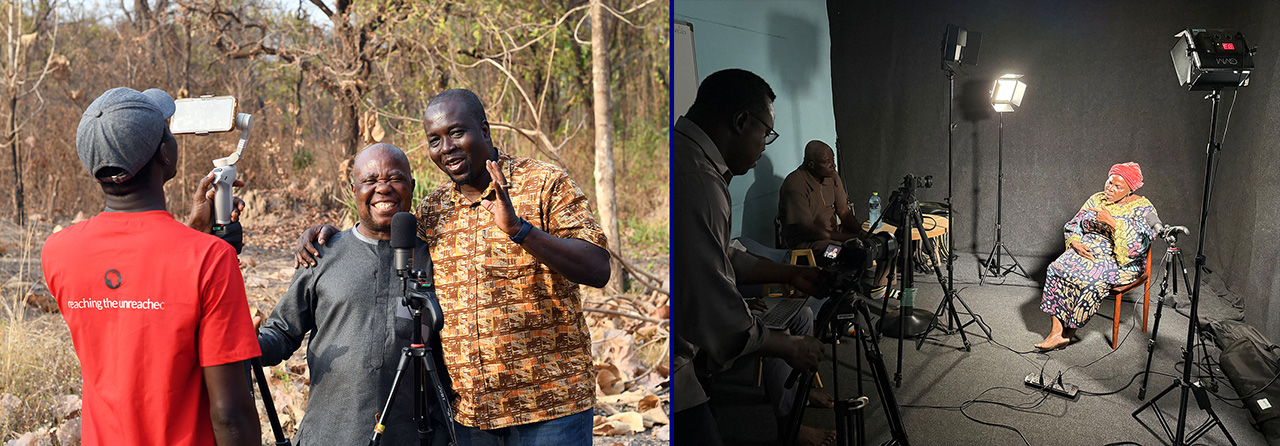
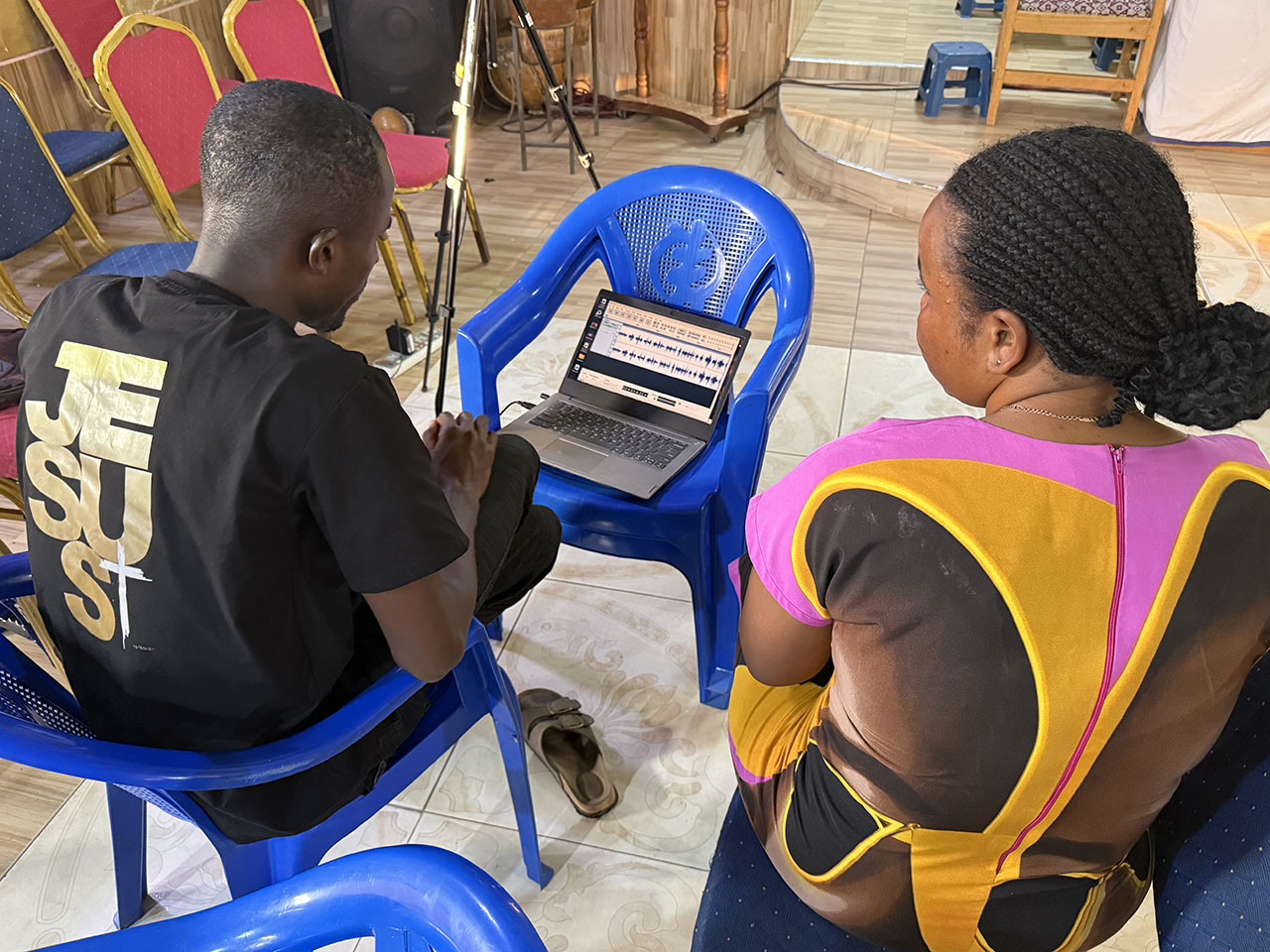
Left: Cyrus recording an Adele paster last year — the studio is the bush. Right: We are in Accra, and can use the OneWay studio. We are more familiar with the bush, and had no idea how to configure the studio. Thankfully, Newman was available.
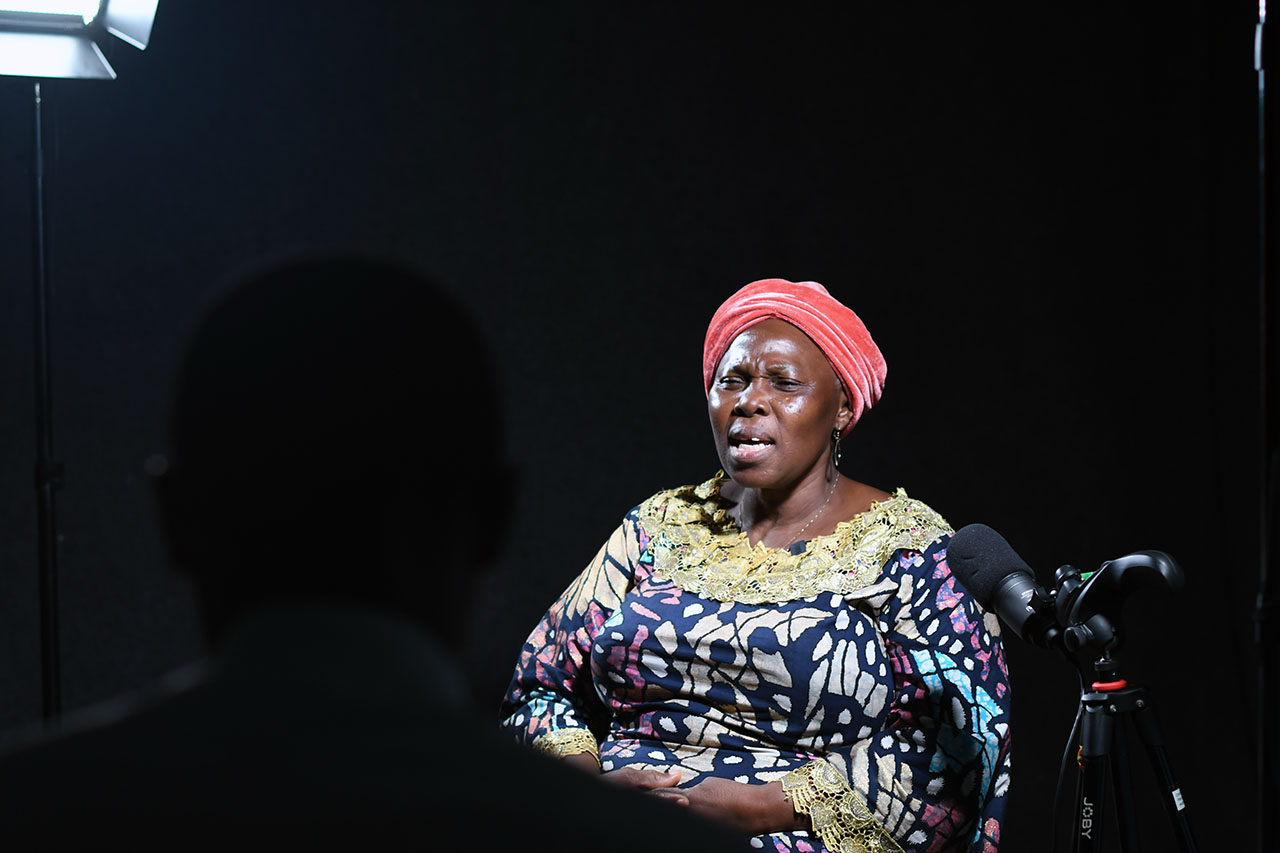
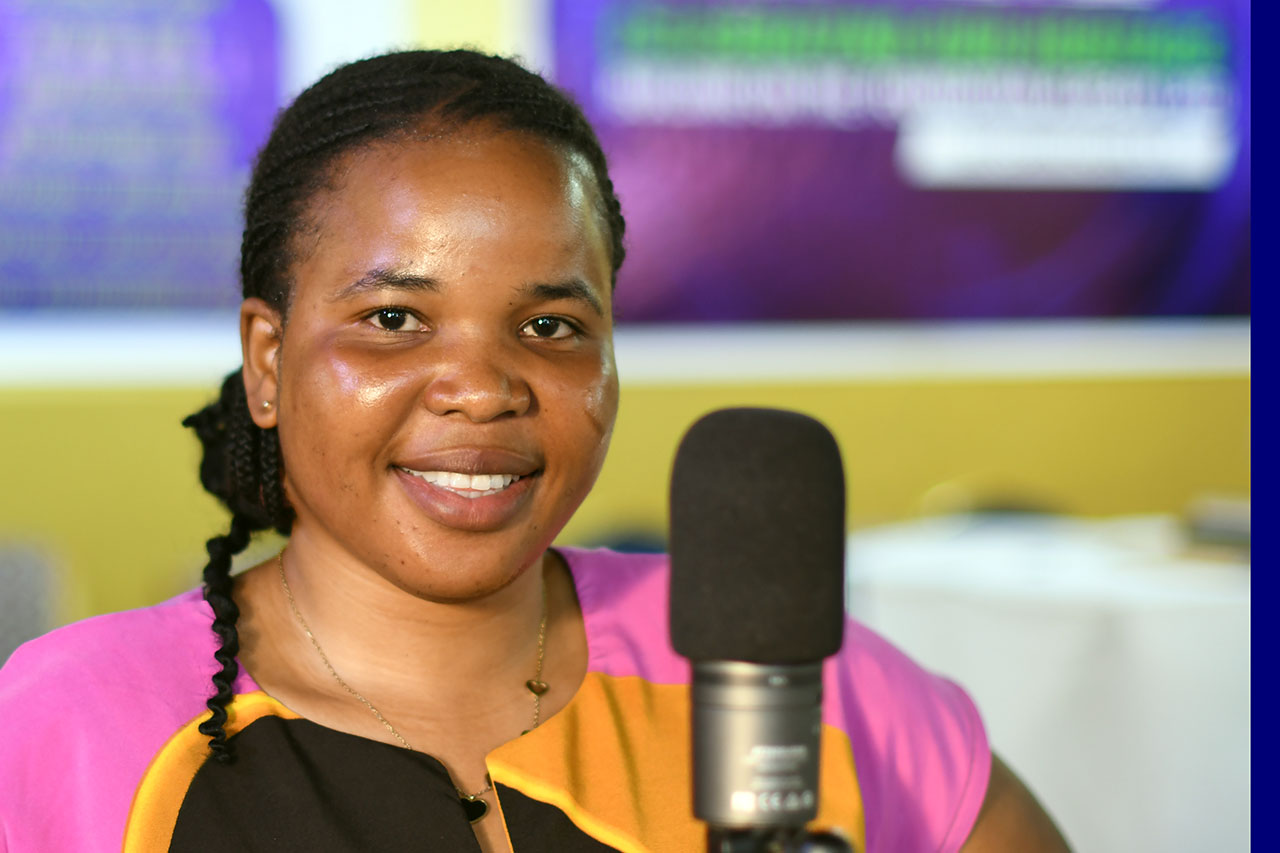
Mariam tells her story. Cyrus records the audio.

Instead, we recorded Mariam in Hausa, English, and Twi. One beautiful story.  Mariam grew up speaking Hausa in Nigeria. As a child, she had questions about her faith — questions that can cause trouble when boldly asked by a young girl. Yet Mariam was blessed with a father who wanted to see her educated, even when local traditions did not support girls’ education. At school, Mariam continued her questions and her search, eventually learning about Jesus.

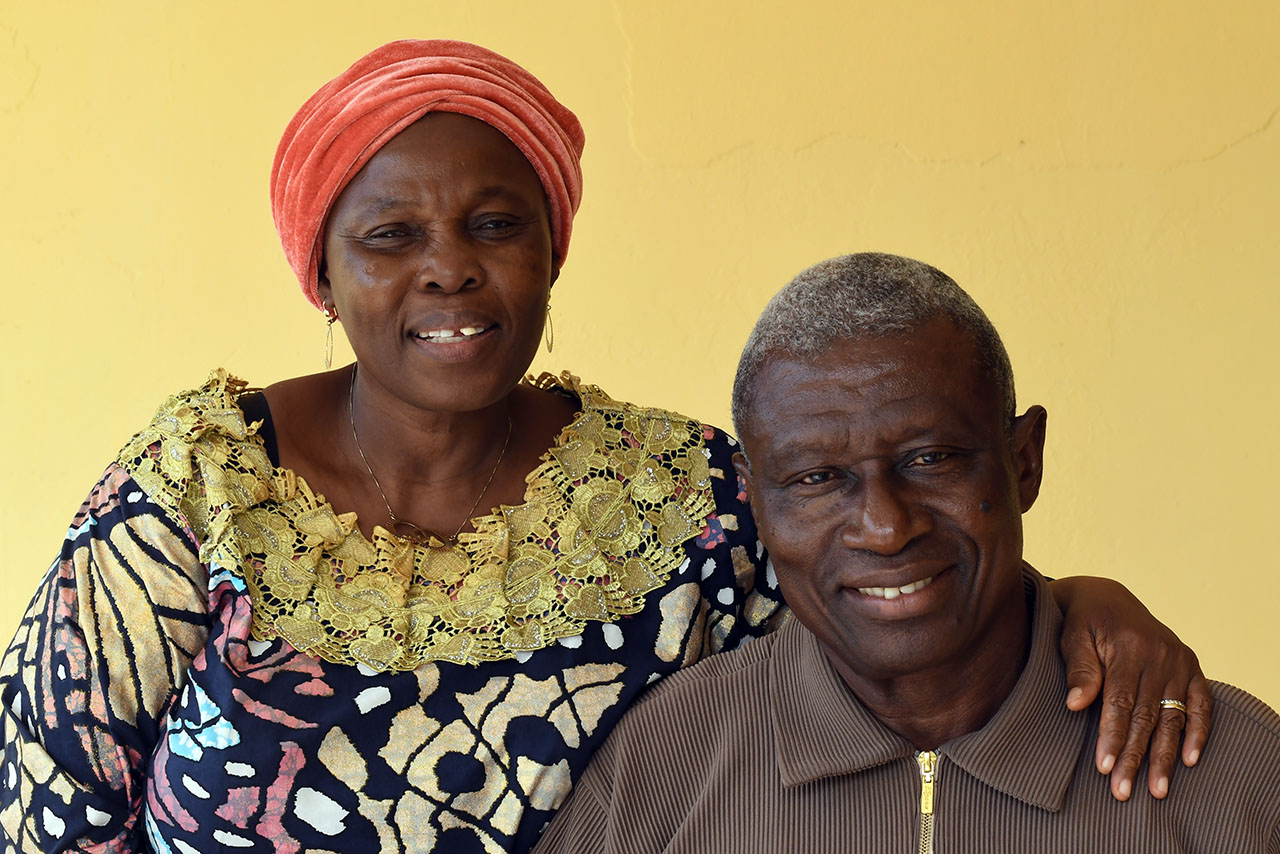
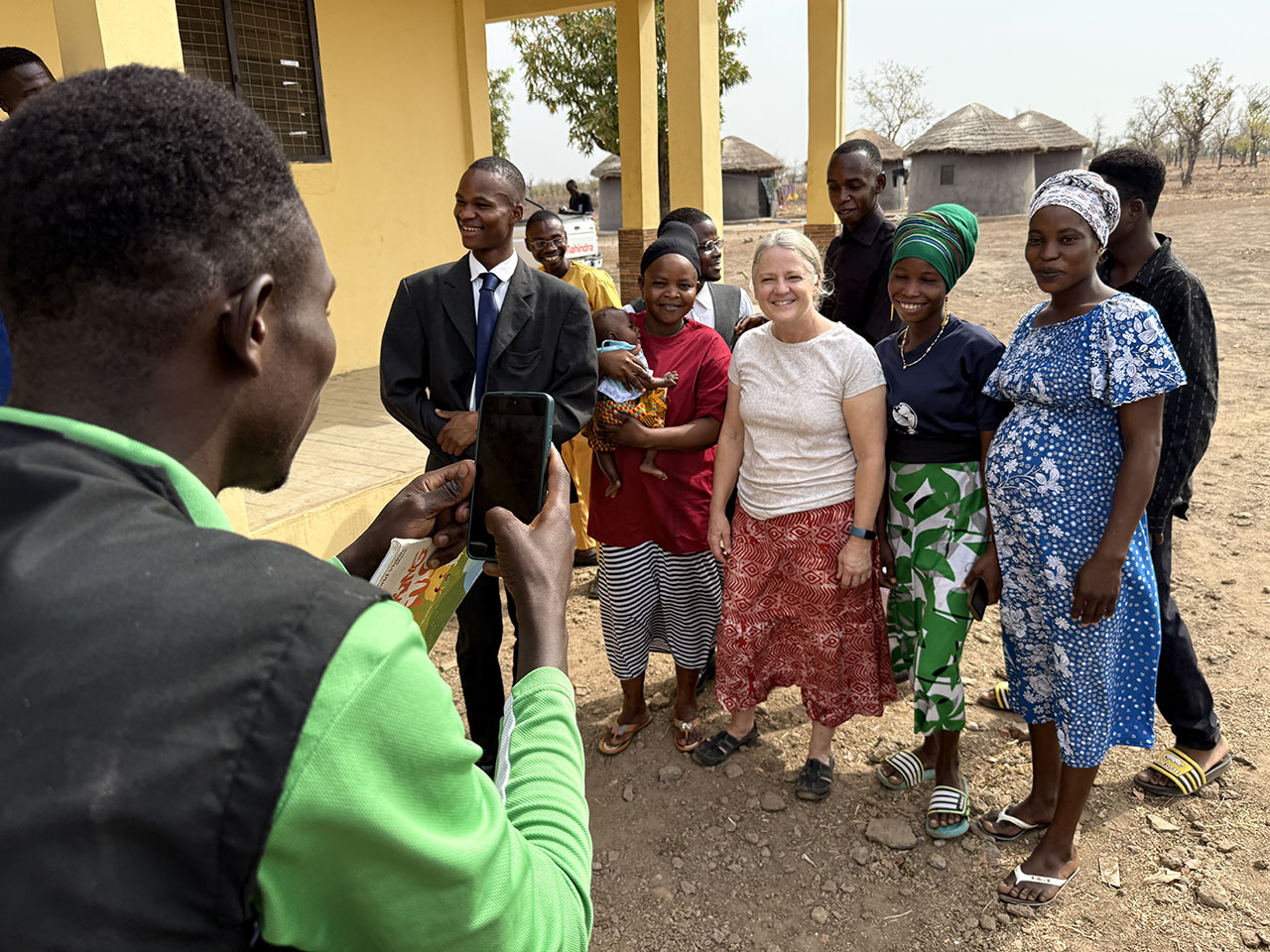
Mariam and her husband pose for a photo outside the office.

But her new life was costly. She was kicked out of her home and eventually moved back to Ghana. Today, she and her husband are missionaries to the Hausa in Nigeria and Ghana — answering the very questions Mariam had as a child and sharing Christ’s love with many people.  One powerful story.

A Planning Retreat

On the coast of Ghana, just south of Accra
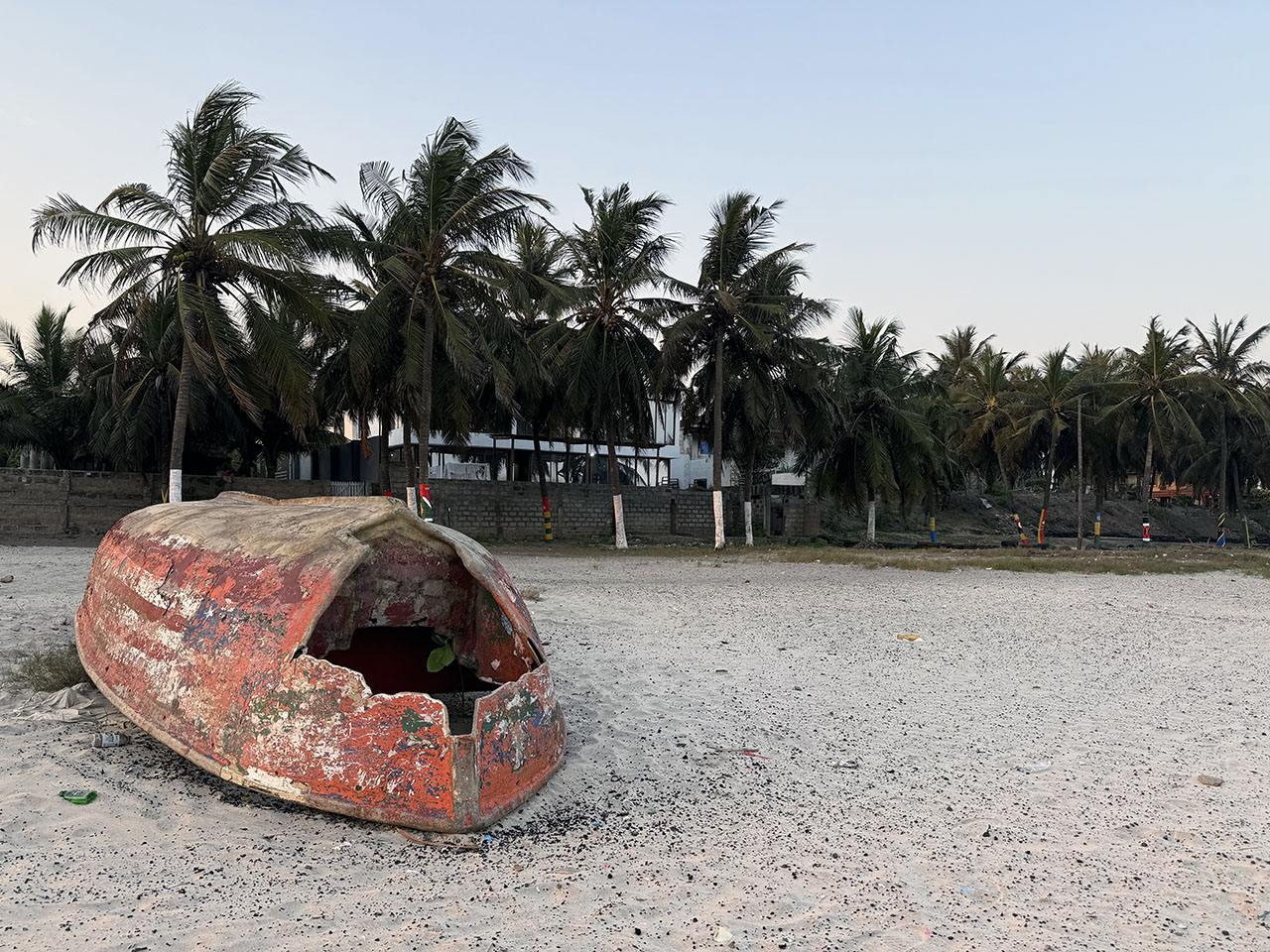
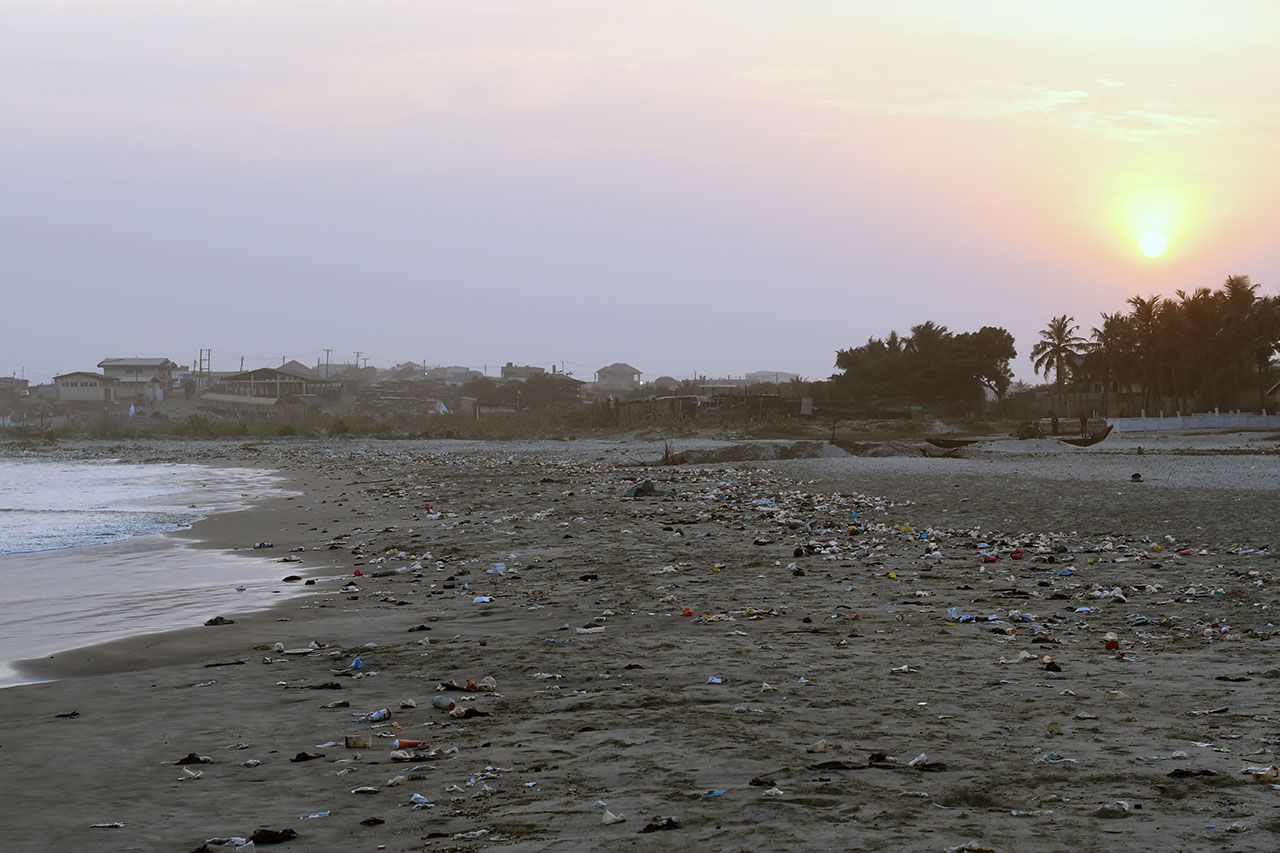
A peaceful sunset. Sadly, in the foreground — disposable plastic waste. A difficult image to include, but it is the harsh reality of daily life.
Time in the shade to plan and work through strategies

Yet. Yet. The metrics. While in a planning meeting with C&C, I made a joke about a graph that was “up and to the right.” I got puzzled looks — it was not an expression they were familiar with. Americans are driven by metrics. Even in mission organizations, annual reports highlight them with pie charts, “up and to the right” graphs, colorful infographics, and timelines showing improvement and projected growth.

As Beth and I sat with Ray, Cyrus, and Clement for a set of distraction-free planning meetings along the coast, the gap between our contexts was on full display.

My metric — 100 tracks — how I was considering progress and planning for remaining Hausa work — was misguided. Ray, Cyrus, and Clement were looking at impact, not integers. I was stuck viewing the world through a metric lens, and while I didn’t have little infographics floating through my thoughts, they may well have been bouncing around my subconscious.

Our short, one-day “retreat” to pray, sing, and plan for the next three years — with expanding to countries such as Togo, Benin, Sierra Leone, Chad, and Guinea on the horizon — was a fantastic success after we tossed out our metric-colored glasses and tabled discussions of finances and milestones. For Ray, the driving theme was clear: encouraging and training people. Changing lives. Impact.

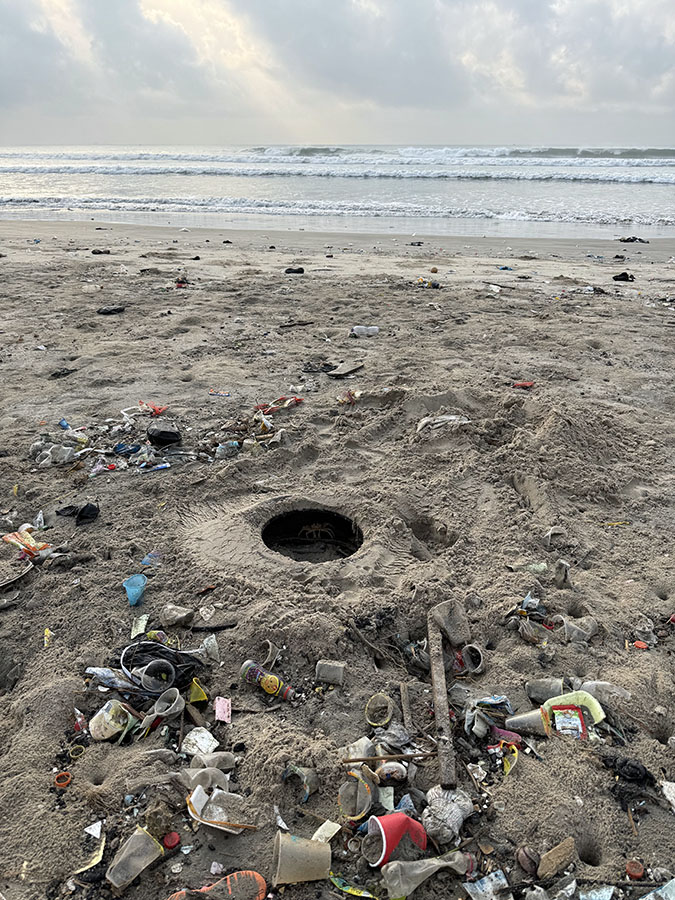
Just after dawn, a hard working young man brought a shovel and spare tires to the beach. He proceeded to dig large holes, toss in the tire, and then cover it with a nylon sack. After he left, I went down to investigate.
Crab trap

As I reflected on the wonderful progress we had made building a plan for encouraging and training people, I thought of a passage from the Gospel of Matthew. Peter asked Jesus for a metric: “How often do I need to forgive someone? As many as seven times?” Jesus replied, “Seventy times seven” — which essentially means, “Stop counting. There is no metric” — check your heart.

Maybe in some situations, shifting away from the numeric score and looking at the people and the impact, can help reframe and set a new course. 

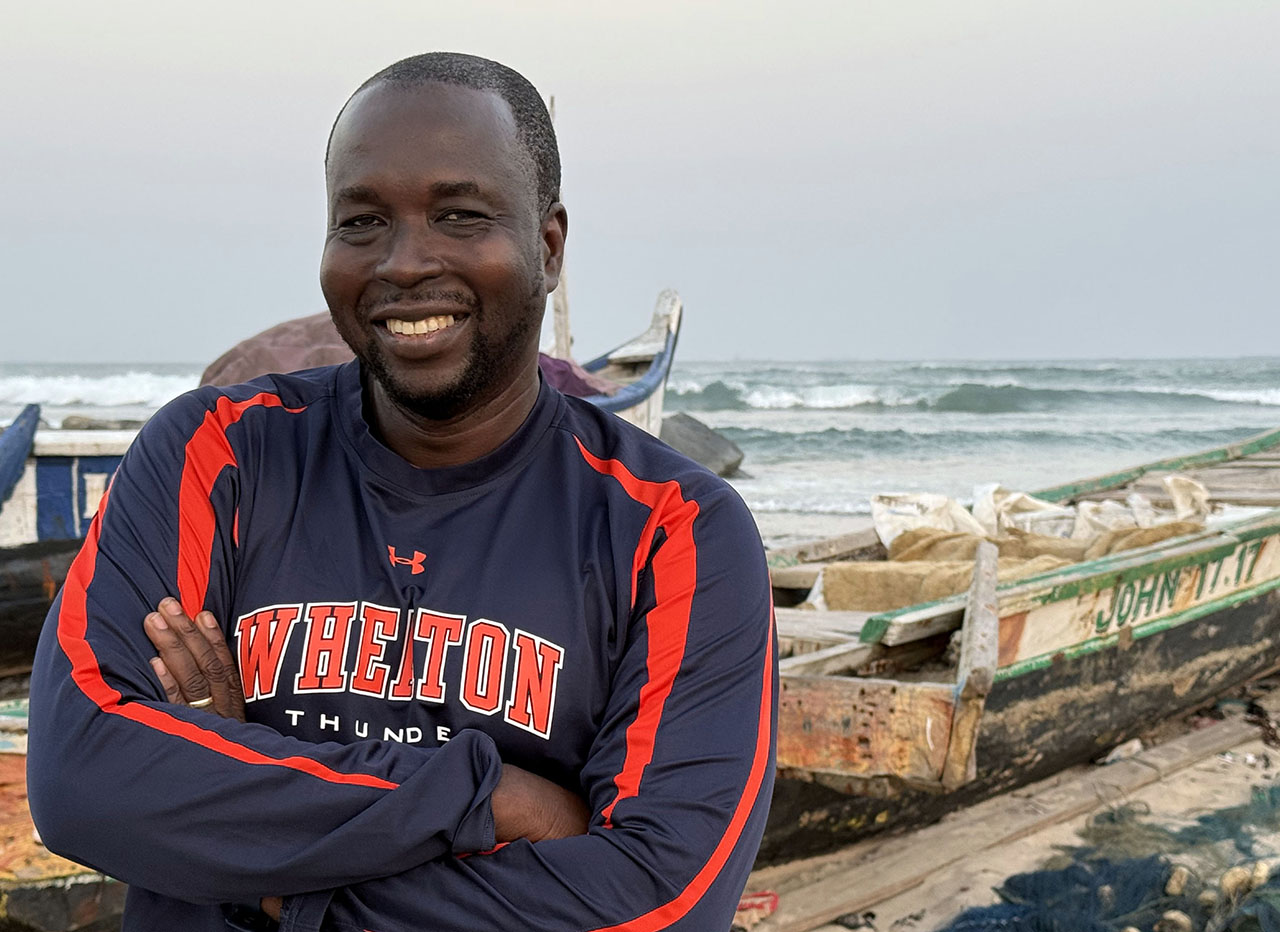
Ray poses for some fun alongside a fishing boat

"https://leopardshark.com/ghana-trips/wp-content/uploads/2026/02/Coconut.mp4"

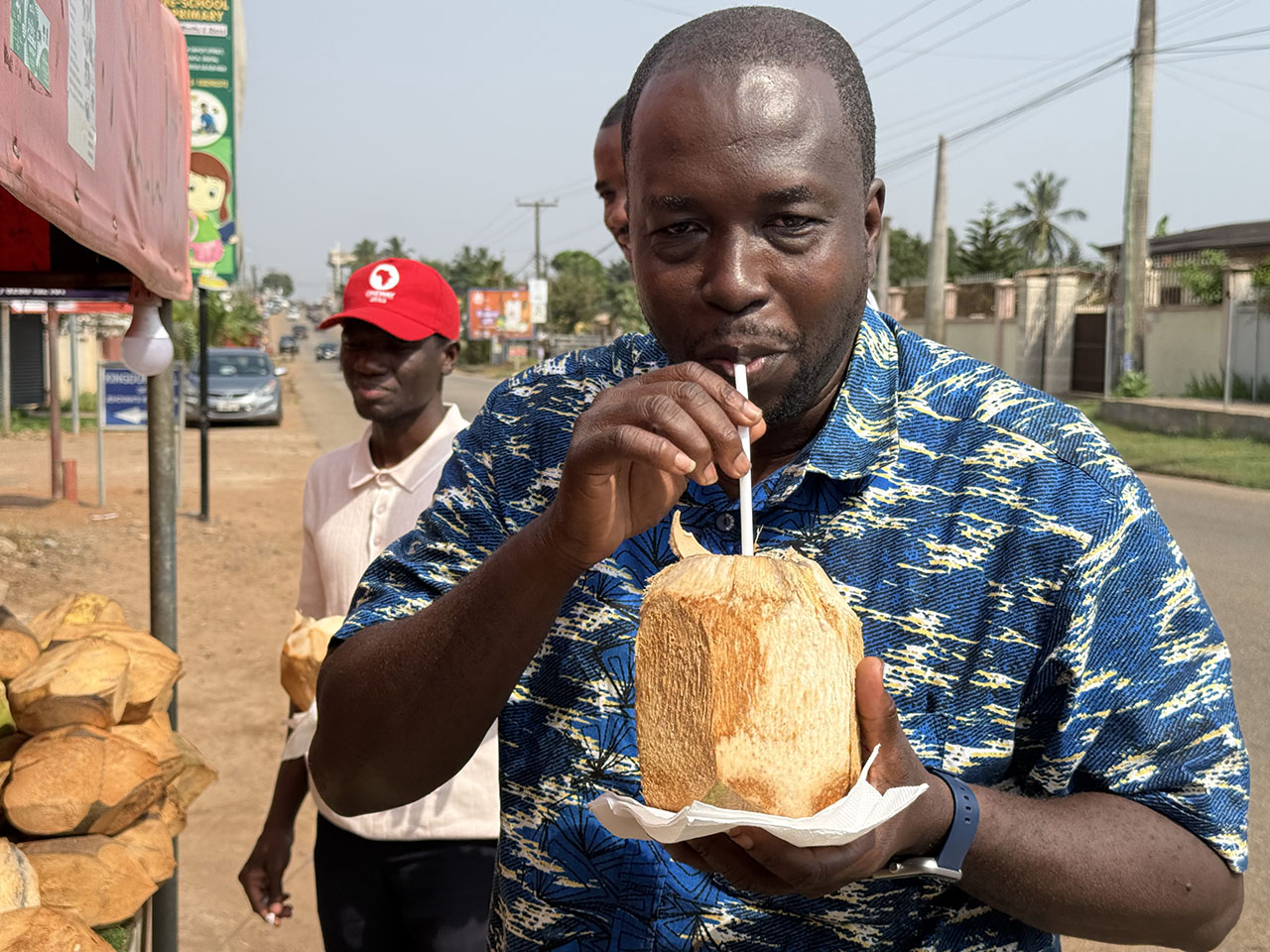
Fresh coconut on the way home…

We have a bit more than a week left here in Ghana, so there is still plenty of time to learn more. 😊

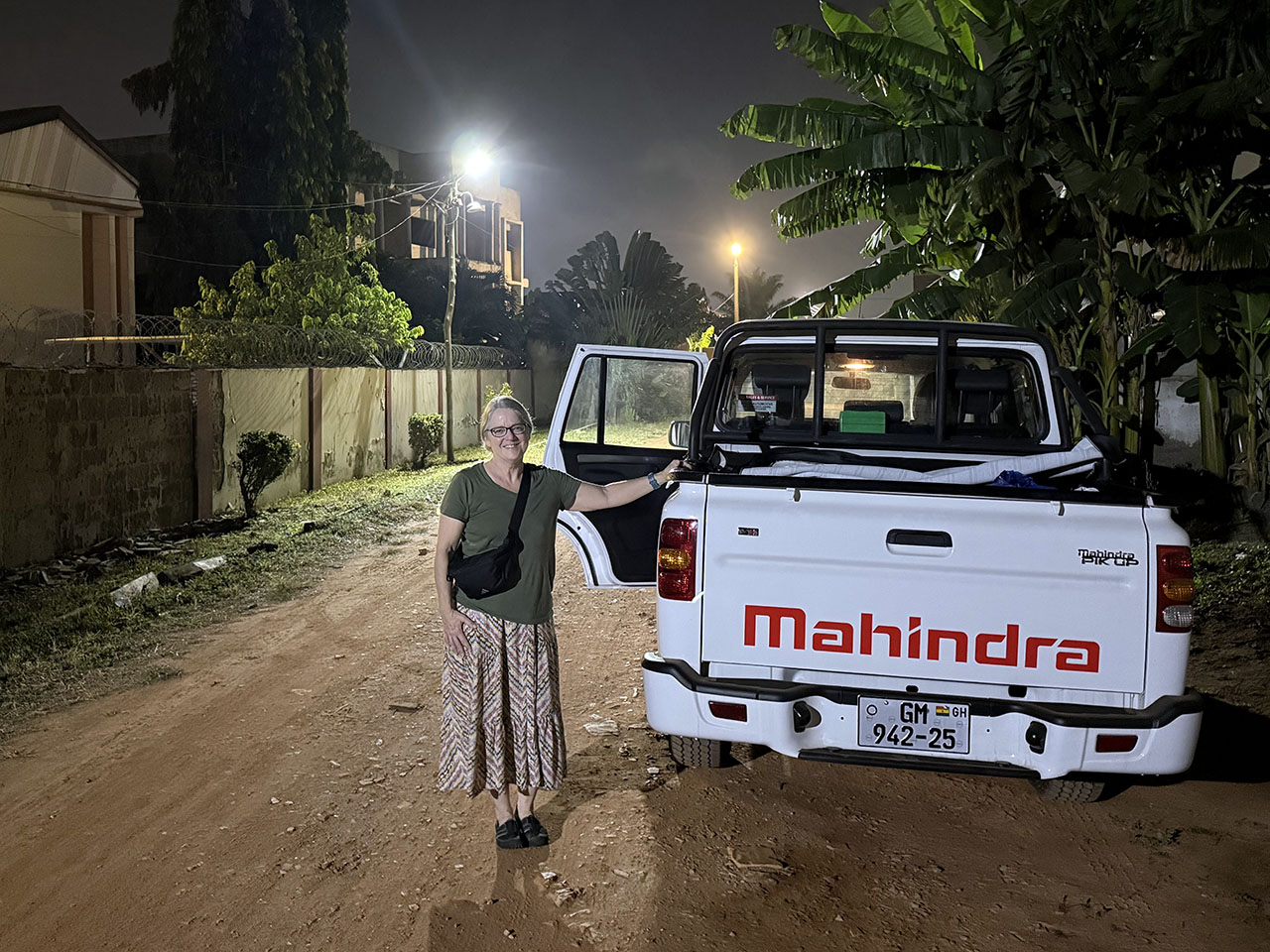
The Mahindra and I

Last Sunday, the team made further progress recording the Hausa. Rather than asking someone to come to the studio, we did what we do best… pack up, head out, make friends, set up, and record.

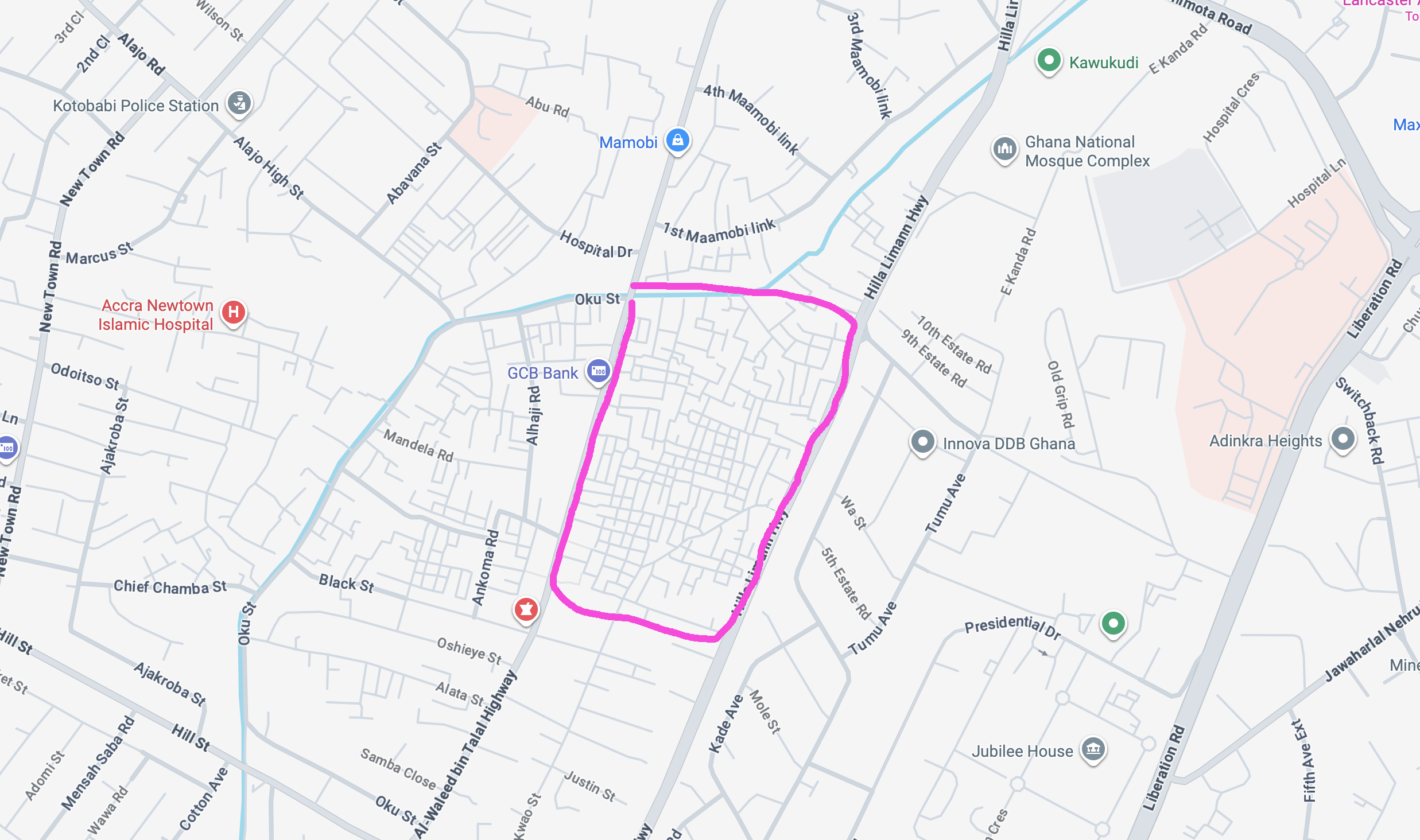
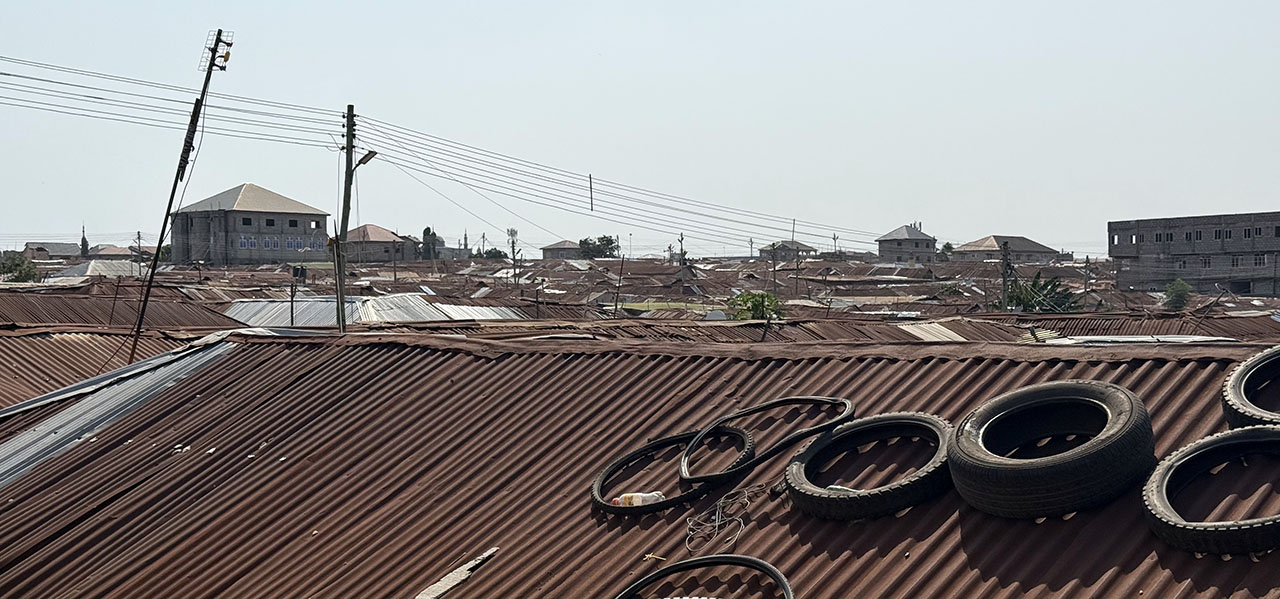
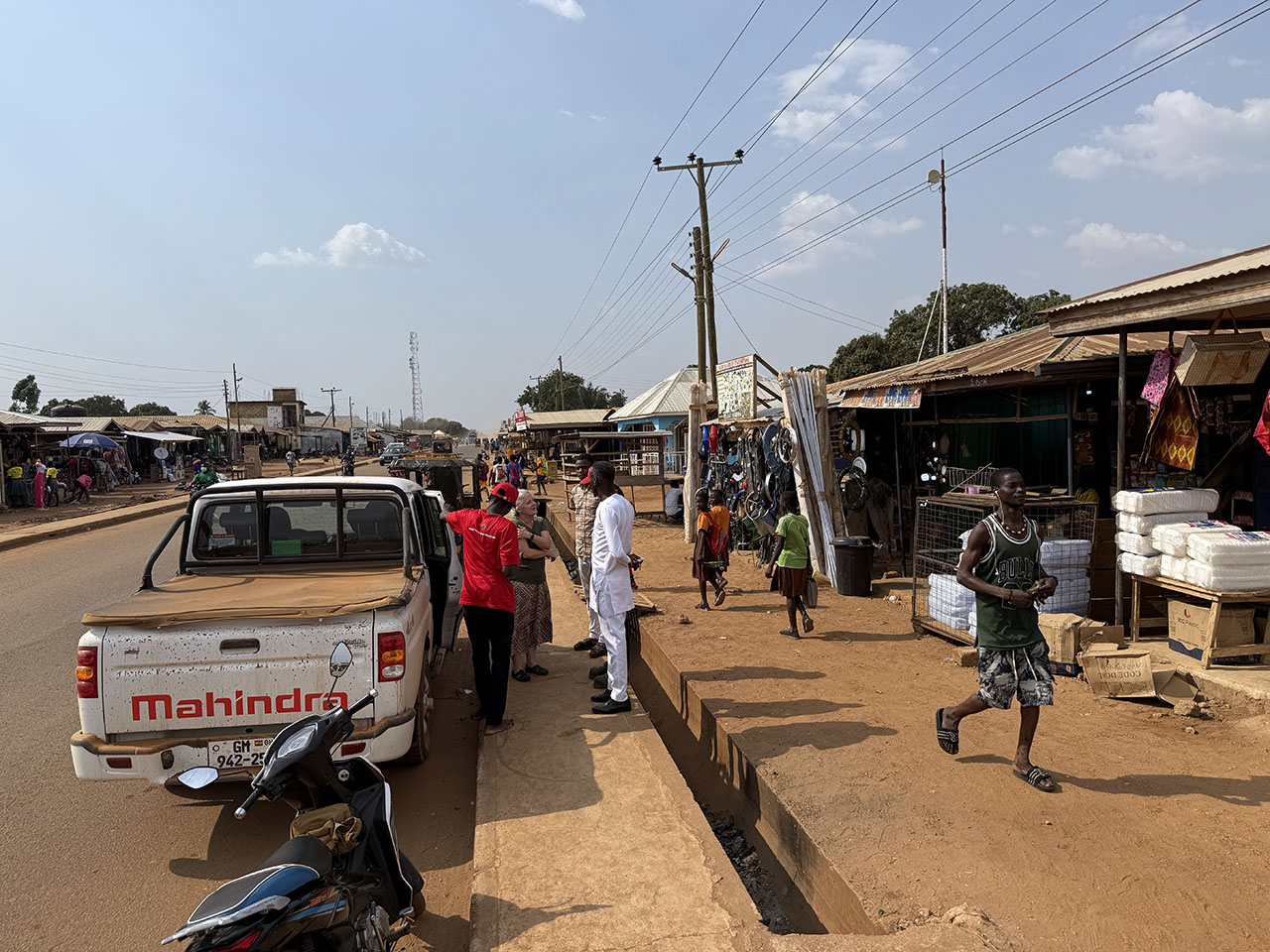
Nima Zongo is well known. Wikipedia explains the Zongo is one of the largest and oldest in Ghana. Since I was driving Ray’s new truck, a Mahindra from India, it seemed wise to do some route planning and map exploration. The map reveals the dense warren of 1-story concrete block buildings and rusty metal roofs of the Zongo. Narrow walkways zigzag between homes and stores. We parked near one of entry points.

The Nima Zongo in Accra

If you click and watch the video below, you can see us enter the Zongo and find the church.

"https://leopardshark.com/ghana-trips/wp-content/uploads/2026/02/nima-walk.mp4"

It is difficult to see, but the homes of the Zongo stretch out from my vantage point until the multistory buildings.
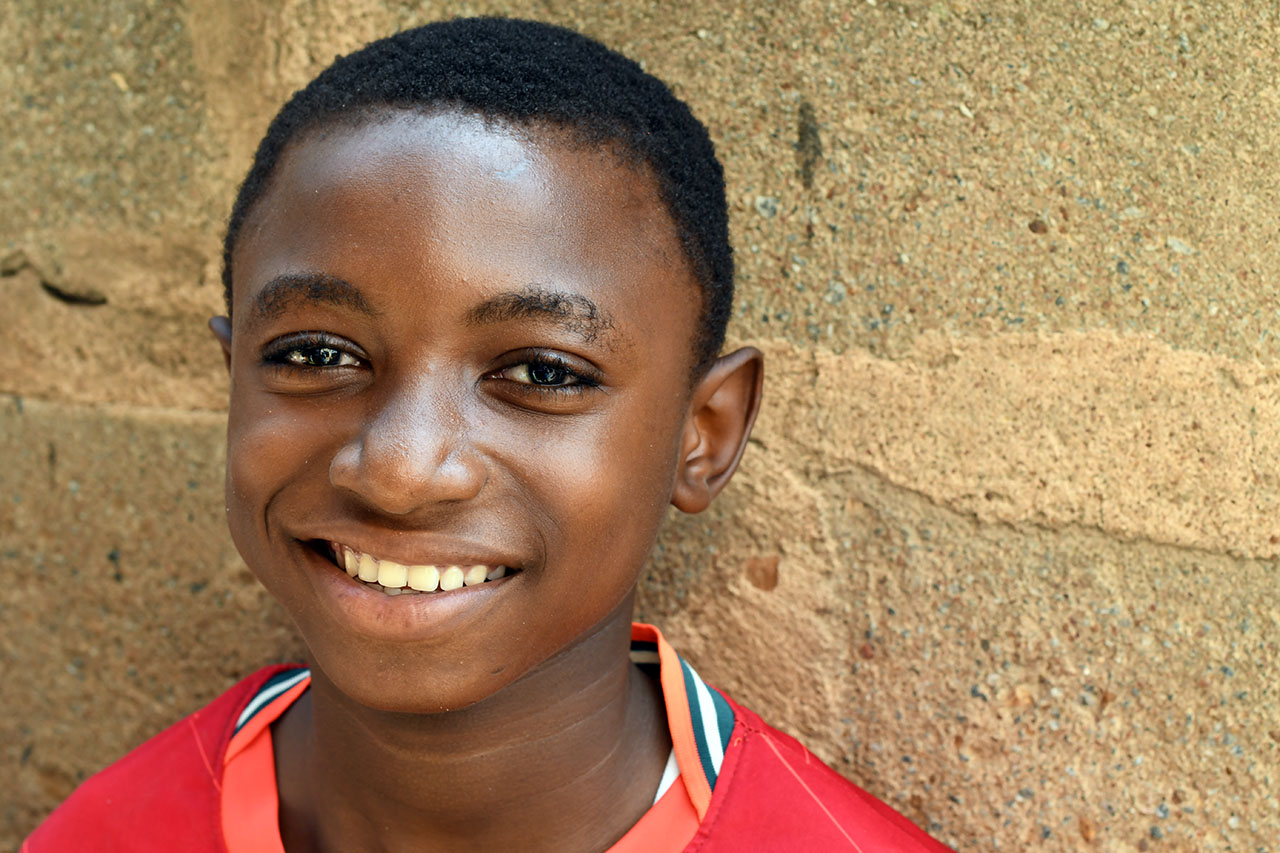
A new friend

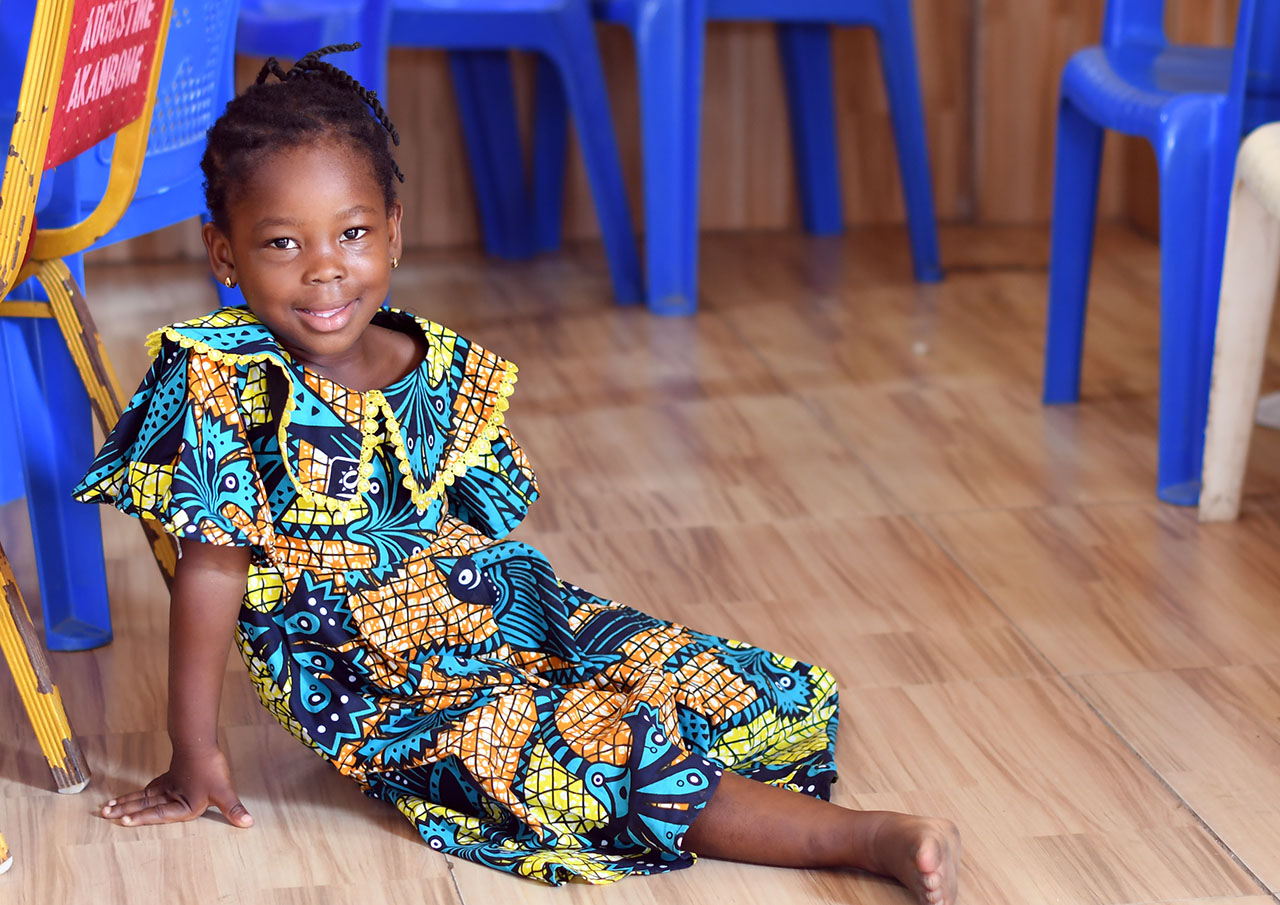
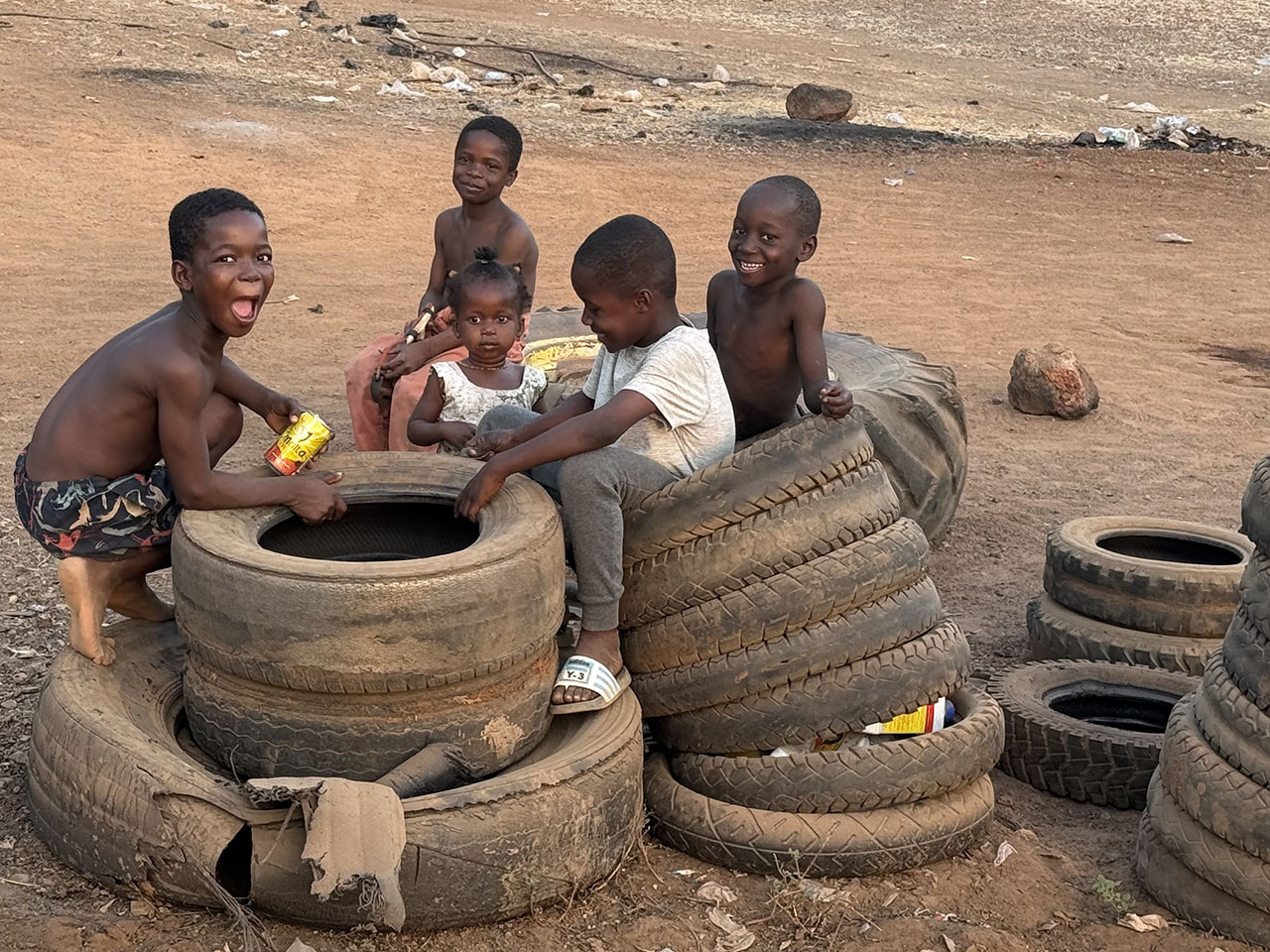
The kids were quick to investigate. C&C got set up for recording while I made friends. Their English was fantastic. The boy above spoke 4 languages — English, Twi, Hausa, and Buli.

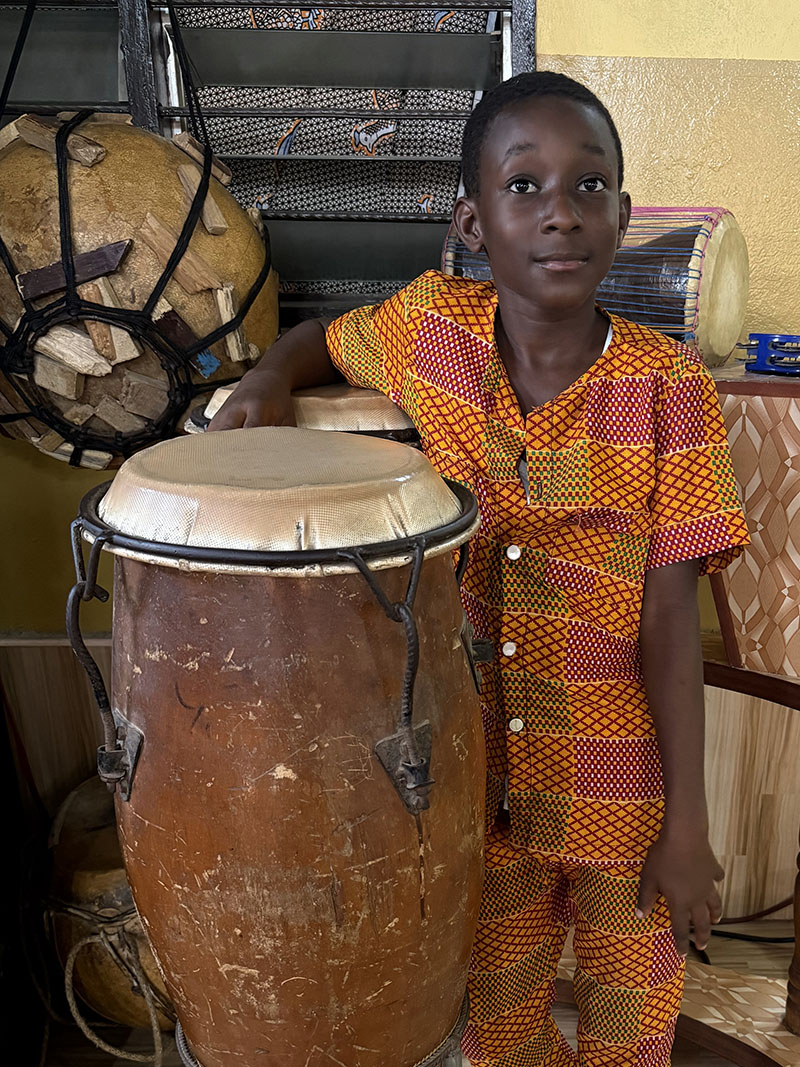
A young drummer looking very sharp in his Ups and Downs
Clement begins recording

Ceiling fans whirred above us, radios blared from nearby homes, and kids shuttled through the alleys. By stepping up close to the mic and speaking clearly, all the distractions fell away and the team started building the Hausa catalog. We started with Bible Stories and Testimonies. C&C have really polished their skills — Beth and I just watch. They are clearly ready to head to new countries where we might have difficulty traveling.

I played and chatted with the kids. I was given a stern warning not to venture out into the Zongo and explore :-) I asked the young men and women if I should be worried. “Nah, the problems were long ago — people know to mind their business”. I chuckled as his wording. Yes, to live peacefully, there are times you need to “mind your business”. I poked and prodded with questions, some serious and some just goofy. One shy young man said he wanted to be a police officer. I asked him what he would need to study. He quickly replied, “the law”. Another energetic young man who really loved speaking in English told d me he wanted to be a professional footballer (soccer). Kids with big dreams — they are all beautiful and engaging. Their eyes sparkle with curiosity.

C&C wrapped up — we shouted for joy, clapped our hands, prayed, and thanked everyone for their hospitality, hard work, and letting me snap a few photos. Mahindra treated us well. Within moments the strong AC was cooling the truck and we were on the search for dinner.

Tomorrow would be the big beast of a driving day, from Accra to the Philip Center North. I prayed and struggled to avoid a bit of driving flashback… in the morning, at 5:00am, we would start north on the same road where we wrecked a year ago.

Time to Drive

5:00 AM pickup at the house where Cyrus and Clement were staying.
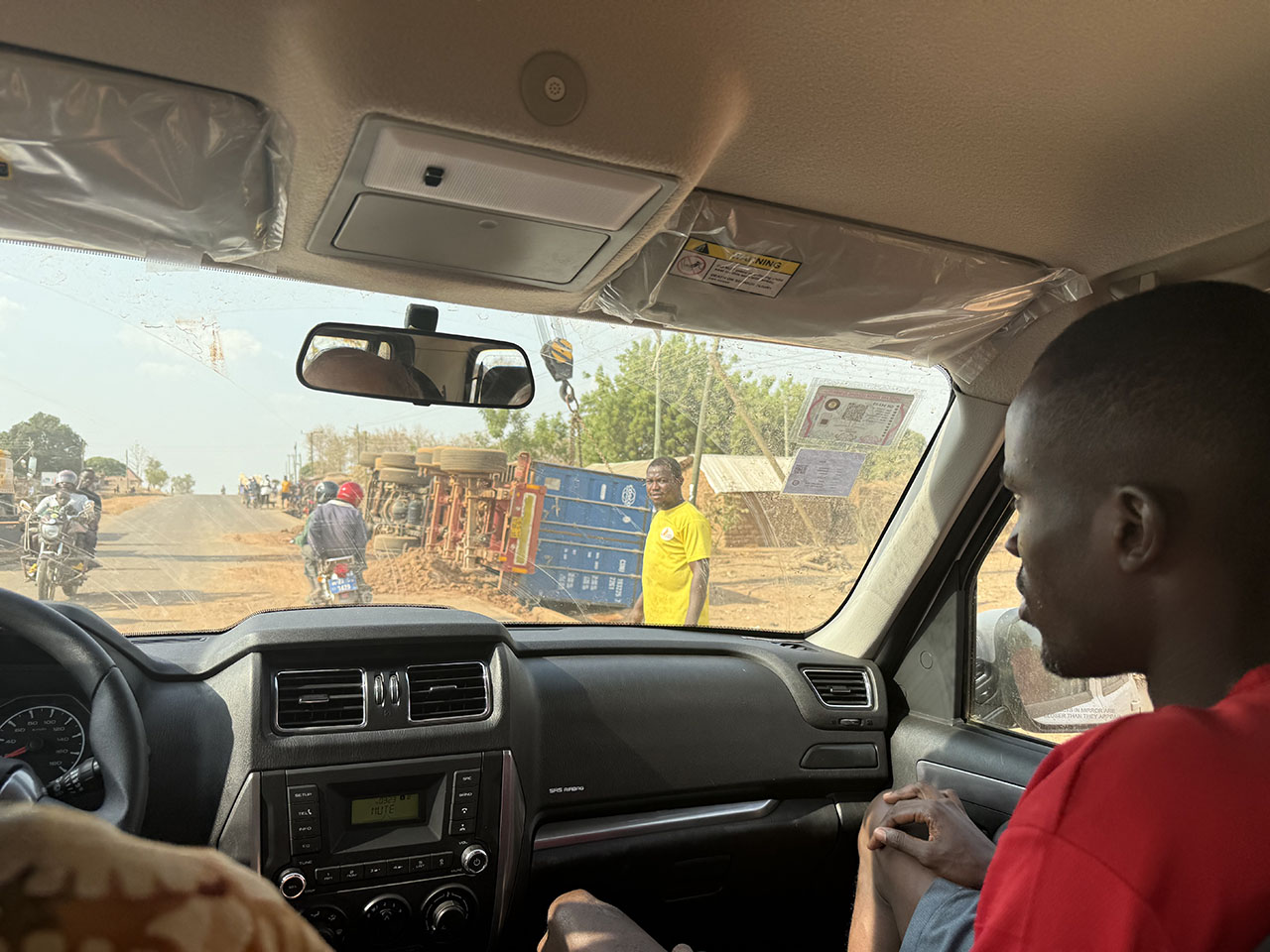
No caption probably needed — but as you can see, the truck caught a wheel in the open gutter and wrecked

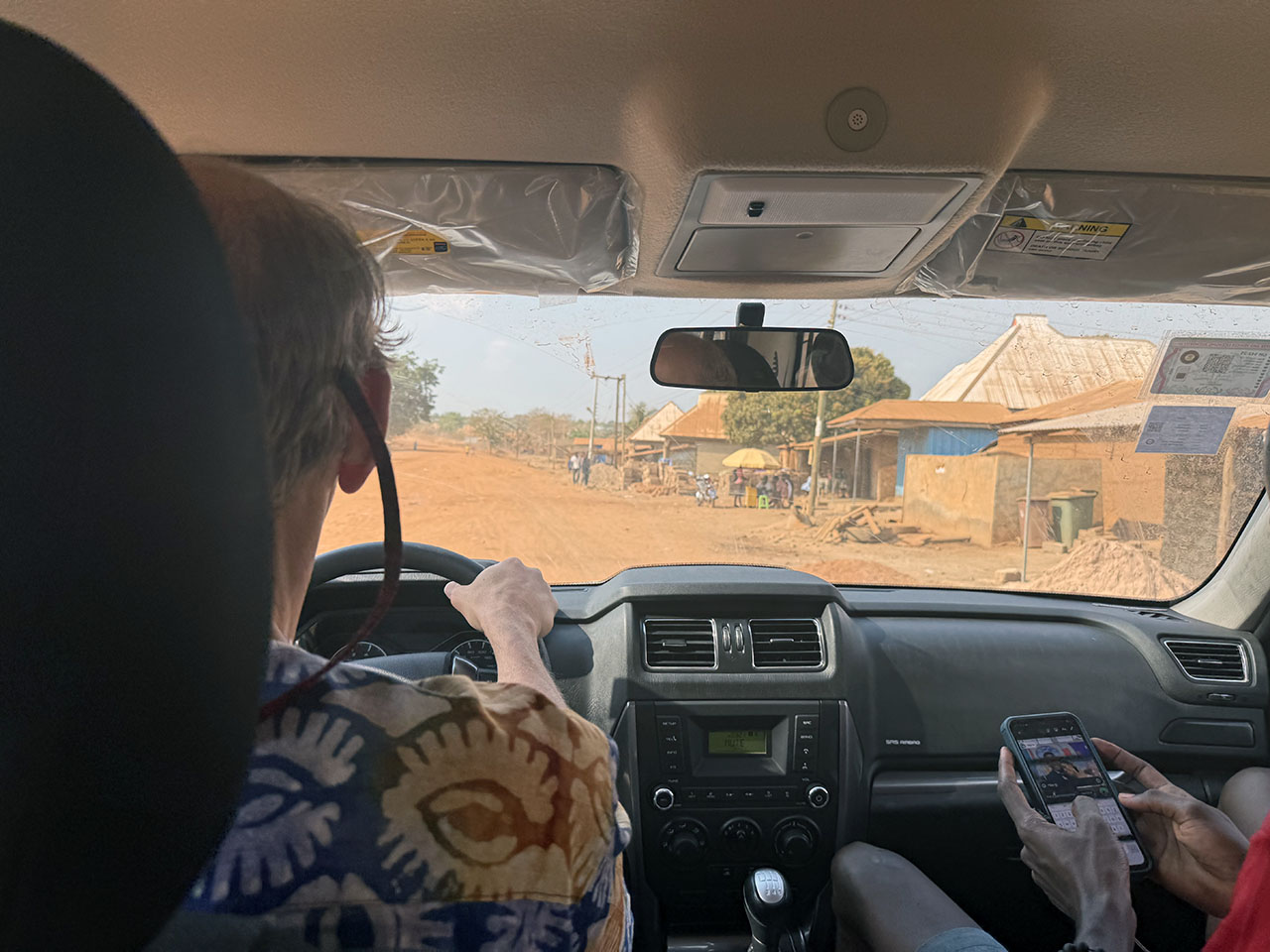
In the cool darkness, the heavy humid air condensed on the cool windows, within 30 minutes the early morning air had turned foggy as we ascended the up the mountains North of Accra. I know gripping the steering wheel tighter does not improve visibility, but I tried anyway.

I’m not exactly sure why time passed quickly. In hindsight, I would have imagined the first 4 or 5 hours to be painfully slow. Maybe along with hyper attentiveness and focus comes a loss of time perception — like a Xbox gamer suddenly realizing it was 1:00am.

While passing just north of Nkwanta, where we did recordings last year, we saw Augustine walking along the road!

What an incredible opportunity to stop and surprise him. I spun the truck around (carefully) and drove up the embankment. He was stunned — and his broad grin brought such joy! If you have not read about Augustine. Read this post from last year.

In Africa, it is important to cover family matters first. We asked about his family, the church, his children, and is there any important news. He asked when he could have more BiblePlus units with the music and all the other recordings. We stopped him, and I asked him if I could video him asking for more units :-). He was excited to help.

"https://leopardshark.com/ghana-trips/wp-content/uploads/2026/02/Augustine-Thx.mp4"

Augustine is in the middle, with the blue shirt

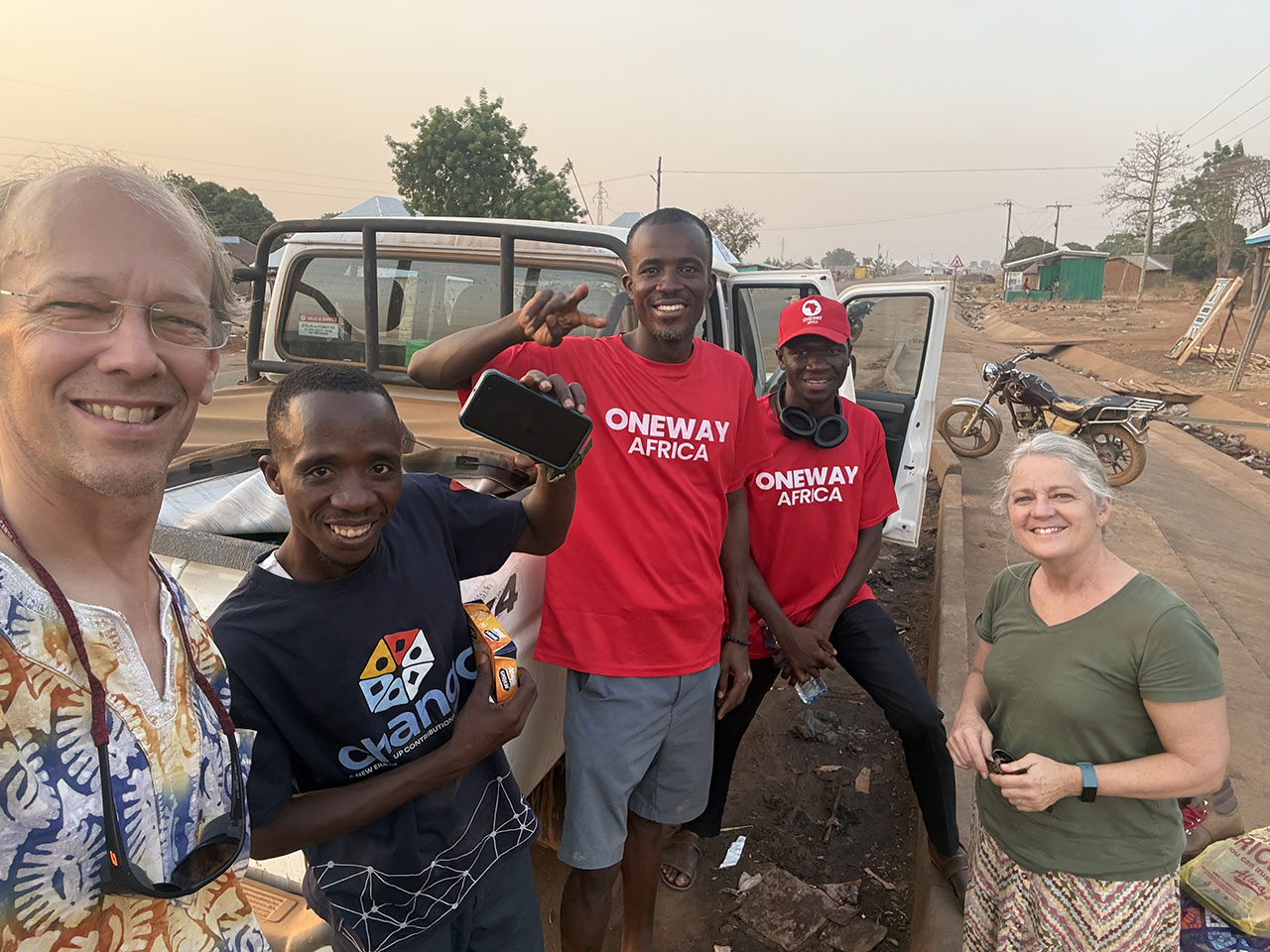
The next few stops were quick — just to say hello to OneWay friends we first met a few years ago.

Patrick is standing behind Beth. In white is his “man of peace” (someone who befriends and hosts one of the riders).
We first met Jonah in 2013!!! We asked how many children he had… he replied with a smile: “one and a half”.

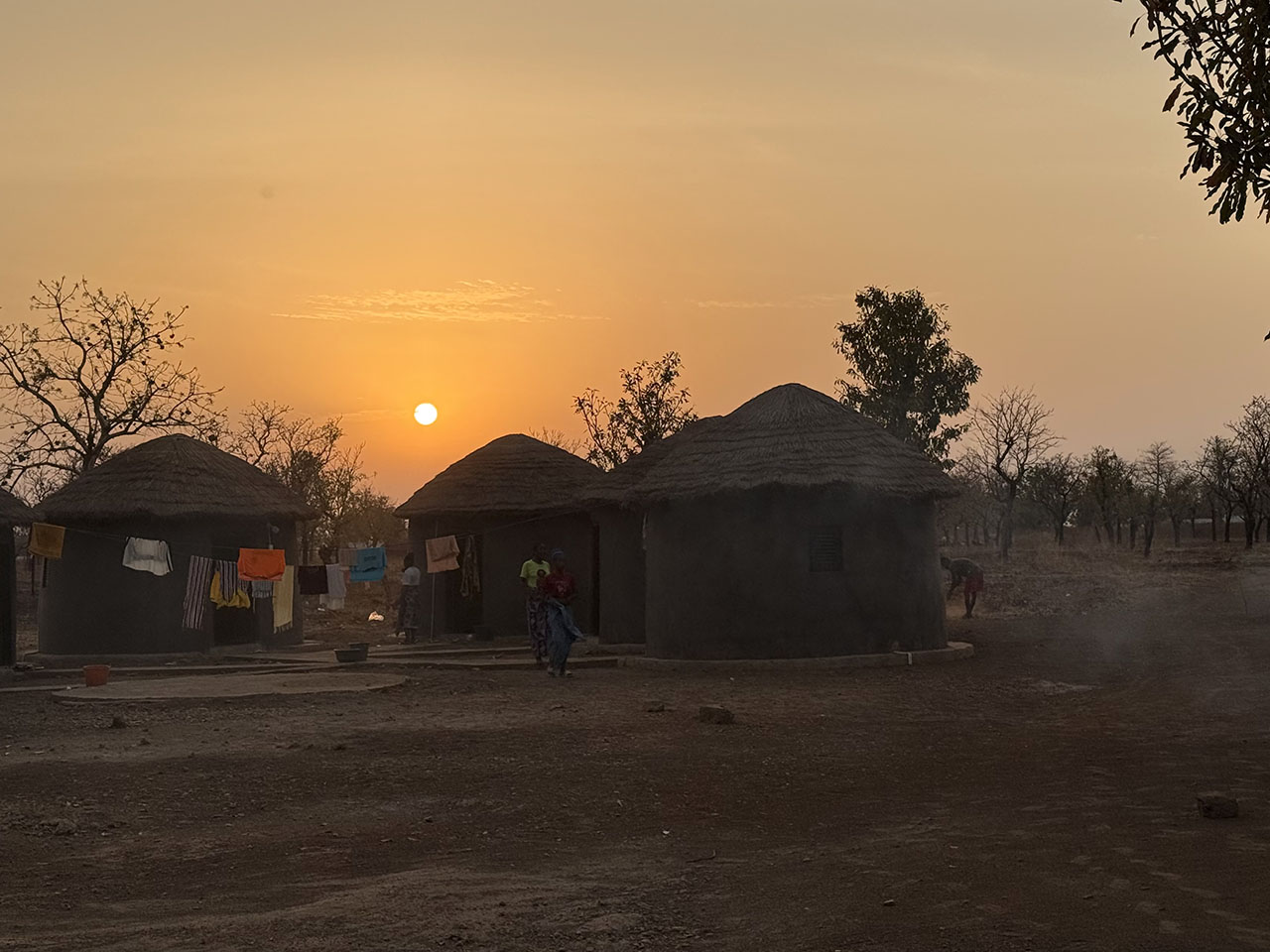
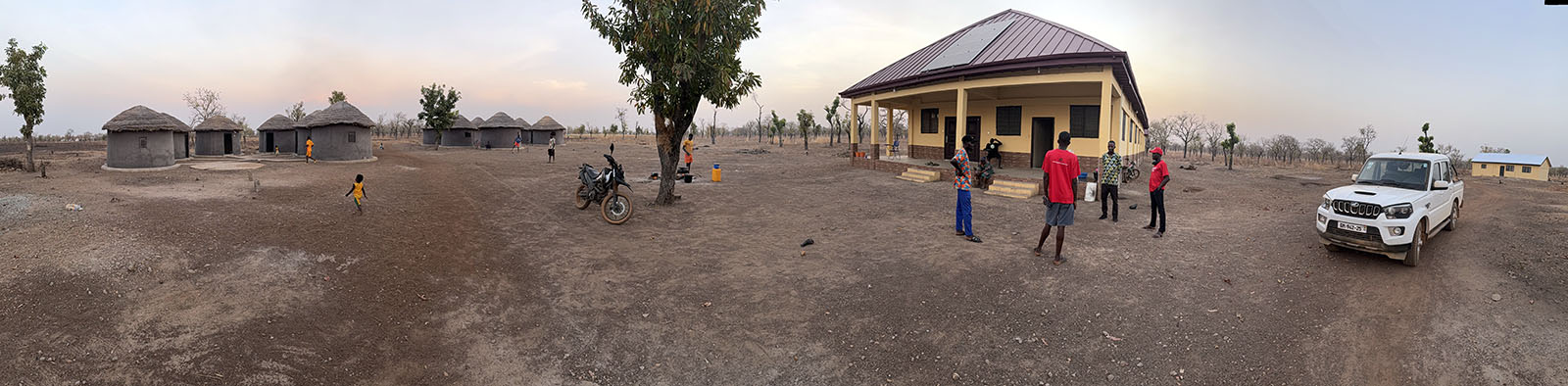
As the sun sunk behind the dry fields and shea butter trees we arrived at the Philip Center North.

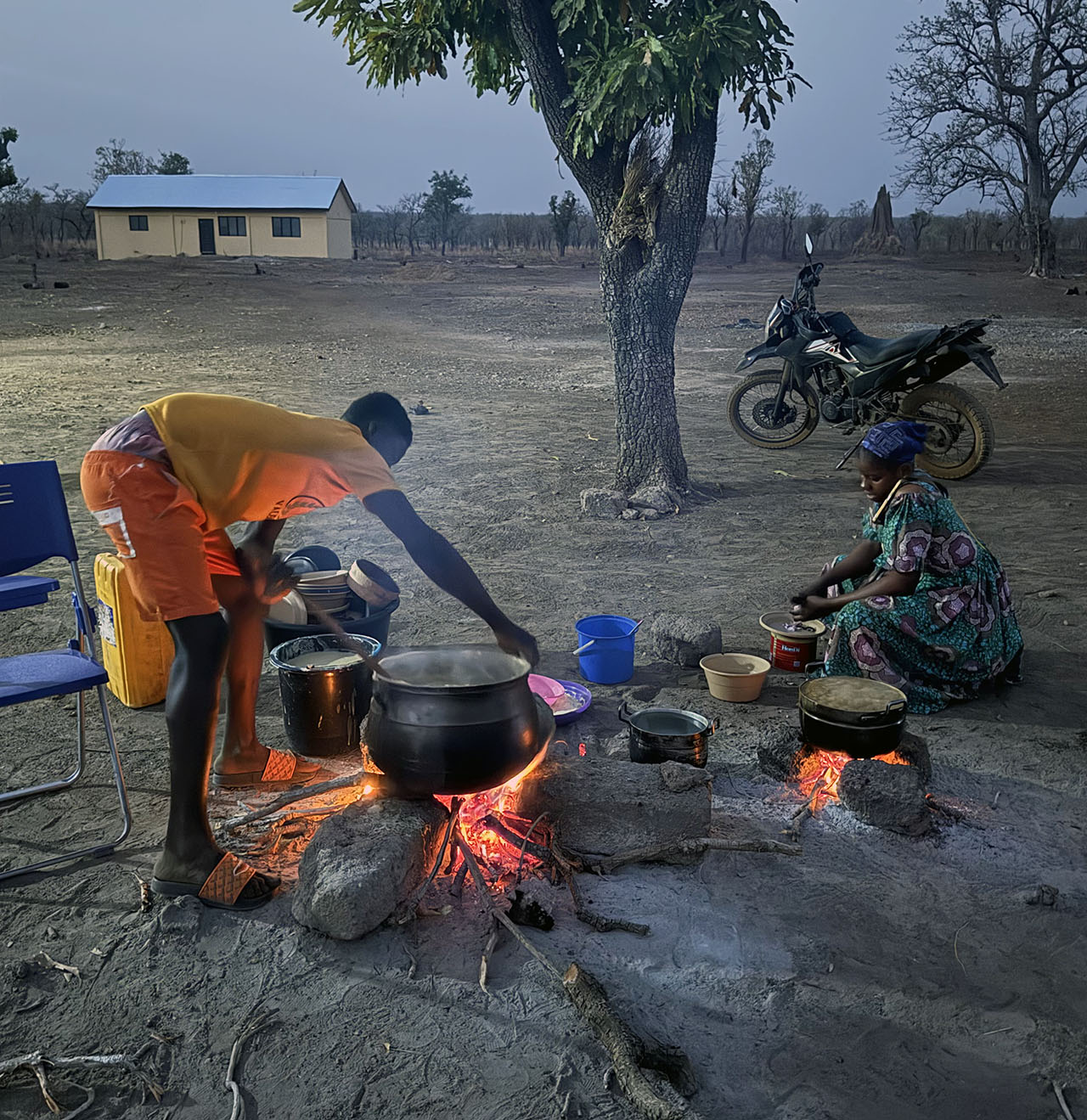
A kitchen for 30

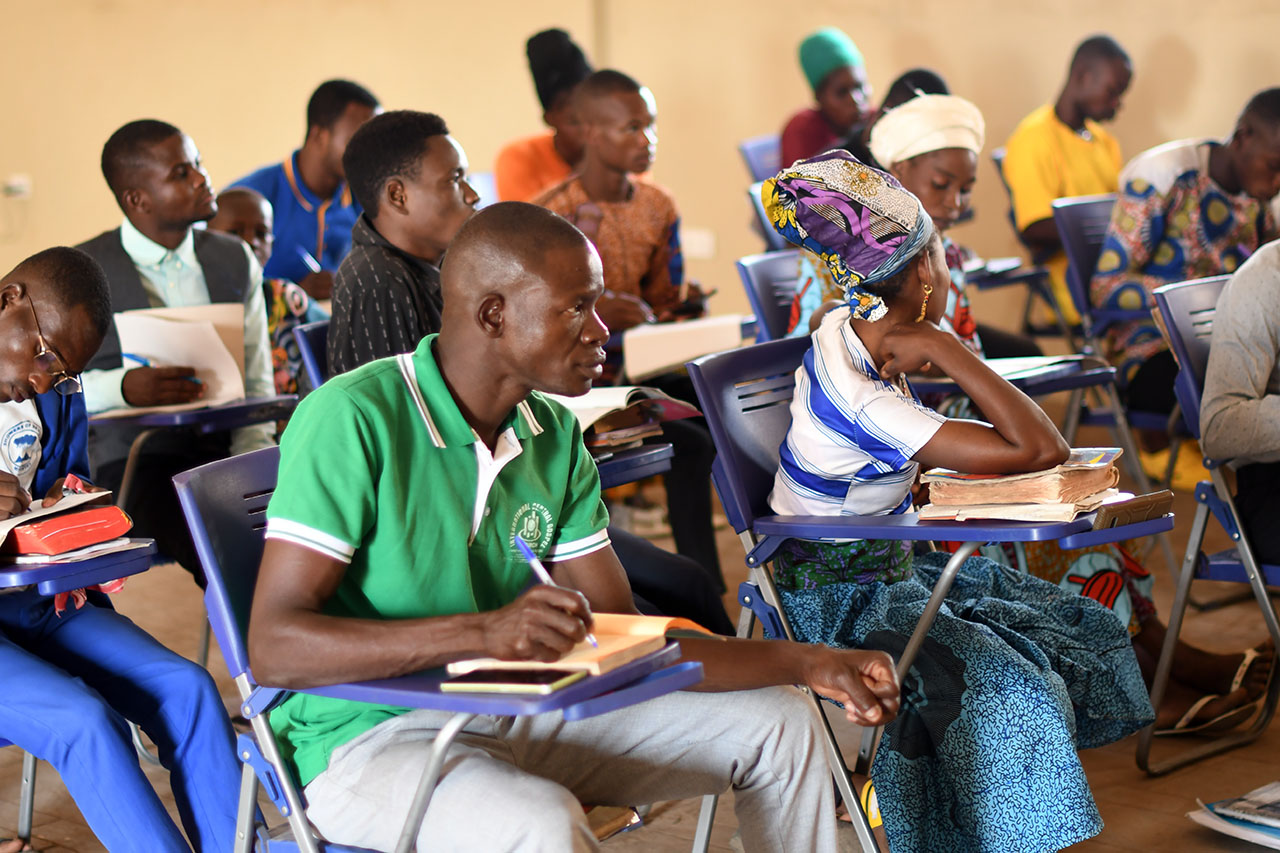
The “Konkomba School of Missions” was in session. Thirty students, men and women, looked on with curiosity as we pulled up and introduced ourselves to Justice, who together with Stephen, run the classes currently in session.

It had been about 12.5 hrs of travel. The dusty billows of red road dust were swirling in my head. We had made it. Relief — mental and physical settled in and I suddenly felt quite tired. The black polytank filled from the bore hole (well), provided us with warm bucket showers.

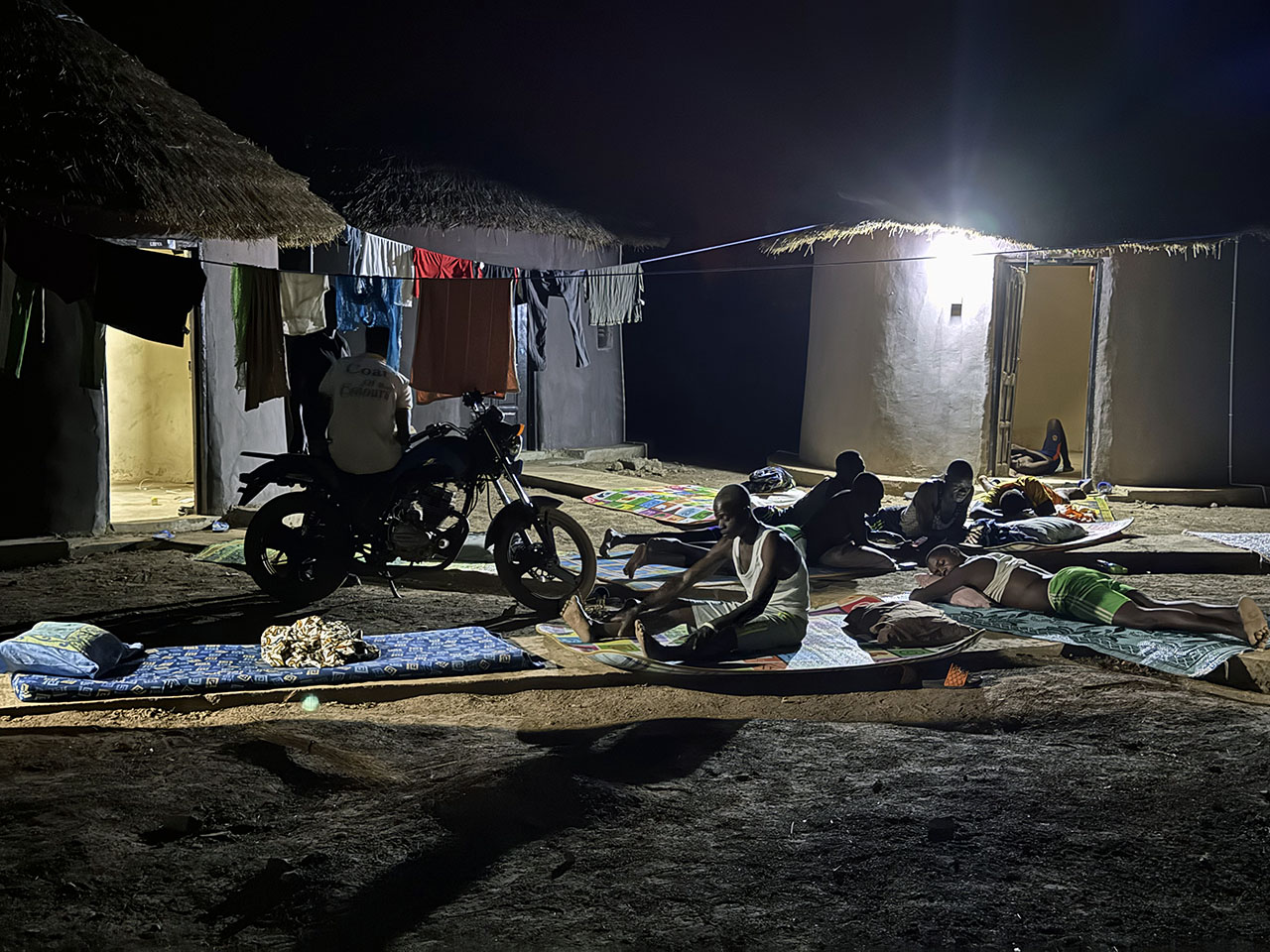
Thank you for your prayers. The night air felt so refreshing. The Milky Way spread across the dark dark sky. Many of the men slept outside on mats, enjoying the coolness. The day was a challenge, and I’m glad to be on the other side. Tomorrow we work.

The men sleeping outside

Our Daily Bread

Gentle Konkomba voices were raised in song. The sun would rise soon. My eyes, now open, took in the early morning landscape. A dry breeze moved through the shea trees. The songs and prayers of the students, gathered in a nearby classroom, were lifted in thanksgiving.

In Naperville, our early morning routine begins with hot coffee in hand, a woolen blanked draped across our legs, and a comfortable couch as peaceful music streams over AirPlay.

Yet here, as the sun begins to reveal the day and break through the clouds obscuring the horizon, morning prayer and music is participatory. Voices are raised. What have I lost to a playlist? Can I learn from the Konkomba and restore the traditions of my ancestors?

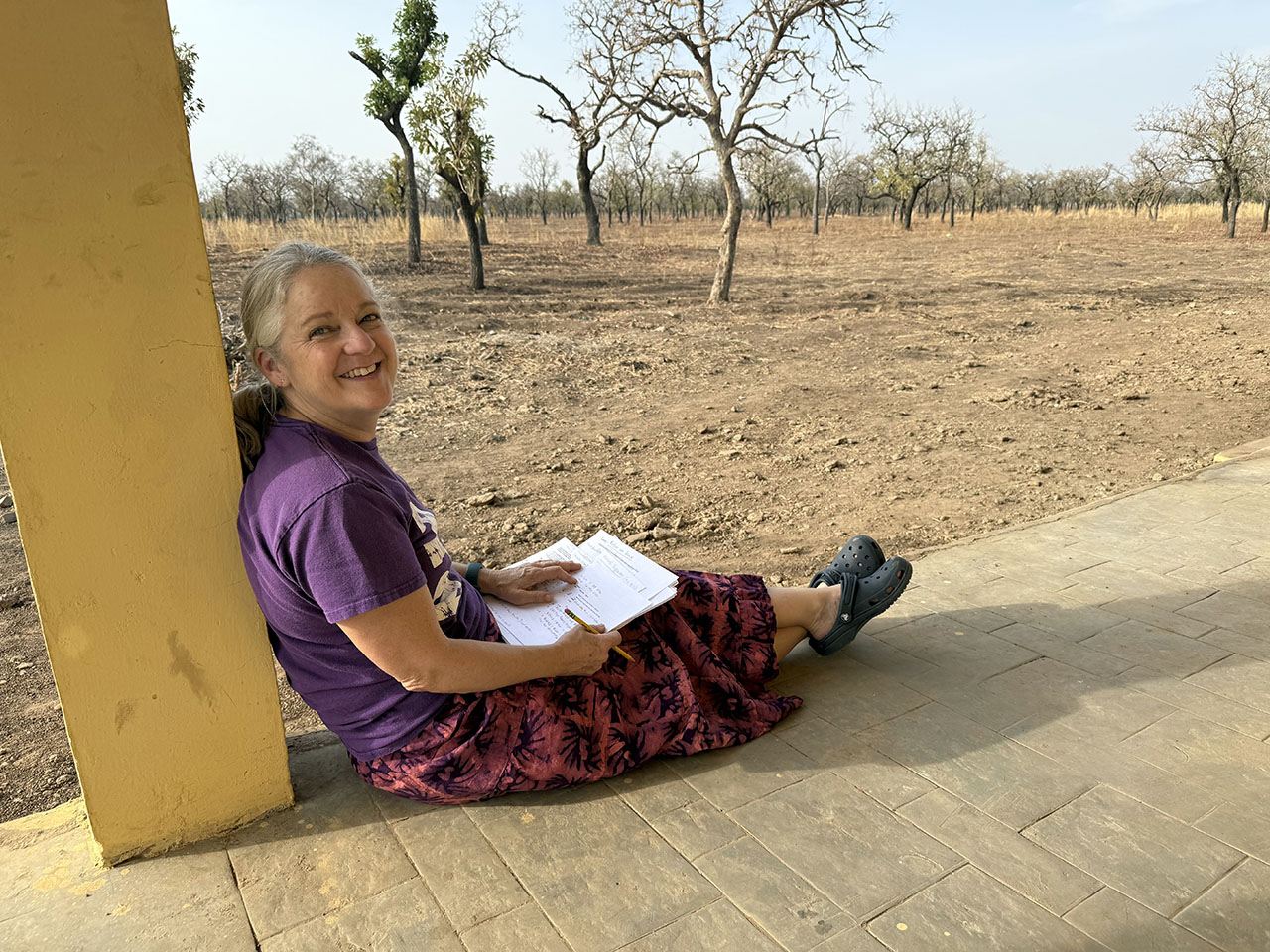
As I sat in a blue plastic chair, writing in my journal and knowing the cool morning air would soon give way to the 100 degree heat of the equatorial sun, students passed by smiling, then crouching low to the ground as a gesture of respect, offered a “good morning” greeting. This is a land and a people with rich traditions, beautiful song, and smiling faces. Thank you Lord for peaceful mornings.

It was not long before the men and women started their daily tasks. Justice, always ready with a broad grin, eagerly gave me a tour of the simple buildings and surrounding farmland. Our visit during the dry season hides the fertility of the land. In the rainy season, yams, corn, peanuts (ground nuts), rice, beans, grow rapidly in the daily showers and bright sunshine. The rain transforms many roads into impassable, muddy bogs. Yet Justice is familiar with the land of his ancestors and looks forward to the rains that will come. He beams with excitement as he describes how the 20 acres of dusty red dirt will yield a harvest to feed students. I asked him to pause during his description so I could record a video, in his own words, describing what he sees.

Click the video below to hear Justice

"https://leopardshark.com/ghana-trips/wp-content/uploads/2026/02/Justice-Narration.mp4"

After I finished recording the short video, we chatted a few minutes more — his smile so full of hope, joy, and peace. As he ended the tour he looked out over the buildings and dirt and summed up the situation — we have a well and pump for water, a classroom for the school, places for the students to live, and we will plant crops — “we have everything we need”. He paused and said it again, “we have everything we need”, his smile even larger than before.

Lunch

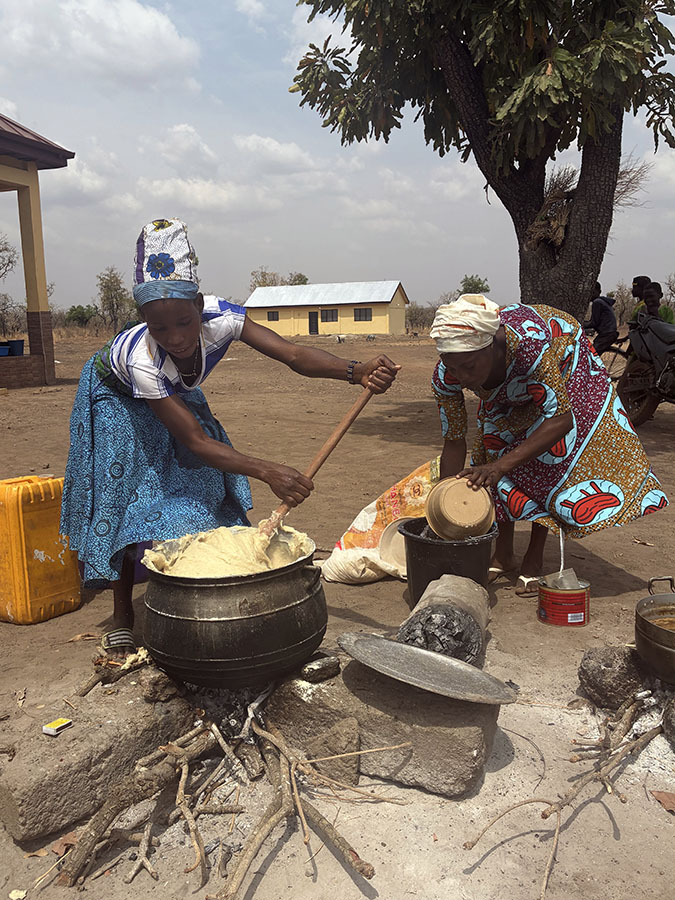
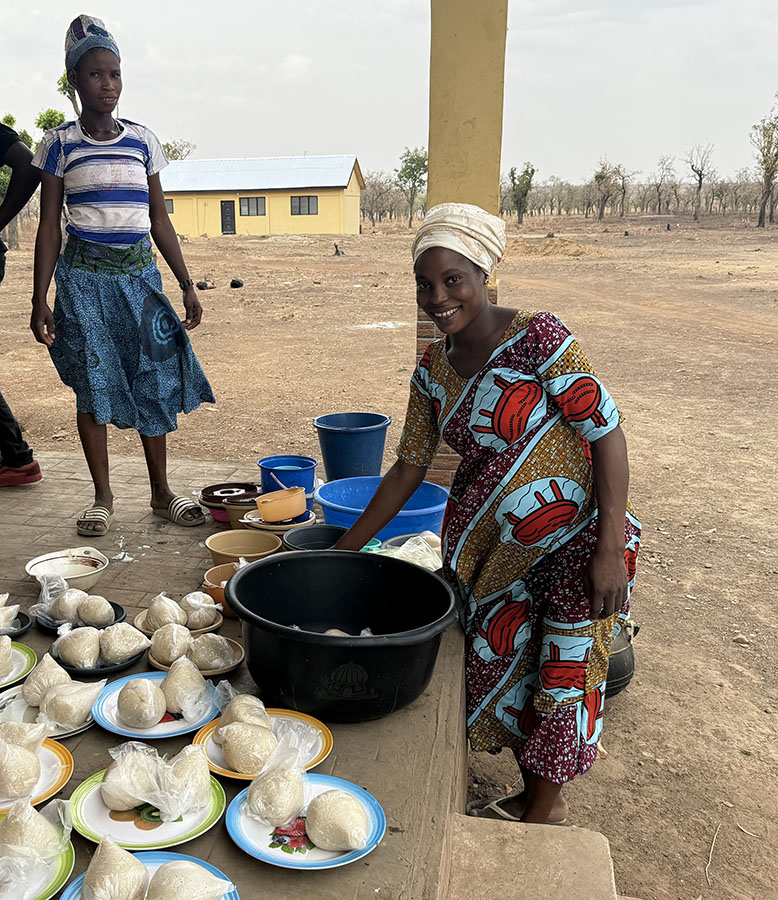
In the afternoon, the students began preparation for lunch. In many parts of the world, grains are transformed into bread. Here in Ghana, grains and starches are not converted to dry loaves with ovens, but rather fermented, cooked, and stretched into banku. Harvested corn and cassava root is dried and ground. After adding water and a bit of salt, the mixture is allowed to set and slightly ferment, similar to sour dough. The next step is labor intensive. With a wooden paddle, the mixture is vigorously stirred and folded while it cooks over the fire. In the blazing sun and heat of the afternoon, Beth and I got dizzy just imagining folding and whipping the sticky mixture over a fire.

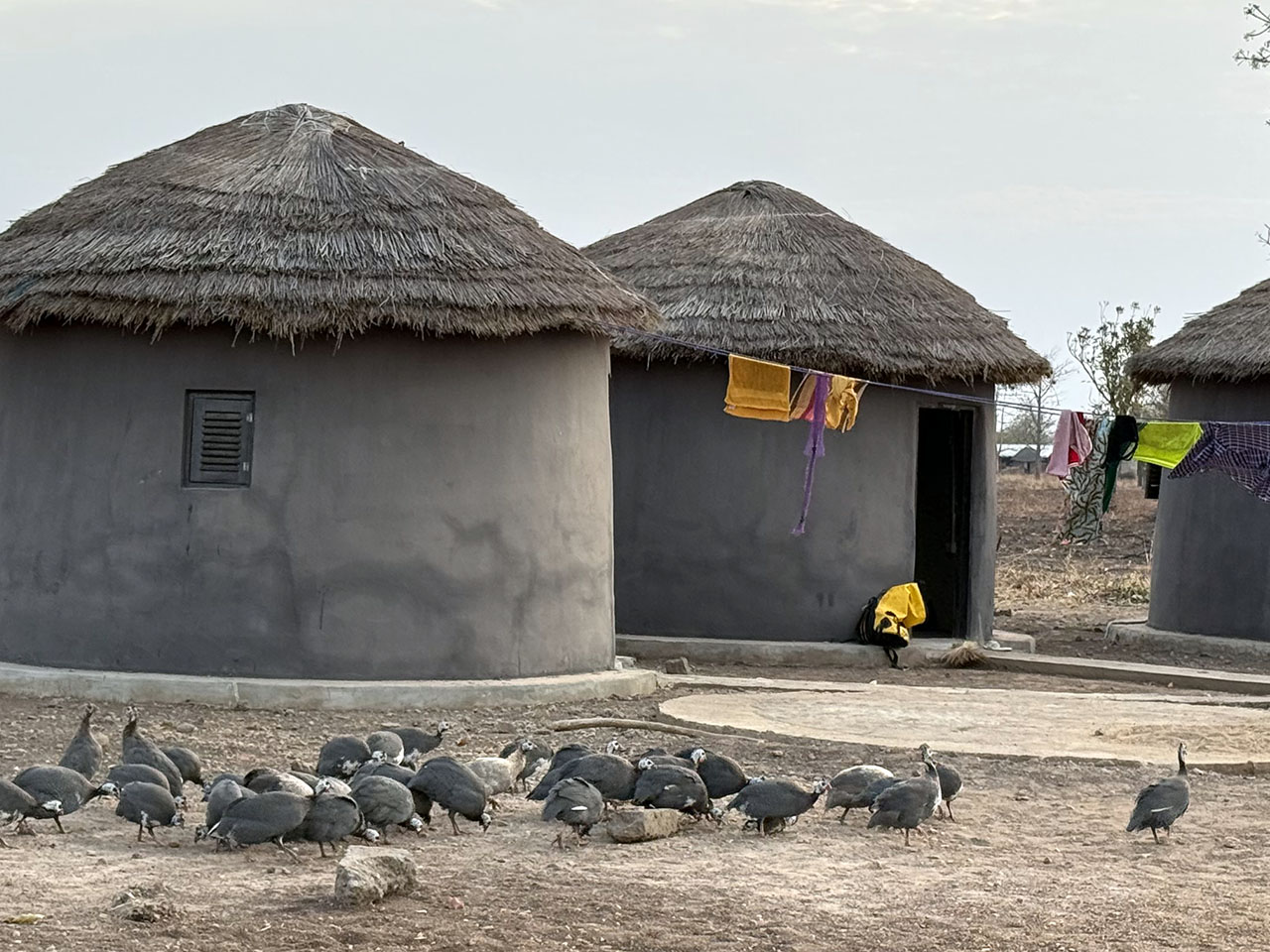
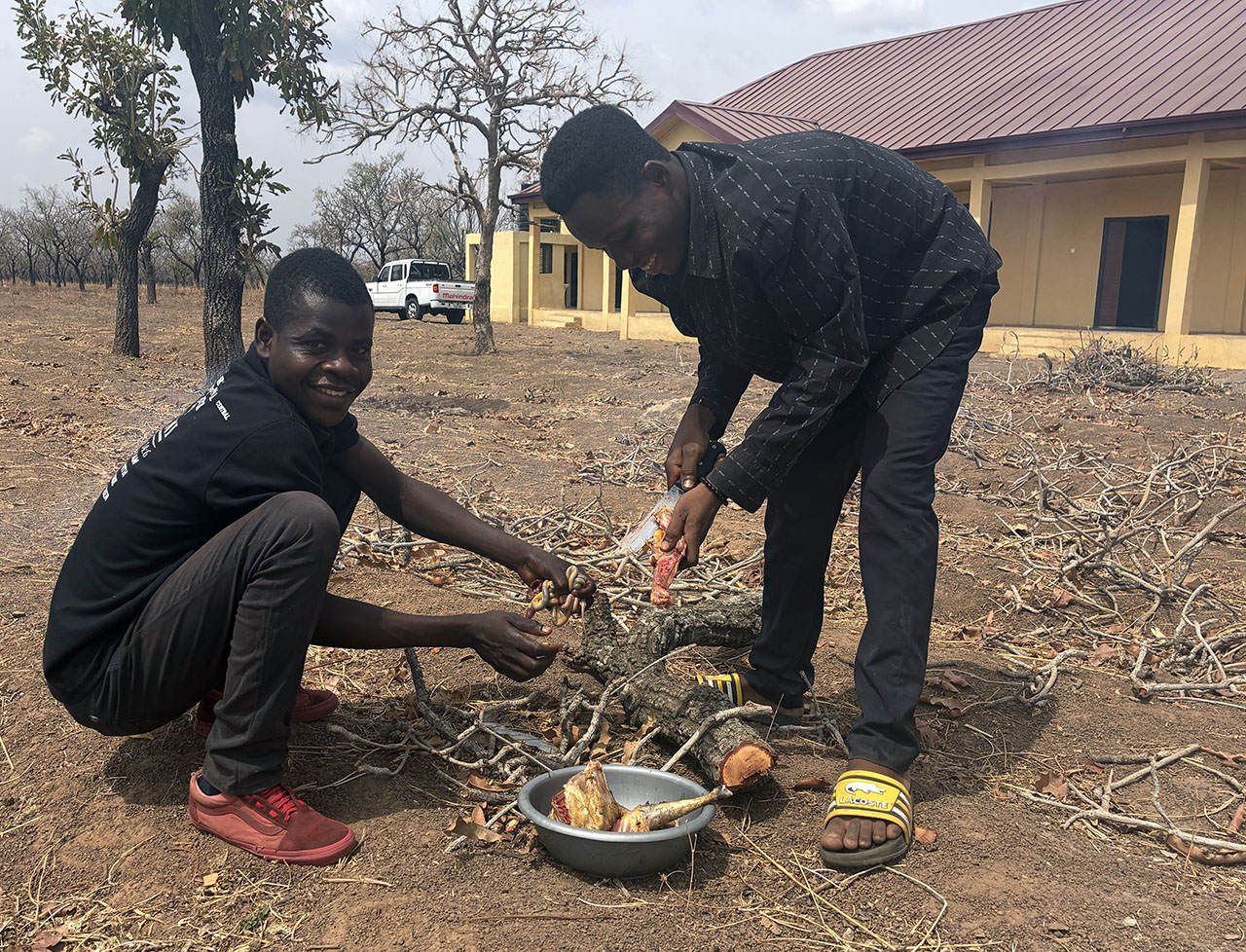
After cooling, the cooked dough is measured out into bags and formed into balls. The “bread” is commonly served with a savory soup, fish, or sauce. Today, the students butchered a guinea fowl for the soup. Lunch here is not Farm to Table, but rather Yard to Table.

The words of Justice continue to roll through my mind. “We have everything we need.” We pray each day for our daily bread. In this case, the simple dough of corn, cassava, water, and salt, cooked over an open fire. Lord, thank you for our daily bread.

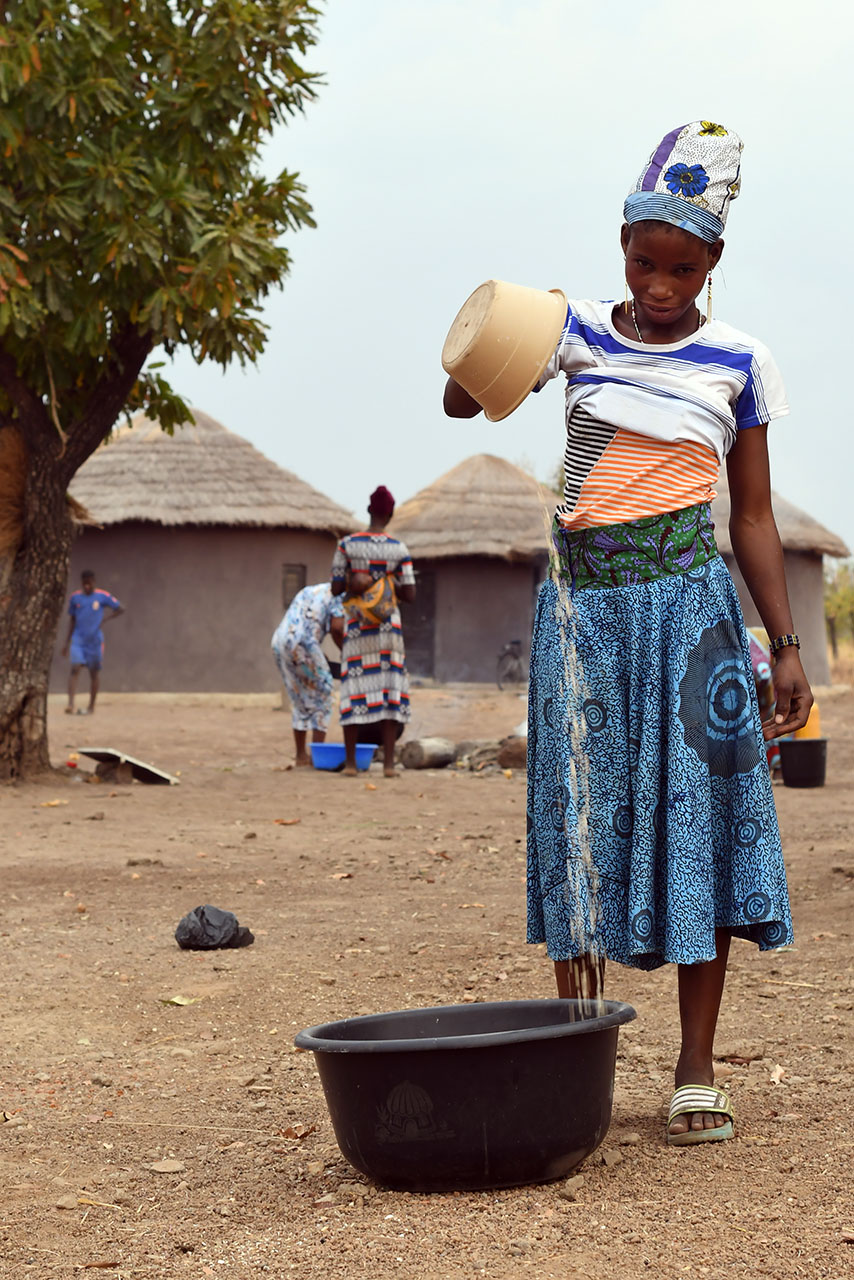
Using the wind to winnow the grain

The School

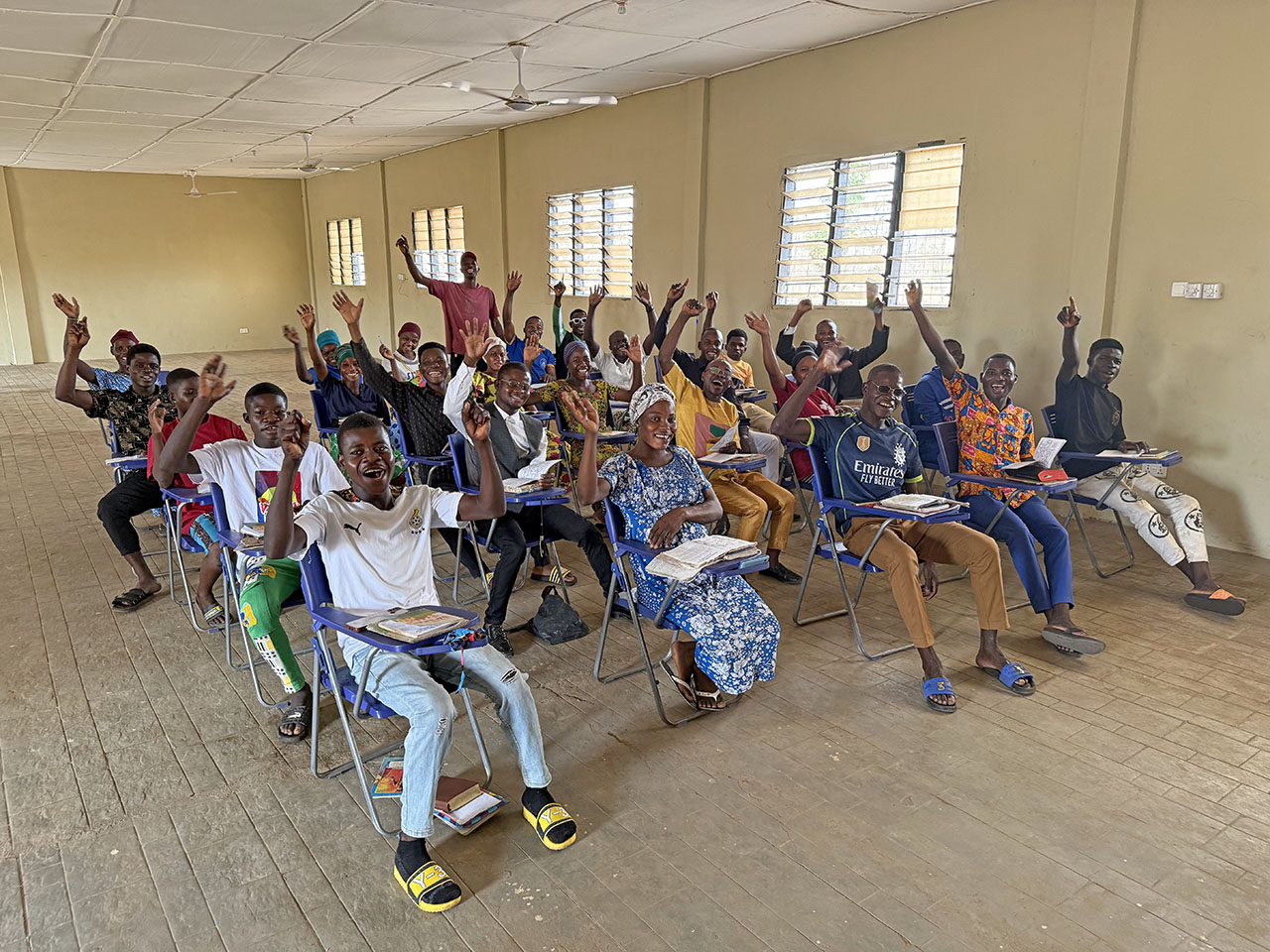
About thirty young adults, a few married and with small children, are now living and studying at the Philip Centre North (PCN). This two month session is for the Konkomba School of Missions. While most of the classes taught by Justice and Stephen are in the native language, Konkomba, the instructors also provide help learning English.

The photos below provide a small window on the dynamic and energetic students and their classes.

In October, after the growing season and rains have passed, we plan to return to PCN to help set up the instructors from Create Mobile as they reach a new group of students from around Ghana and the nearby countries in mobile-phone-based short-form videos.

An Improv Show

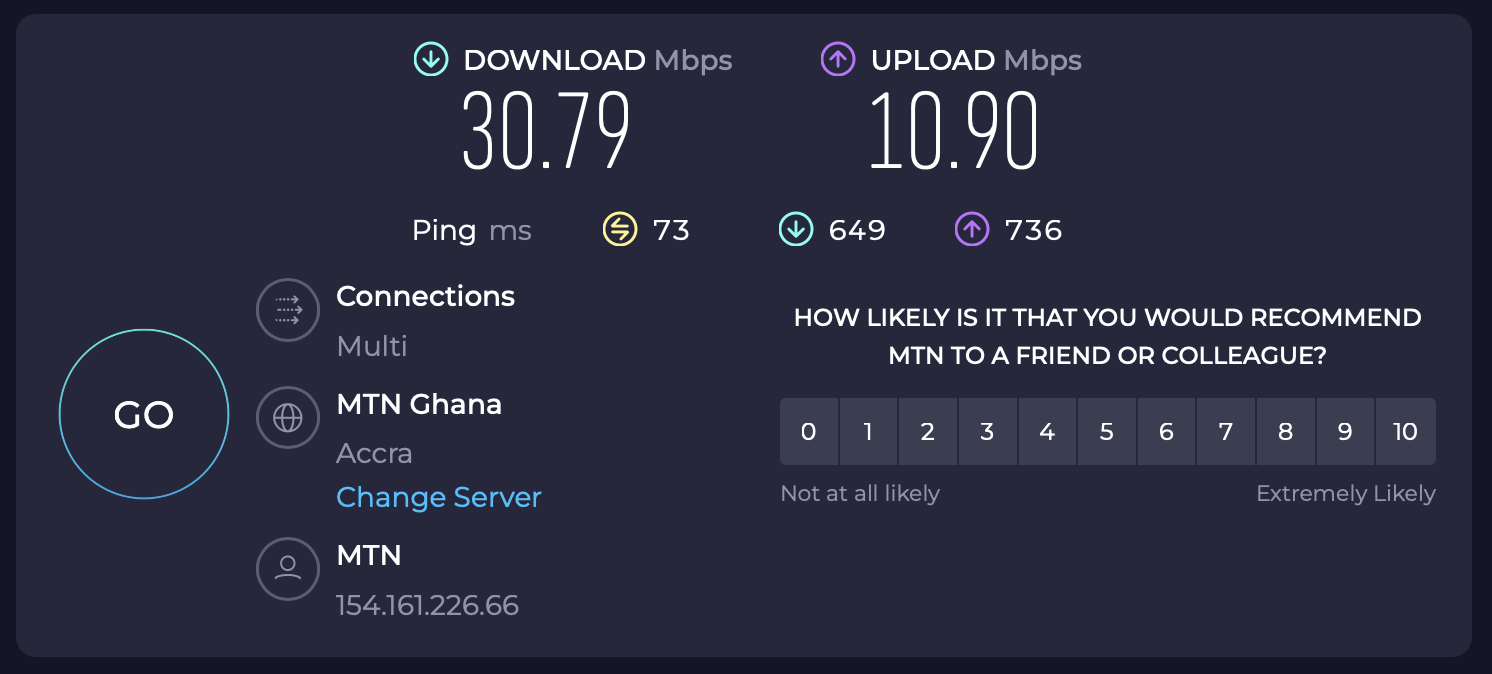
The Philip Centre is only 0.8 miles from the main road. As we drove here, Beth marked the GPS locations of cell towers on the road. The nearest one is 2.4 miles away and slightly over a hill, with a heading of 200 degrees. Justice is having a very difficult time communicating with the office in Accra because the cellular signal is so weak. In the cool of the evening, it is sometimes possible to exchange a few WhatsApp messages, or if the conditions are just right, place a voice call. But sharing photos or other Internet-based communication is nearly impossible.

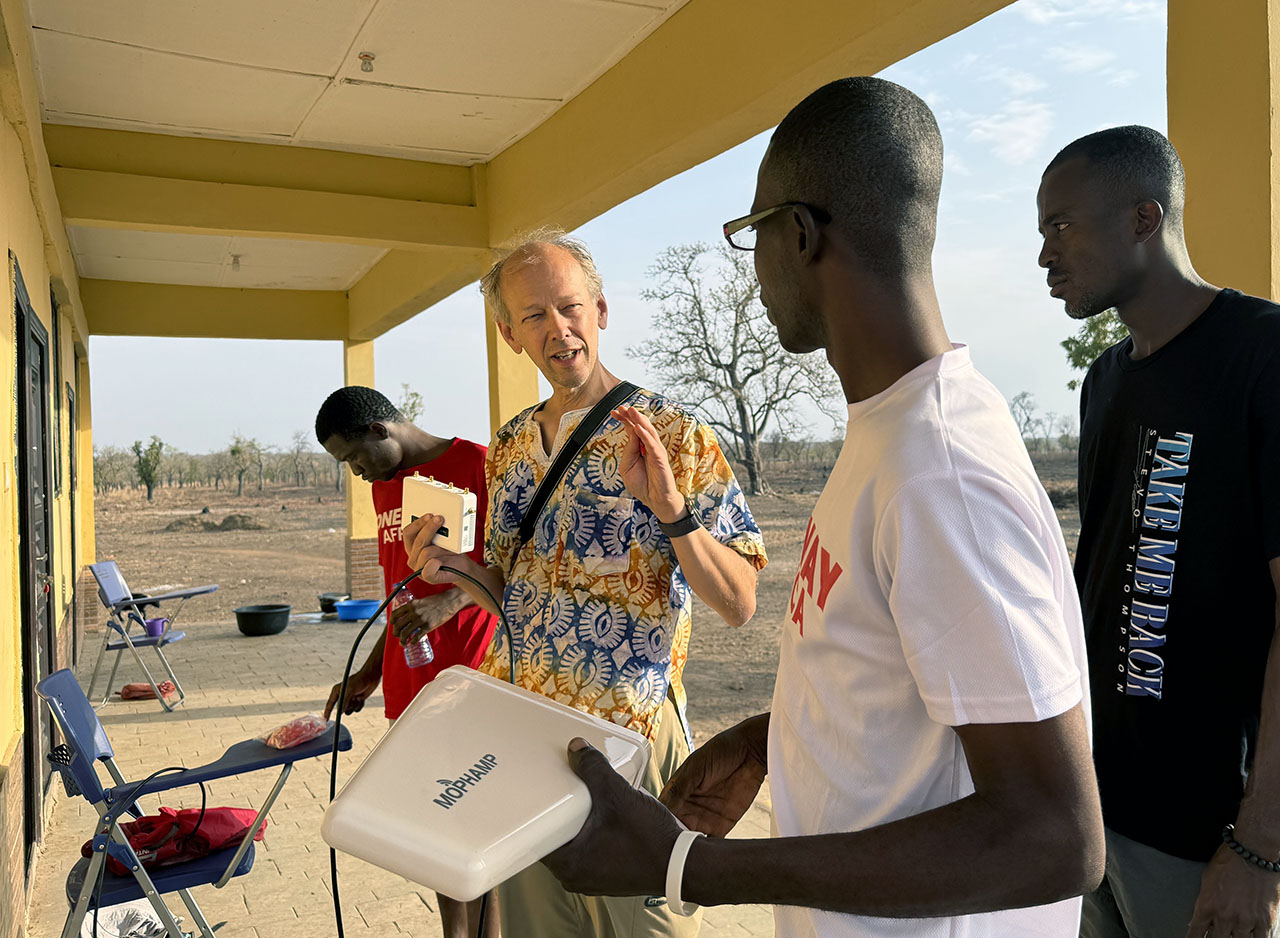
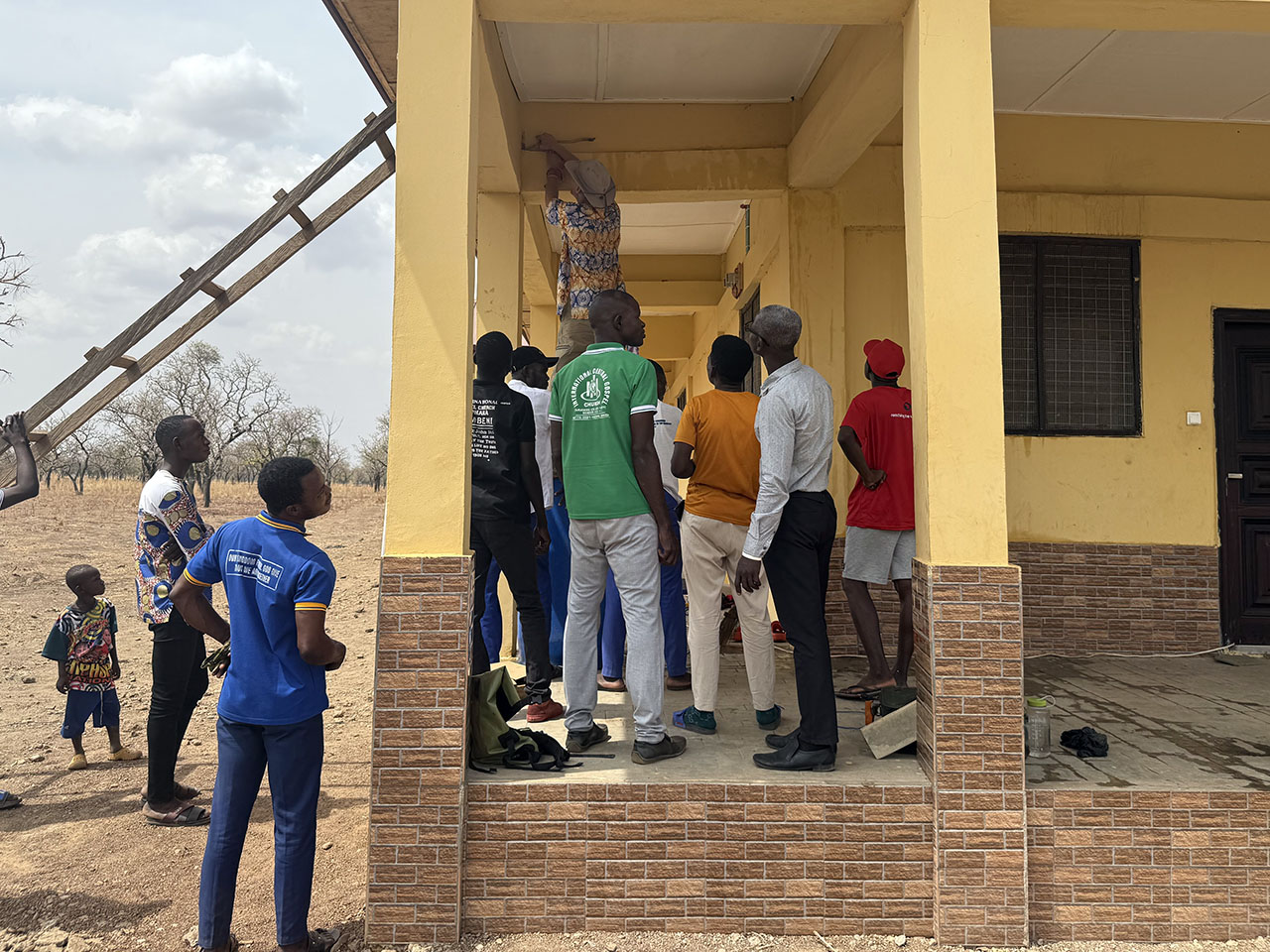
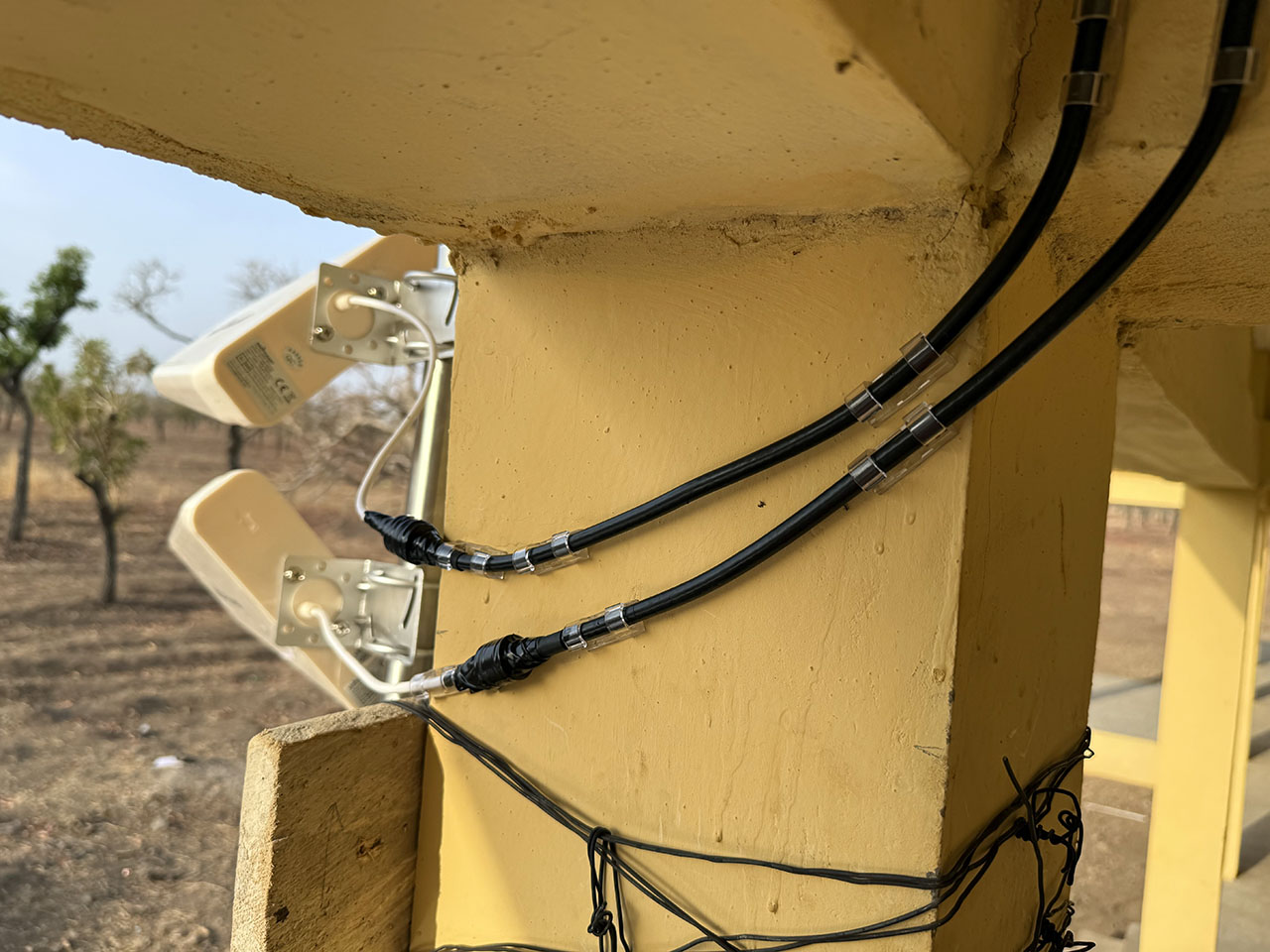
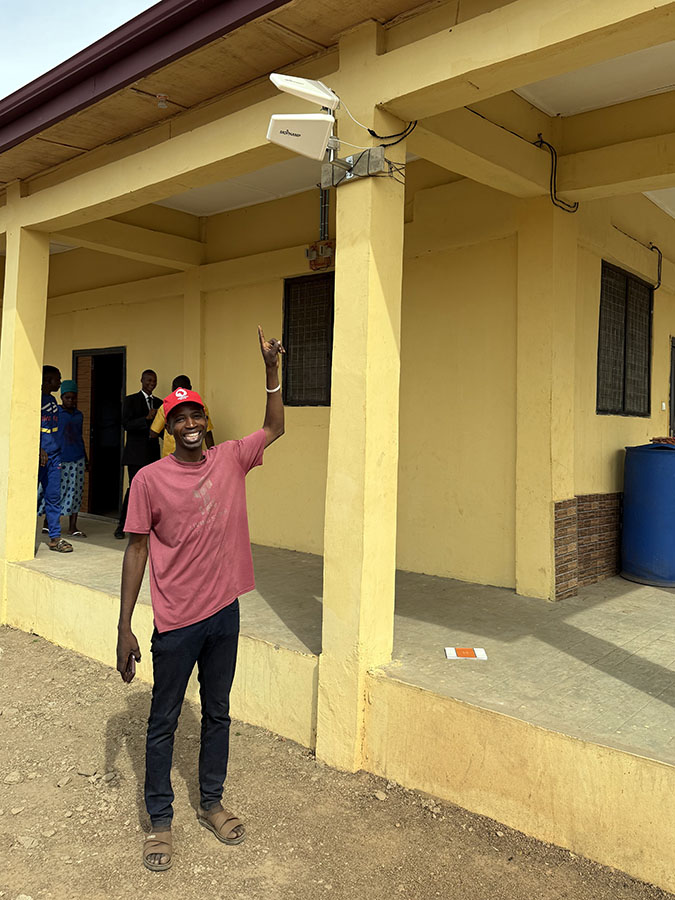
I brought a pair of log-periodic antennas with 9db gain. My hope… really a wild guess, was that maybe, with the right orientation and setup, I could configure some improved communications. I brought everything I believed I would need, that could also fit in a suitcase.

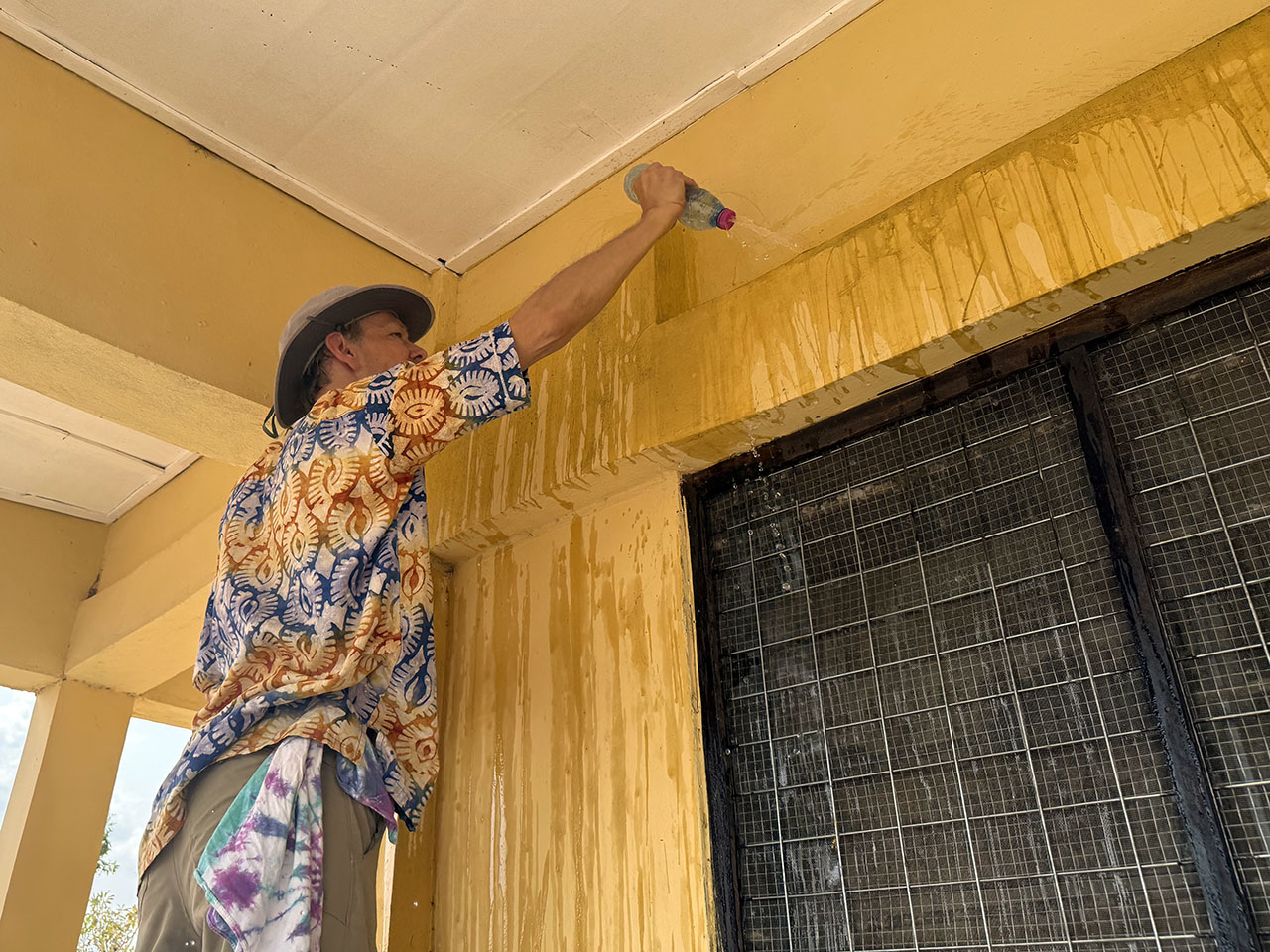
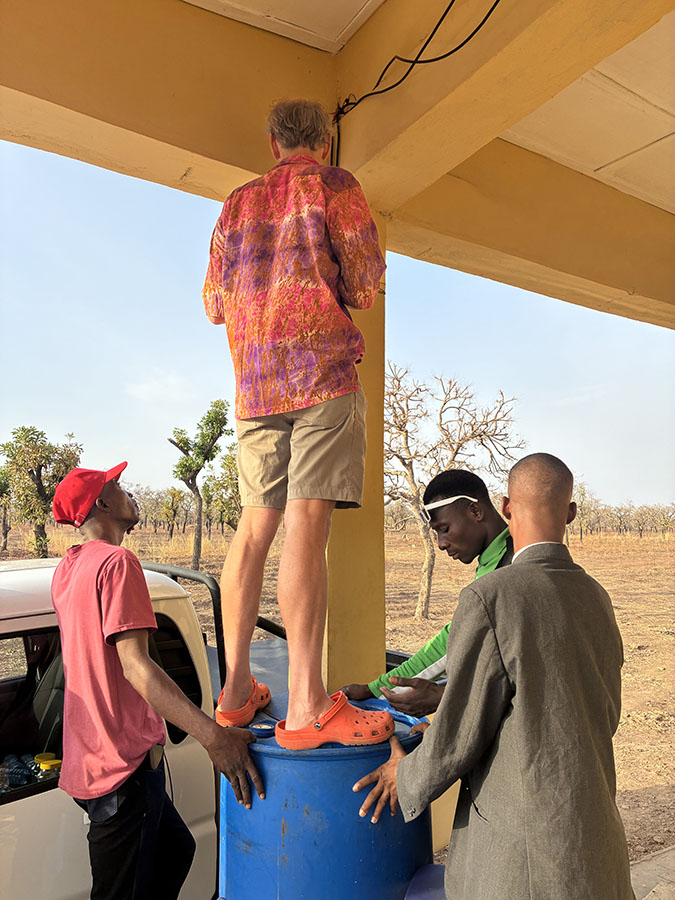
To make it all work, we fashioned a mounting board out of a cement mortar board, sent someone to Gushegu to find rebar tie wire, built a power washer from a water bottle, made a step ladder from a blue barrel, and borrowed a hammer from a nearby home.

But, as the sun went down on our day of work, both the directional antennas and Justice were beaming. Results below :-)

Saying Goodbye

In the morning, we once again awoke to singing. I snapped some additional photos and everyone gathered to see us off.

Like the singing in the morning, African style prayer is participatory. Instead of everyone listening to one person, like we are prayer spectators, Africans pray in unison, aloud, and each with their own words and themes. While to the American ear it may at first sound strange, it carries with it awe inspiring crescendo of passion. Even as Beth and I could not understand any of their words, the kindness and sincerity of their prayers moved us. I could not help but let my thoughts return to Justice’s earlier words — “we have everything we need”. I thought about the simplicity of the Lord’s Prayer — and our daily bread. I considered the chasm between the desires of my heart and the satisfaction of hard work, song, praise, and daily bread.

It was a tremendous visit. So much learned and so much accomplished in just one and a half days.

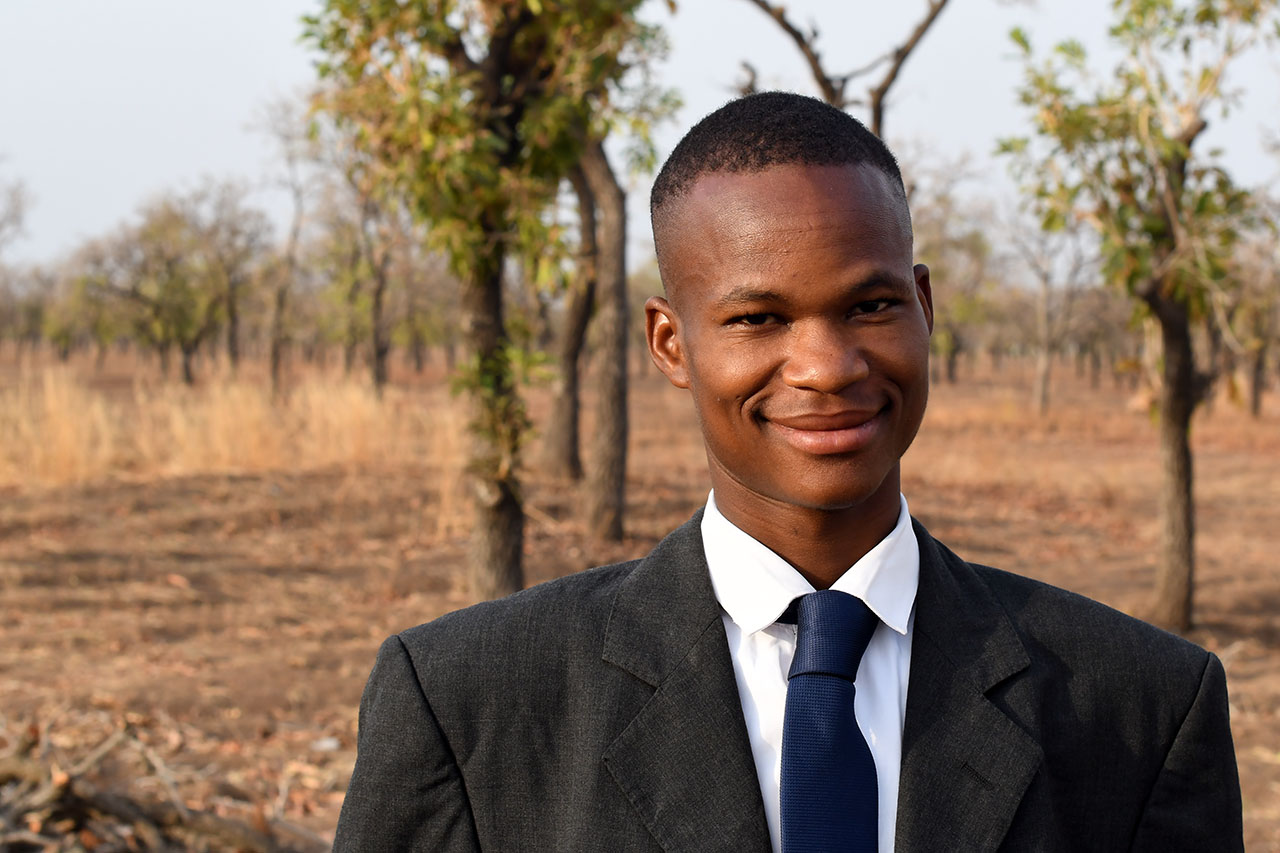
Justice in the middle, and Stephen on the right.
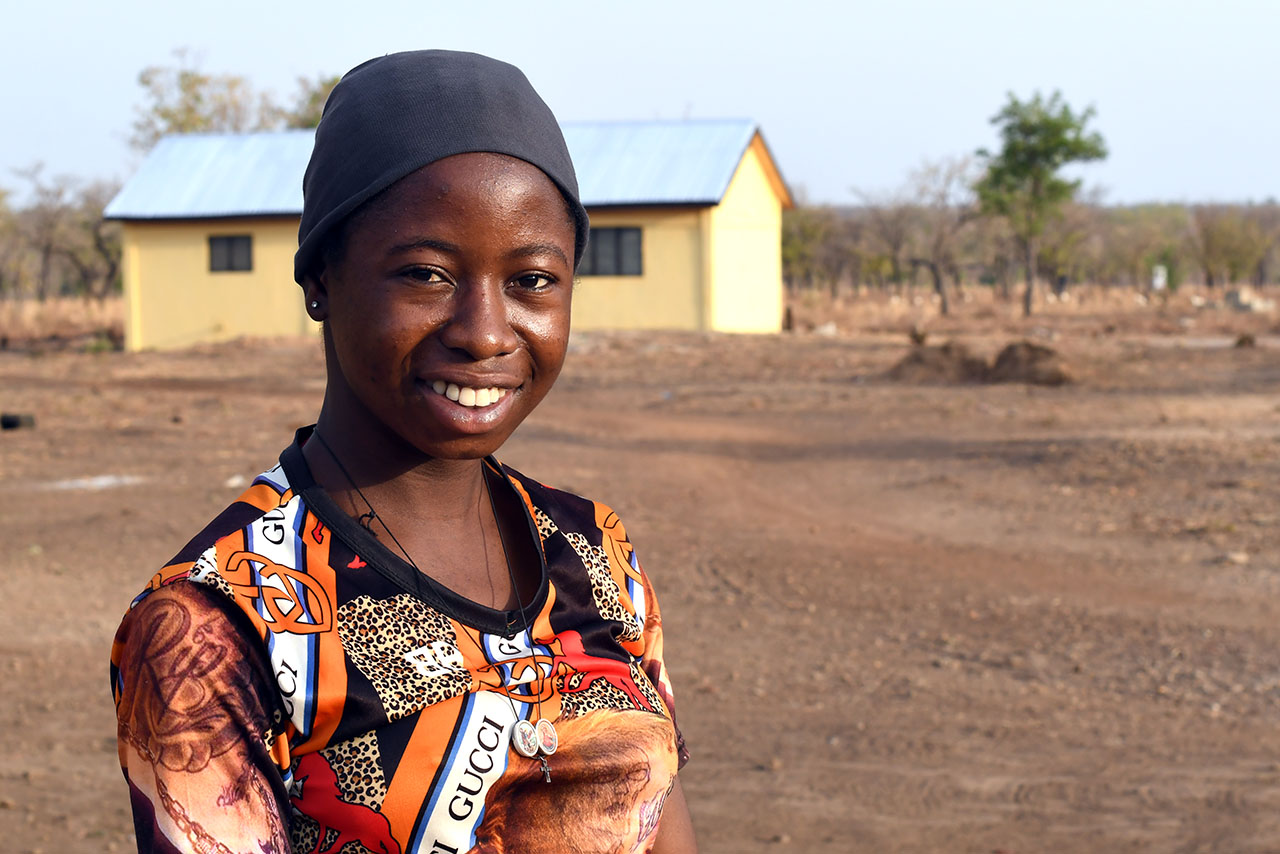
Justice

After leaving the Philip Centre, we drove to Tamale. If you are curious about driving in Ghana, the short clip below shows a very small glimpse of the excitement.
"https://leopardshark.com/ghana-trips/wp-content/uploads/2026/02/Driving_Ghana.mp4"

Working from Home

It is good to be home. Beth and I have spent the last couple of days putting away our gear, writing notes while we remember details (doesn’t that make us sound old?), and planning for next steps.
For some returning travelers, comfort food includes pizza, spaghetti, fried chicken with mashed potatoes & gravy, or maybe mac and cheese. For Beth and I, the first three meals at home were green. Oh how we miss crunchy fresh salads and green veggies when traveling in Africa. The classic travel food rule: “boil it, cook it, peel it, or forget it” means fresh produce is largely out.

With the encouragement of happy stomachs and hot showers, we have started considering the October trip. Yes, it is 7 months away, but there are many details lurking. Fortunately, organizing and planning are Beth’s superpowers.

If you really trust someone, you can lean back in the passenger seat, close your eyes, and take a nap while they drive through a blizzard at night on I94, just south of Lake Michigan . There is no need to check the tension on your seat belt or ponder aloud if we should pull over at the next rest stop. So it is with our next trip to Ghana. I will spend my time working out some technical details, occasionally looking up to admire the pattern of swirling snow blowing across the road, and then go back to my tinkering. I’m blessed to be a nerdy second-part trumpet player while Beth conducts the orchestra.

The BiblePlus team has grown into a distributed team — when we are not in Ghana, we are working remote, from home. This weekend, C&C will be recording in Kumasi before heading to their respective host villages — Cyrus in the northwest, in Wa, and Clement in the northeast, in Chereponi. Over the next couple of weeks I’ll be editing the new Dagbani tracks C&C recorded a couple of months ago. Beth is already working on spreadsheets and cost estimates for the October training.

It was so easy to give nearly 100% of my time and mental attention to the project when I was driving the Mahindra or the debugging cellular data configuration, or working out how we might automate some of the digital processing workflows. But with distractions of house, suburbs, and my part-time professor job, my progress will slow. Thank you for your encouragement and prayers over the next months. We want to continue strongly.

The last few days of our trip in Ghana were diverse. I’ll summarize a few of the highlights as small vignettes after each of the photos below. Then we will go radio silent until October, when we fire up the Blog again.

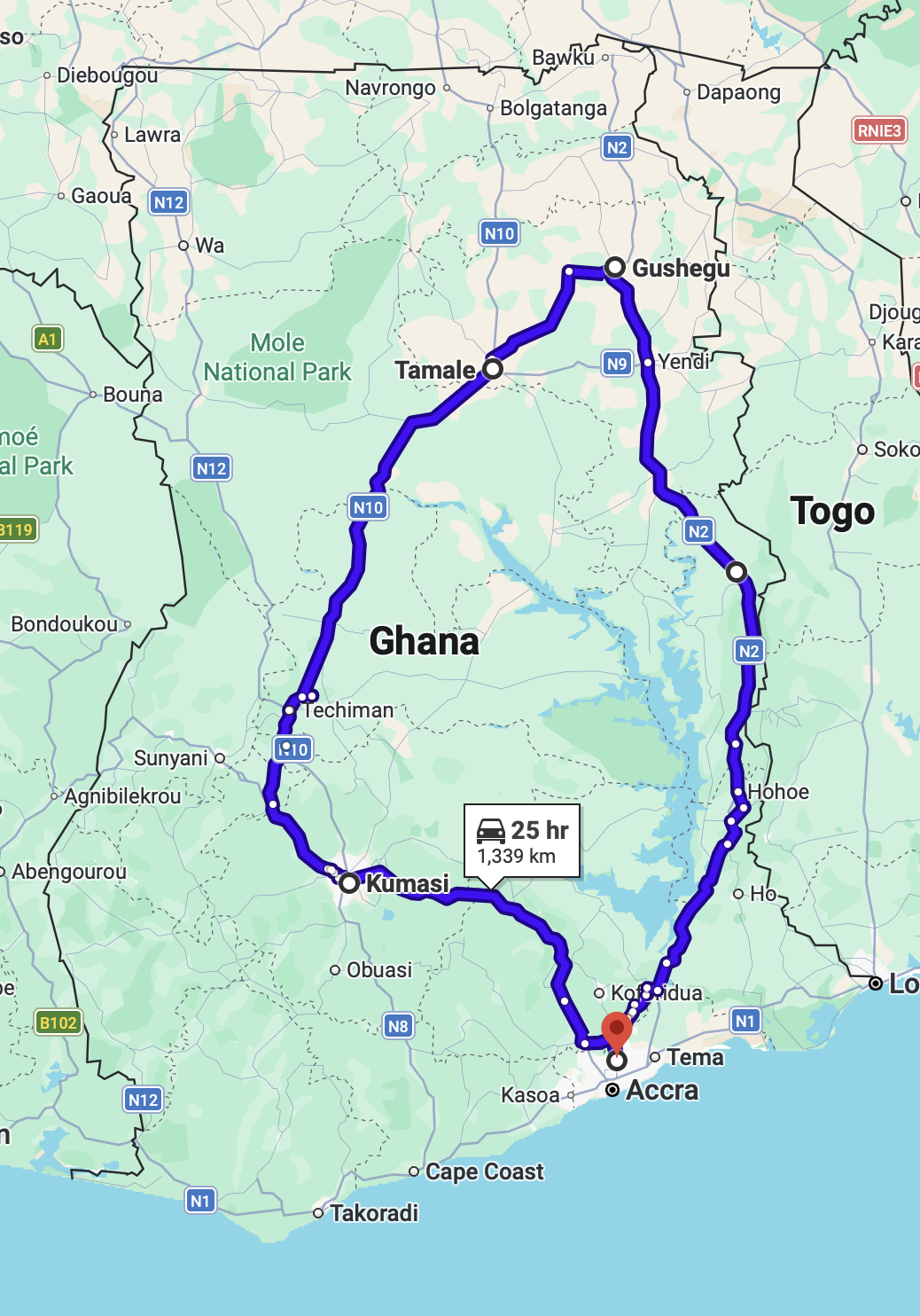
It was our first trip to Northern Ghana without Ray. We left Ghana in the Mahindra, drove a total of 32 hours (Google Maps does not understand Ghana traffic), and returned safely. C&C did all the technical work — a substantial milestone for the project. Our next step for 2027 will be to help C&C and some new yet-to-be-recruited Africans expand into other West African countries.

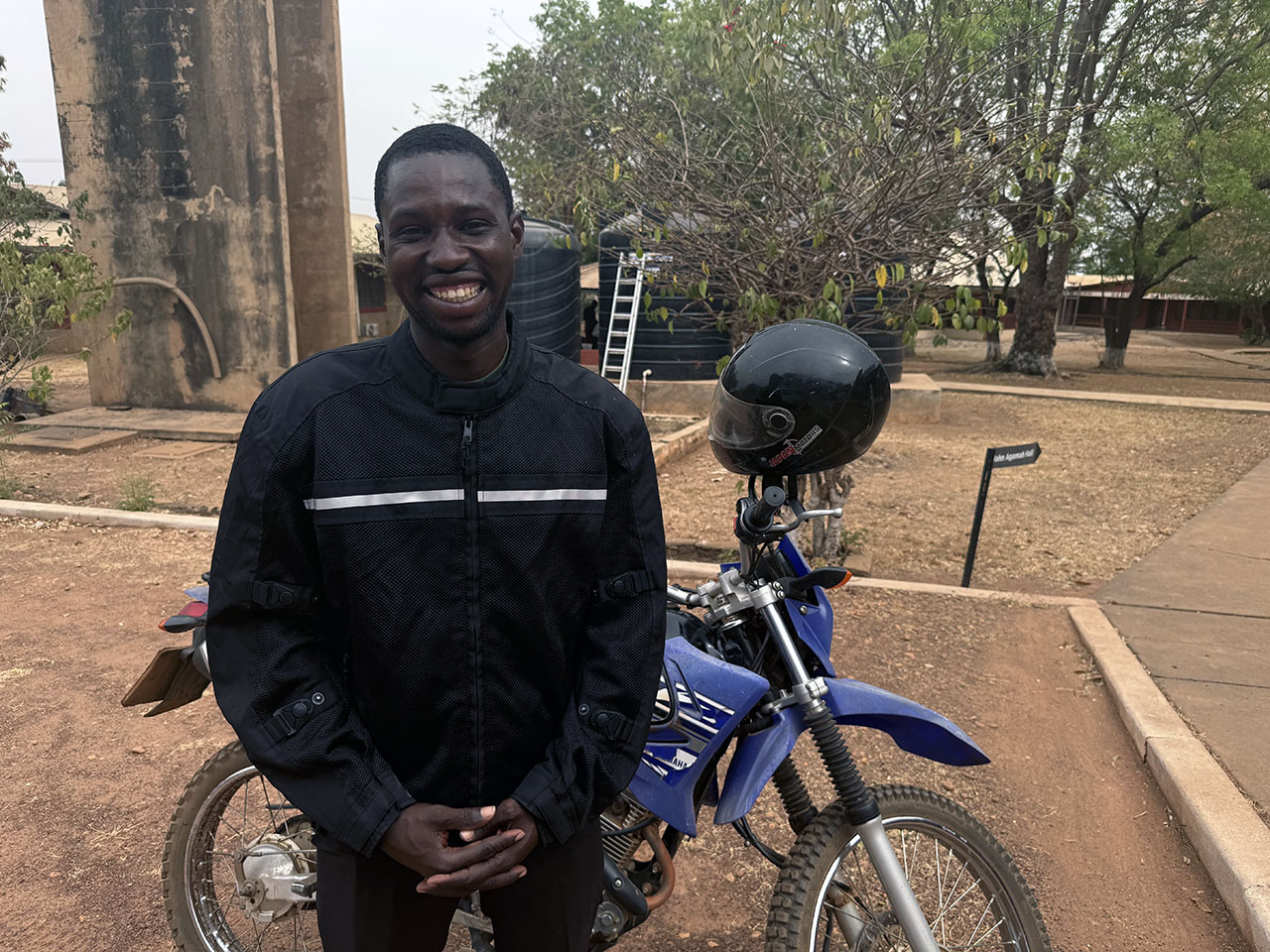
One of the newest moto missionaries, Isaac, put on his protective jacket that we brought from the USA. Riders get knee pads, boots, and gloves as well. The roads are dangerous, and every protective advantage is helpful.

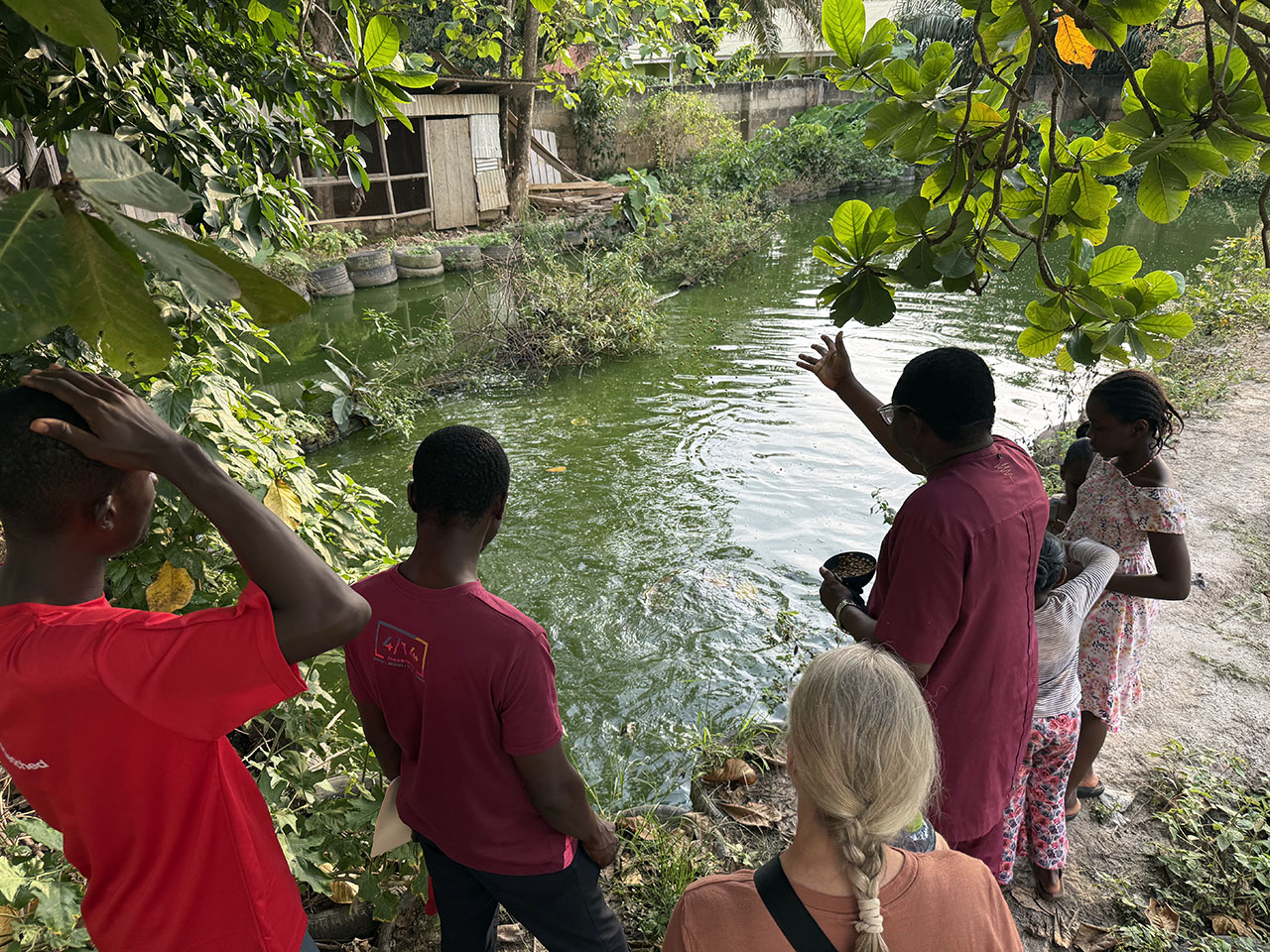
Ahmad is Hausa. He now directs a Christian conference center in the middle of Kumasi, a dense, traffic-plagued metropolis in central Ghana. In the photo above, Ahmad is feeding the catfish in his pond while his two granddaughters look on. It was wonderful to meet with Ahmad, sitting in chairs in the shade of a tree in his front yard. Ahmad will be instrumental in getting us connected to the Hausa community in Ghana that has so far been a bit elusive.

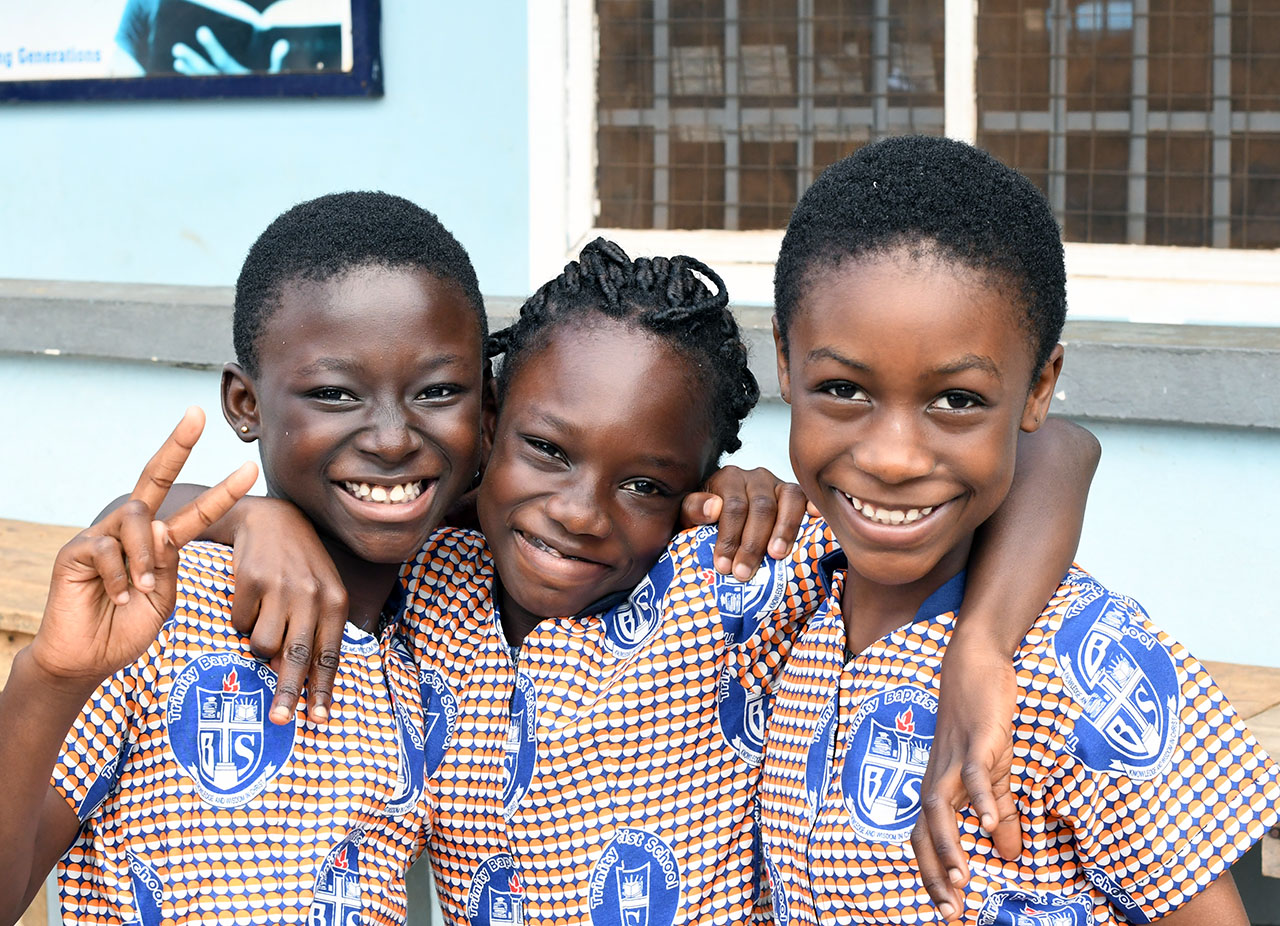
Also in Kumasi, we visited the Trinity Baptist church and school. The church was enthusiastic about working with OneWay Africa on BiblePlus. It is still early days, but it feels like the team has started a new partnership with Akan Twi speakers (the most spoken language in Ghana, and a critical “trade language”). Already, as a stretch goal, C&C agreed to try and produce a Twi version of BiblePlus in time to ship units from Hong Kong in June so they are ready for a September trip to remote churches supported by Trinity Baptist.

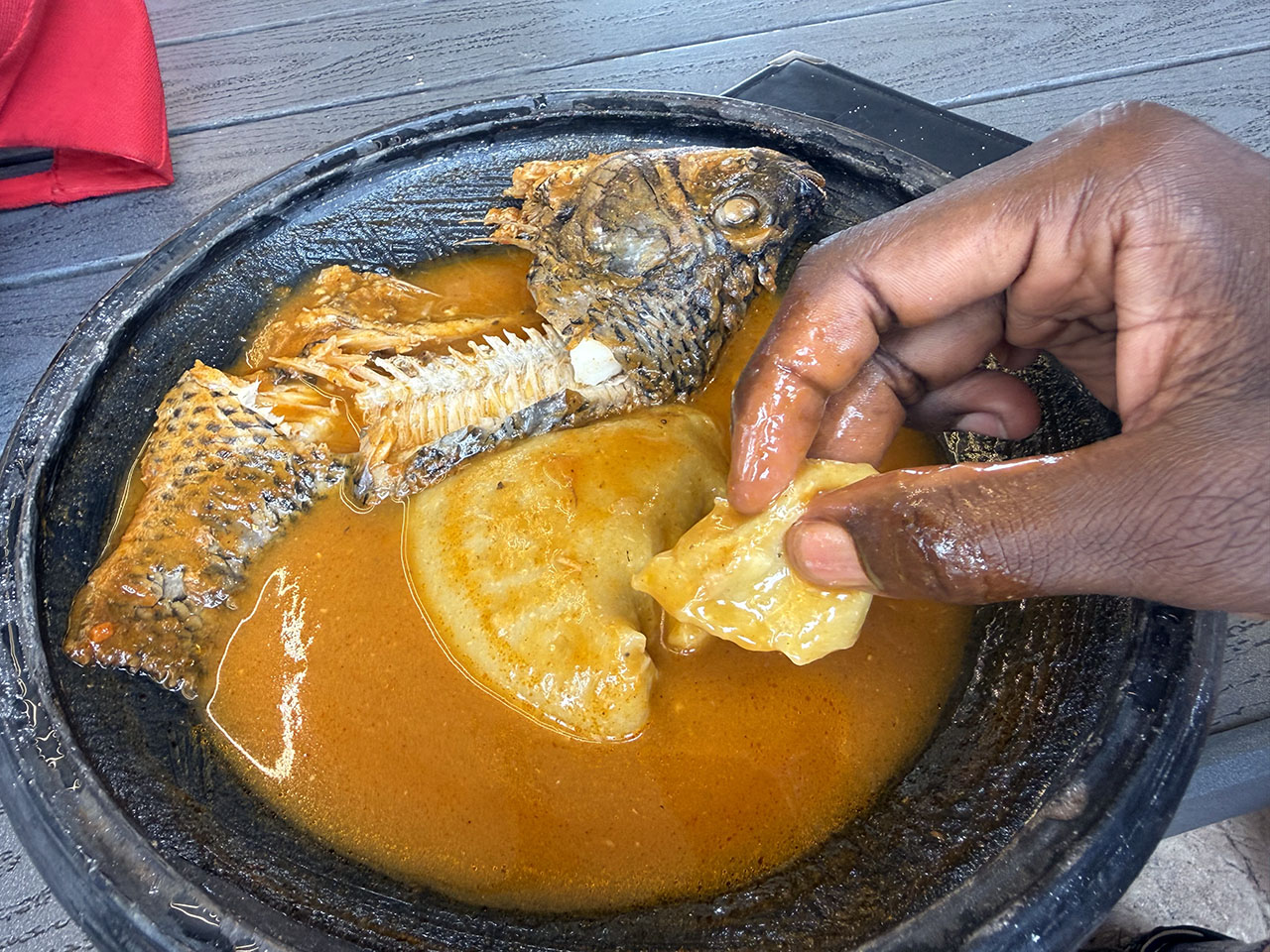
Tilapia and fufu. Need I say anything more?

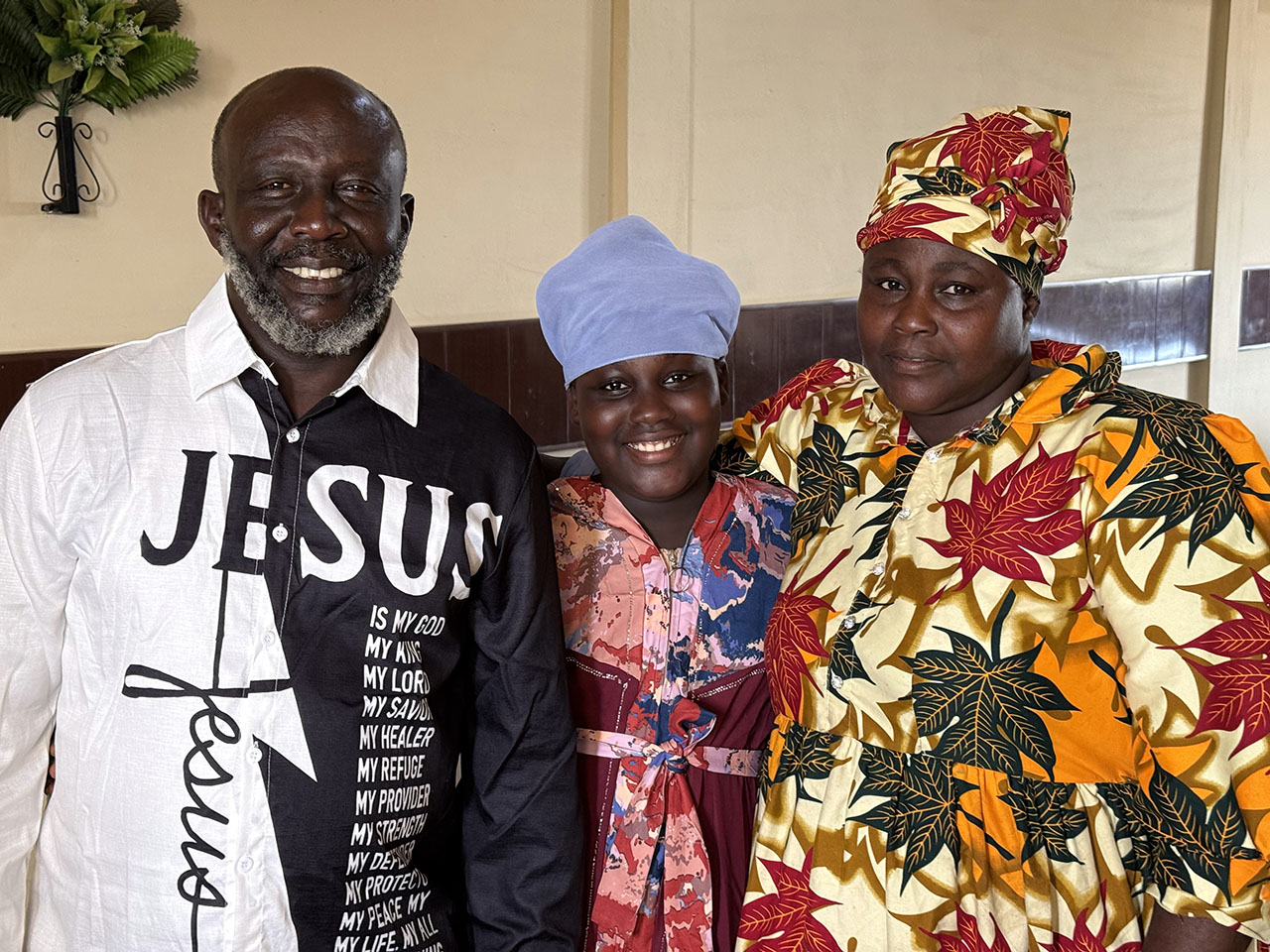
Paul Israel, his daughter, and his wife met us at the Trinity Baptist church. In a small classroom, Cyrus recorded Paul telling his story — an amazing and moving story of finding redemption.

When I stepped forward and grasped Paul Israel’s strong and thick hand, he was already smiling. He was not comfortable speaking English, but briefly explained he grew up a “Zongo Boy”. He continued, “I dropped out of school after 1st grade. I’m uneducated. I have nothing to offer others except what God has done in my life”. He switched to Akan Twi and continued. Clement, whisper-translated highlights as Paul talked to the pastors from the church.

I can’t possibly retell Paul’s life experiences in this small space. I hope we can eventually get a transcription of the Hausa recording. However, here is an overview of why Paul was so filled with joy.

Paul (not his birth name) struggled in his youth. His father was an Imam, but Paul only made it through 1st grade before dropping out of school. Caught up in drugs, he started dealing cocaine and eventually shifted to armed robbery. At the age of 21, he was caught, convicted, incarcerated, and was sentenced to death. For 12 years he awaited his execution.

From his prison cell, he tore pages out of a Bible he could not read to roll joints. He sold them to other inmates. That did not last long :-). God intervened. Later, his death sentence was changed to life in prison by the courts. After 6 more years of jail, he was released! Eighteen years after being put on death row, he had a new life in Christ and a new life of freedom — “if the Son sets you free, you will be free indeed.” There is so much more to his story… how he met his wife, what he does now…

As tears welled up in my eyes, and I squeezed Paul’s hand firmly once again to thank him for meeting Cyrus and sharing his story with us, I thought about how Paul Israel came to stand in front of us, about 30 years after his death sentence, yet now with a bright smile, a family, and a new life. Could his story, put on a solar-powered audio player, shared via WhatsApp, or put on a mobile phone help transform another Zongo Boy? A simple prayer.

We hope to be back again in October.